




10 Signs Your Front Door Lock Needs Replacing
Knowing the signs your front door lock needs replacing is one of the most useful pieces of home-security knowledge you can have, because a front door lock almost never fails without warning. It grinds, it sticks, it works loose, it needs a firm shoulder against the door before the key will turn. Those small annoyances are the lock telling you, months in advance, that it is heading towards a complete failure or leaving you exposed to a break-in. Catch the signs early and you get to choose a better lock in your own time. Ignore them and you tend to end up ringing a locksmith at 11pm, standing on the doorstep in the cold.
At Max the Locksmith, a large share of the callouts we attend across Nottingham, Derby, Mansfield and Loughborough involve locks that had been struggling for weeks. The customer knew something was not right but hoped it would settle down on its own. Locks do not settle down. Below are ten concrete signs your front door lock needs replacing, each with a plain explanation of what is actually happening inside the door, plus honest guidance on when a repair will do and when replacement is the sensible call.
The 10 signs your front door lock needs replacing
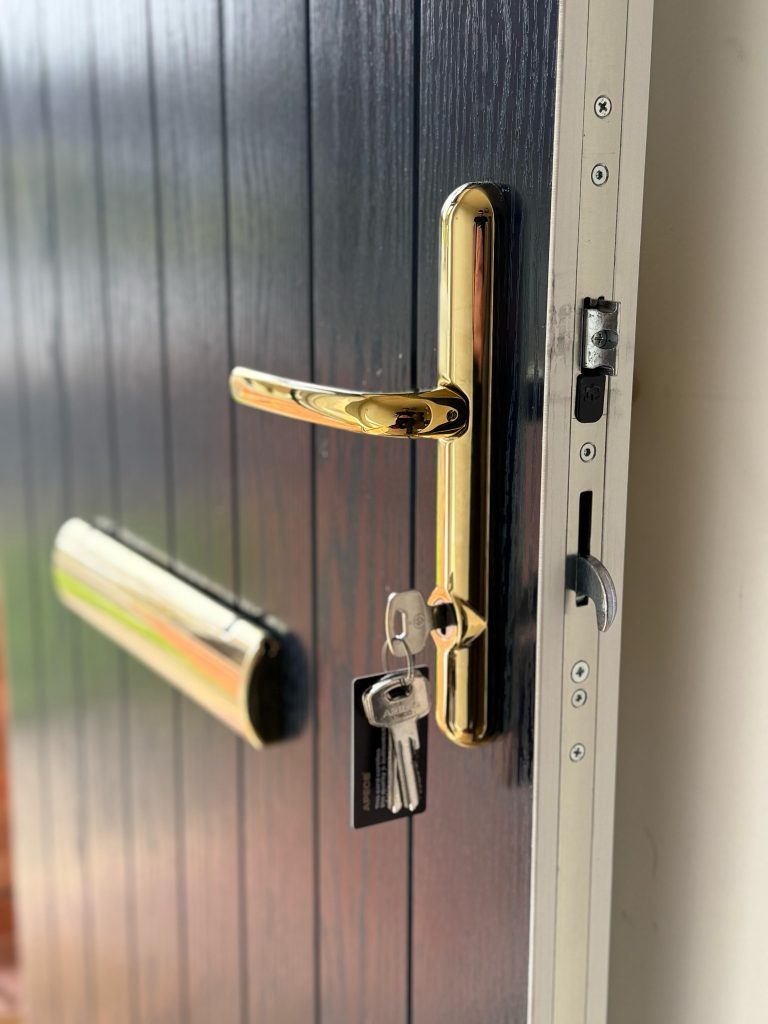
1. The key is stiff, sticky, or needs jiggling to turn
This is the earliest and most common warning of all. A euro cylinder or mortice lock that turns smoothly one month and needs coaxing the next is wearing internally. The pins and springs inside the cylinder are moving less freely, and once that process begins it accelerates. A squirt of the right lubricant can buy time in the early stages, but if the stiffness returns within a few weeks the cylinder is on its way out. A lock that has to be persuaded will eventually refuse altogether, and it rarely picks a convenient moment to do so.
2. The key has snapped, or a piece has broken off in the lock
A key should never snap under normal use. If it does, the fault is usually the lock, not the key. Worn pins and a tight cylinder put sideways strain on the blade every time you turn it, and eventually the metal fatigues and breaks. Once a key has snapped, the cylinder that caused it needs replacing rather than simply extracting the broken piece and carrying on. The same underlying wear will snap the next key too.
3. The lock or handle feels loose in the door
A front door lock should feel solid. If the cylinder rocks, the handle has developed play, or the whole unit shifts when you operate it, the fixings or the internal components have worked loose. On a uPVC or composite door this often means the handle mechanism is failing and is putting strain on the rest of the multipoint system. A loose lock is easier to attack and closer to failure than a firm one, so it is worth acting before it seizes.
4. There is visible rust, corrosion, or discolouration
Front doors take the worst of the British weather, and locks show it. Rust around the keyhole, a green or white bloom on the cylinder face, flaking metal, or a stiff, gritty feel when you turn the key all point to corrosion inside the mechanism. Corroded locks fail without warning and are almost impossible to repair reliably, so replacement is the safe route once corrosion has taken hold.
5. The lock was damaged in a break-in or an attempted one
After any burglary or attempted forced entry, the targeted lock should be replaced, even if it still turns. Snapping, drilling and levering attacks can weaken the internal mechanism in ways you cannot see from the outside. Look for scratches or scoring around the cylinder, bent or misaligned components, or a damaged strike plate on the frame. A lock that survived one attempt is compromised and far more likely to fail during the next. This is also the moment to upgrade to an anti-snap cylinder, and it is worth having every external door checked at the same time. Our after-burglary service covers exactly this.
6. Your lock is outdated and vulnerable to modern attacks
Security standards move on, and a lock that was perfectly respectable fifteen years ago may now be easy to defeat. Older euro cylinders in particular are vulnerable to lock snapping, a technique that lets a burglar break a standard cylinder in seconds using basic tools. If your cylinder does not specifically state that it is anti-snap, it almost certainly is not. Older locks can also be susceptible to bumping, picking and drilling. Upgrading to a modern anti-snap cylinder rated to TS007 3-star or SS312 Diamond, or a British Standard mortice lock, closes those gaps.
7. The door no longer locks smoothly or the key turns only halfway
A healthy lock throws its bolts cleanly with no fighting. Grinding noises, a key that turns only part way, hooks and rollers that will not fully engage, or a door you have to lift or lean on to lock all signal trouble. Sometimes the cause is the lock itself; just as often on uPVC and composite doors, the door has dropped on its hinges and thrown the multipoint mechanism out of line. Either way it needs looking at, because forcing a straining lock day after day is what turns a small adjustment into a full mechanism replacement.
8. You have had the same lock repaired more than once
Repair is often the right first move, and we favour it wherever it genuinely solves the problem. But there is a point where repeated repairs on the same lock stop making sense. If you have had the same cylinder or mechanism patched up two or three times in a short spell, it is telling you it has reached the end of its service life. A new lock at that stage gives you reliability, better security and lower running costs than paying repeatedly to nurse a worn one along.
9. You have lost your keys, or they have been stolen
A lost key is only a filing error until it can be linked to your address, at which point it becomes a real risk. If keys have gone missing alongside a piece of post, a loyalty card, or anything showing where you live, or if they were stolen, change the lock the same day. On many doors this is a quick cylinder swap. It is far less disruptive, and far cheaper, than dealing with someone letting themselves in.
10. You have just moved into the property
New keys in hand does not mean you are the only keyholder. Previous owners or tenants, their relatives, cleaners, tradespeople, dog walkers and helpful neighbours may all have copies, and there is no way to know how many are out there. Replacing the locks when you move in is a fast, inexpensive job that hands you complete control over who can get in, and it is the ideal moment to upgrade to something better than whatever was left on the door.
Repair or replace? An honest view
Not every troubled lock needs throwing away, and we will always tell you when a repair or adjustment will do the job. The distinction usually comes down to root cause. If the lock is fundamentally sound and the problem is alignment, lubrication or a single worn part, a door lock repair is the cheaper and more sensible route. If the lock is corroded, has been forced, is out of date, or has already been repaired repeatedly, replacement is the better investment.
The table below sums up how we tend to judge it on the doorstep.
| What you are seeing | Usually a repair | Usually a replacement |
|---|---|---|
| Key stiff but lock otherwise sound | Yes — clean, lubricate, adjust | Only if stiffness returns quickly |
| Door dropped, multipoint straining | Yes — realign door and keeps | If the mechanism is already worn |
| Corrosion inside the mechanism | No | Yes |
| Damage after attempted break-in | No | Yes — and upgrade to anti-snap |
| Standard cylinder, no anti-snap | No | Yes — security upgrade |
| Lost or stolen keys | No | Yes — same day |
Why acting early is worth it
Replacing a front door lock before it fails completely is not just about avoiding a lockout, though that alone is worth a great deal. A modern, well-fitted lock resists the burglary methods that older locks cannot. It reduces the chance of a sudden failure that traps you out or in. It keeps you compliant with the security standards many home insurers now require, so a claim is not put at risk. And it removes the low-level worry that comes with a door you no longer quite trust.
- Better security — anti-snap and British Standard locks defeat the common attack methods.
- Greater reliability — far fewer surprise lockouts and mechanical failures.
- Insurance peace of mind — many policies specify BS3621 or equivalent locks on final-exit doors.
- Everyday confidence — a door that locks first time, every time.
When to call a locksmith
If you have spotted one or more of the signs above, it is worth a call before the situation forces your hand. In particular, contact a locksmith promptly if:
- The key has snapped, or a piece is stuck in the lock.
- The lock has seized and the door will not lock or unlock.
- You have been broken into, or someone has tried, and any lock is damaged.
- Keys have been lost or stolen and could be linked to your address.
- You have just moved in and want the locks changed for peace of mind.
- You are not sure whether your locks meet your insurer’s requirements.
A quick phone call is often enough for Max to tell you whether you are looking at a simple repair or a replacement, and to arrive with the right parts. If it is urgent, our emergency locksmiths in Nottingham handle most jobs the same day.
What a front door lock replacement costs
Max charges a flat £85 plus parts if any are needed. There is no call-out fee, no out-of-hours surcharge, and the same price applies right across Nottingham, Derby, Mansfield, Loughborough and the surrounding East Midlands, whether it is the middle of the afternoon or the middle of the night. Parts depend on the lock: a standard euro cylinder is inexpensive, an anti-snap cylinder rated to TS007 3-star or SS312 Diamond costs a little more, and a full multipoint mechanism is dearer again because the part itself is larger. Max diagnoses the fault, tells you the price before any work starts, and fixes it on the spot wherever possible. Most jobs are completed in a single visit, and all parts and labour carry a twelve-month warranty. See our lock replacement service for more, or check the areas we cover.
Frequently asked questions
How often should a front door lock be replaced?
A good-quality lock typically lasts many years — often ten or more —, depending on how much use it gets, how exposed the door is to the weather, and how well it is maintained. That is a guide rather than a rule. If you notice stiffness, corrosion, looseness or any of the other warning signs, it makes sense to replace the lock sooner rather than waiting for the calendar.
Can a locksmith repair my lock instead of replacing it?
Often, yes. Minor stiffness, poor alignment and single worn parts can frequently be repaired or adjusted. Replacement becomes the better option when the lock is corroded, has been forced, is out of date, or has already been repaired more than once. Max works repair-first and will tell you honestly which route your lock needs after a quick inspection.
Should I change the locks after moving into a new house?
Yes. You have no way of knowing how many keys are in circulation from previous owners, tenants, tradespeople or neighbours. Changing the locks when you move in is a quick, inexpensive job that gives you complete control over who can get in, and it is a good moment to upgrade to anti-snap or British Standard locks at the same time.
What are anti-snap locks and why do they matter?
Anti-snap euro cylinders are built with a sacrificial section that breaks away in a controlled manner if someone tries to snap the cylinder, protecting the internal mechanism so the door stays locked. Lock snapping is one of the most common ways burglars defeat uPVC and composite doors, so a cylinder rated to TS007 3-star or SS312 Diamond is one of the most effective and affordable upgrades you can make.
How do I know if my lock meets my insurer’s requirements?
Many UK home insurers specify that final-exit doors carry British Standard locks, most commonly BS3621 for mortice and nightlatch-style locks. A BS3621 lock displays a BSI Kitemark. If you are unsure, a locksmith can check your existing locks and tell you whether they meet the standard and what to fit if they do not. It is always worth reading your own policy wording too.
Sorted? What most readers check next
- Lock replacement — quality locks, anti-snap as standard
- Locksmith prices in Nottingham — the transparent 2026 guide
- uPVC Door Lock Replacement Cost Explained
Need it sorted today? Call 07552 421433 — £85 + parts (+ VAT), no call-out fee, same price 7 days.