




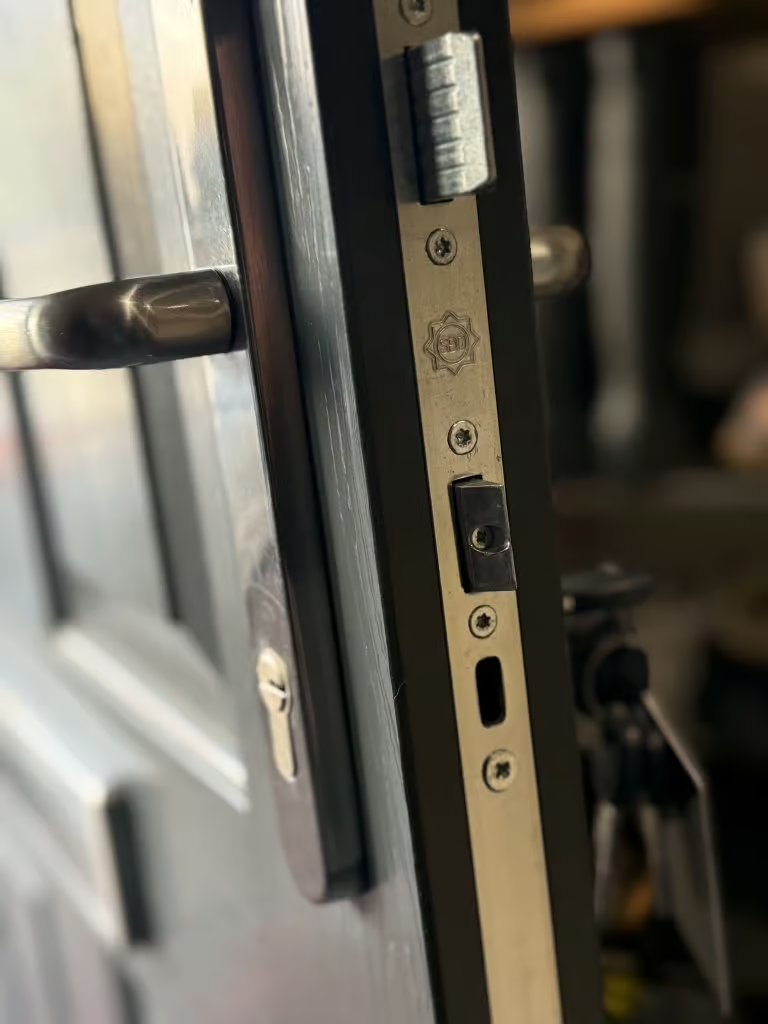
Door repairs —
uPVC, composite & timber
Nottingham · Derby · Mansfield · Loughborough & surrounding areas
Same-day repairs or appointments to suit you.
Door catching the frame, difficult to lock or jammed shut? Handle loose, spinning or refusing to lift? Max and the team repair existing doors and their hardware.
Doors uPVC, composite, timber, French, patio, bifold, sliding and commercial doors.
Repairs Locks, handles, mechanisms, hinges and rollers.
Tell us your postcode and fault. Ask about today’s availability or book a convenient appointment. We agree the repair and price before work starts.
A local repair team, with Max as your point of contact. Tell us what the door is doing and send a photo if you can. We assess the door, frame and hardware together, then explain whether adjustment, a repair or a replacement part is needed. Max or one of our technicians attends; the repair and total price are agreed before work starts.
Door repairs for your home or business
uPVC, composite and timber front doors, French and patio doors, sliding and bifold systems, and commercial entrances. Choose your door type to see the hardware and faults we repair.
uPVC Doors
Mechanisms, cylinders, hinges, handles and alignment
+
uPVC Doors
Mechanisms, cylinders, hinges, handles and alignment
The multipoint locking mechanism operates several locking points along the door edge. We check how those points meet the frame, as well as the handle, cylinder and hinges. Handle stiffness, locking points that stop engaging, or a door that scrapes on closing can indicate an alignment or hardware fault; inspection establishes the cause. Common mechanisms include GU, Mila, Fullex, ERA and Avocet. We identify the existing unit and confirm the suitable replacement and availability when a part is needed.
Mechanism Repairs
Full mechanism replacement, espagnolette strip, locking point adjustment, follower cam service, spindle replacement
Cylinder & Lock
Anti-snap cylinder upgrade (TS007 3-star), Euro cylinder replacement, multipoint lock replacement, lock change, British Standard fitting
⚙️ Alignment & Hinges
Hinge adjustment, hinge replacement, keeps repositioning, door dropped diagnosis, frame and sash alignment
Hardware
Handle and furniture replacement, letterbox upgrade, cylinder guard plates, anti-lift blocks, security hinges, draught seal
Common brands: GU · Mila · Fullex · ERA · Avocet · Yale · Winkhaus · Fuhr · Roto · Nico · Ultion · AGB · Adams Rite
Composite Doors
Locks, hinges, handles and doors catching the frame
+
Composite Doors
Locks, hinges, handles and doors catching the frame
Composite doors are heavier than uPVC, which means more stress on hinges and mechanisms over time. The most common failure patterns: handle stiffness building over months (espagnolette strip or mechanism wear), door difficult to lock in one position (keeps misaligned as door settles), a loose or dropping handle (handle or locking-hardware fault). Parts for Solidor, Rockdoor, Endurance, Distinction, Hurst, Anglian and other brands sourced or carried.
Mechanism
Multipoint mechanism replacement, espagnolette strip, cam replacement, follower service, full mechanism swap
Hinges
Flag hinge replacement, hinge adjustment, stainless steel upgrades for coastal or high-humidity properties, hinge realignment after door settling
Locks & Cylinders
Cylinder replacement, anti-snap upgrade, British Standard lock fitting, key extraction, lock change
Hardware
Handle and furniture replacement, letterbox fitting, spy hole, cylinder guard plates, letter flap draught seal
Brands covered: Solidor · Endurance · Rockdoor · Distinction · Hurst · Anglian · Everest · Palladio · Apeer
Bifold Doors
Panels catching, worn hinges, rollers and locking faults
+
Bifold Doors
Panels catching, worn hinges, rollers and locking faults
Bifold door systems carry significant weight across multiple hinges and a top and bottom track. Hinge wear is proportionally more rapid than on conventional doors, and when a panel drops even a few millimetres, it starts catching on the track — leading most people to force it harder. Panels off-track, handle operating but locking points not engaging, and draught or water ingress at the threshold are the three most common bifold faults Max diagnoses in Nottingham.
Hinges & Track
Pivot hinge replacement, knuckle hinge adjustment, panel realignment, roller replacement, top guide, bottom track adjustment and cleaning
Mechanisms & Locks
Multipoint bifold mechanism replacement, shoot bolt replacement, espagnolette, cylinder upgrade, slave panel locks, handle failure
Hardware
Handle replacement, folding pulls, threshold seal replacement, guide adjustment, drainage slot clearing
Brands covered: Origin · IQ Glass · Centor · Schuco · Smart Systems · Kloeber · Reynaers · AluK · Senior
Patio & French Doors
Sliding patio rollers, French door espagnolette, astragal bar locks — all covered
+
Patio & French Doors
Sliding patio rollers, French door espagnolette, astragal bar locks — all covered
Patio Sliding Doors
Roller replacement, handle failure, multipoint mechanism, track adjustment and cleaning, anti-lift blocks. Both uPVC and aluminium patio frames covered.
French Doors
Espagnolette strip replacement on both leaves, handle failure, astragal bar lock (the centre meeting stile lock) replacement, cylinder upgrades. Both leaves and their meeting points checked together.
Aluminium Doors
Mechanism replacement, cylinder upgrades, hinge adjustment, handle replacement for aluminium frame systems. Schuco, Smart Architectural, Reynaers, Senior covered.
Sliding Doors
Internal sliding wardrobe or room divider tracks, pocket door mechanisms, soft-close gear replacement for aluminium sliding systems
Wooden Doors
Period and modern timber — alignment, hinges and suitable locks
+
Wooden Doors
Period and modern timber — alignment, hinges and suitable locks
Timber doors expand and contract seasonally — a door that locks fine in winter may swell and stick in summer. This is the most common seasonal complaint Max receives about wooden doors across Nottingham’s Victorian and Edwardian terraced stock. We check the hinges, frame, clearances and timber condition before deciding whether adjustment or careful trimming is appropriate.
Trim & Align
Planing sticking edges, adjusting strike plates, frame and keep repositioning, door drop correction, draught seal fitting
Hinges
Butt hinge replacement, rising butt fitting, hinge re-screwing with longer fixings into good timber, hinge recess repair, security hinges
Insurance-Grade Locks
BS3621 5-lever mortice deadlock, night latch to BS3621, sash lock replacement, Euro cylinder conversion to timber door. The exact product specification is checked before fitting.
Brands Fitted
Yale · Union · Chubb · ERA · Ingersoll · Legge · UAP · Mul-T-Lock · ASSA Abloy — suitable models selected for the door
Check your insurer’s lock requirements before choosing a replacement. The required specification depends on the policy and the door. Send us any lock specification required by your insurer so we can check a suitable product before fitting. Lock installation service →
Stable, Internal & Fire Doors
Stable and internal door hardware; fire-door work assessed to specification
+
Stable, Internal & Fire Doors
Stable and internal door hardware; fire-door work assessed to specification
Stable Doors
Top and bottom section alignment, strap and band hinge replacement, rebolt lock fitting, weatherseal, stable door lock coordination (both halves locking together)
Internal Doors
Lock installation, handle replacement, bathroom and WC turn-and-release, privacy lock fitting, sash lock replacement
Fire Doors
Locks, closers, seals and associated hardware assessed for the particular doorset and required specification. Confirm the property’s fire-safety requirements before work — see HMO lock service →
Commercial
Commercial door repairs
A shopfront door dropped onto its closer, an aluminium door off its pivot, a fire exit that won’t latch? Max repairs commercial entrance hardware — aluminium shopfronts, glass doors, steel doors, fire exits and communal entrances — for shops, offices, units and forecourts. We assess the fault, discuss access and agree the repair. This is hardware and door-function repair, not glass replacement.
Common hardware brands — compatibility checked before fitting
GU · Mila · Fullex · ERA · Avocet · Yale · Winkhaus · Fuhr · Roto · Nico · Ultion · Ingenious · Chubb · Union · Legge · Ingersoll · Schuco · Origin · Solidor · Rockdoor · Endurance · Palladio · AGB · Adams Rite · ASSA Abloy · Mul-T-Lock
What is your door doing?
A door that will not lock, catches the frame or has a failing handle may need adjustment or a part repair. Describe the symptom to Max; we check the cause before recommending the work.
Door Won’t Lock — Handle Works
Handle turns but locking points no longer engage the keeps. Most often caused by the door dropping on worn hinges — a few millimetres of drop is enough to misalign the locking points. Also caused by a worn or snapped espagnolette strip inside the mechanism. Book a repair →
Door jammed shut or handle won’t move
A jammed lock, handle fault or failed mechanism can leave a door stuck shut. Tell us whether the handle moves and whether the key turns. We’ll assess the fault and explain the repair needed. Don’t force the handle or key. Ask about a jammed-door repair →
Handle Stiff or Dropping
A stiff, loose or dropping handle can result from alignment, handle or locking-hardware problems. We check the cause before recommending adjustment or replacement. Avoid forcing it; mention whether the problem happens with the door open, closed or both.
Multipoint Mechanism Failure
When multiple locking points stop engaging simultaneously, the multipoint mechanism has usually failed internally. We check operation and alignment, identify the mechanism and confirm whether repair or a compatible replacement is needed. Timing depends on the part required. Lock and mechanism repairs →
Key Difficult to Turn or Stiff
A key that requires increasing effort to turn is a warning sign of cylinder or mechanism wear. Do not apply WD-40 — this will accelerate wear significantly. Max will diagnose whether the issue is the cylinder itself, the mechanism camshaft, or debris in the keyway, and advise on the most appropriate repair.
After a Break-In
Forced entry can damage the lock, mechanism and frame. Once safe access is agreed, we assess the damage and suitable repairs, including TS007 anti-snap cylinders where appropriate. Tell Max if the door cannot be secured, so availability and the next step can be discussed. After burglary service →
Diagnose Your Door
What Does Your Door’s Symptom Mean?
Every symptom tells a story. Find yours below — understand the likely cause, and how urgently it needs attention. If you’re not sure, describe it to Max over the phone and he’ll advise in minutes. Or browse the full door, lock & window fault guide — every common fault, what causes it and how it gets fixed.
Handle won’t lift — door deadlocked shut
Likely cause: A jammed mechanism, handle fault or loaded locking points can prevent movement. Do not force the handle or key; describe what still moves when you contact Max.
Jammed shut — ask about repair availabilityKey turns but the door won’t lock at all
Likely cause: Locking points misaligned (door dropped on hinges) or espagnolette strip failure. Cylinder and handle still work — but locking points don’t reach the keeps. Property is unsecured.
Not secure — tell Max when you callHandle stiff — requires increasing force
Likely cause: Door dropped on worn hinges, causing locking points to drag on the keeps. This is the earliest, most treatable stage. The repair may involve alignment, hinges or locking hardware.
Avoid forcing it — arrange a checkHandle drops after releasing
Likely cause: Handle fixings, springs or internal locking hardware may be worn. Inspection is needed to identify which part requires attention.
Have the handle and mechanism checkedKey stiff, hard to turn, or needs wiggling
Likely cause: Potential cylinder or mechanism failure. Could be worn cylinder, debris in the keyway, a poorly cut key copy, or the mechanism camshaft beginning to seize. Do not apply WD-40.
Book a diagnosis — before it seizes completelyDoor drags or scrapes the frame
Likely cause: Worn hinges or a change in alignment may cause the door to drop or catch. We check the hinges, frame and locking points to see whether adjustment or replacement hardware is needed. Avoid forcing the handle.
Book an alignment and hinge checkDoor locks fine but feels slightly stiff
Likely cause: Early hinge wear or lack of lubrication. Apply PTFE-based dry lubricant (not WD-40) to keyway and locking points. If stiffness persists after lubrication, book a hinge check.
✓ Apply PTFE dry lubricant first. Monitor for 2 weeks.Sticks in summer, fine in winter
Likely cause: Timber movement, worn hinges or frame alignment can affect the fit. We check the clearances and condition before deciding whether adjustment, hinge work or careful trimming is suitable.
✓ Seasonal — book a door alignment checkNot sure which symptom matches your door?
Describe what the door is doing to Max over the phone — stiff, dropping handle, loud click when locking? The description and photos help us prepare; an on-site inspection establishes the cause and suitable repair.
Real doors. Real repairs.
Every job below is a real callout. Photos taken on site. Descriptions are exactly what was found and what was done — no stock photos, no generic write-ups. Covering Nottingham, Derby, Mansfield, Loughborough and the surrounding areas.


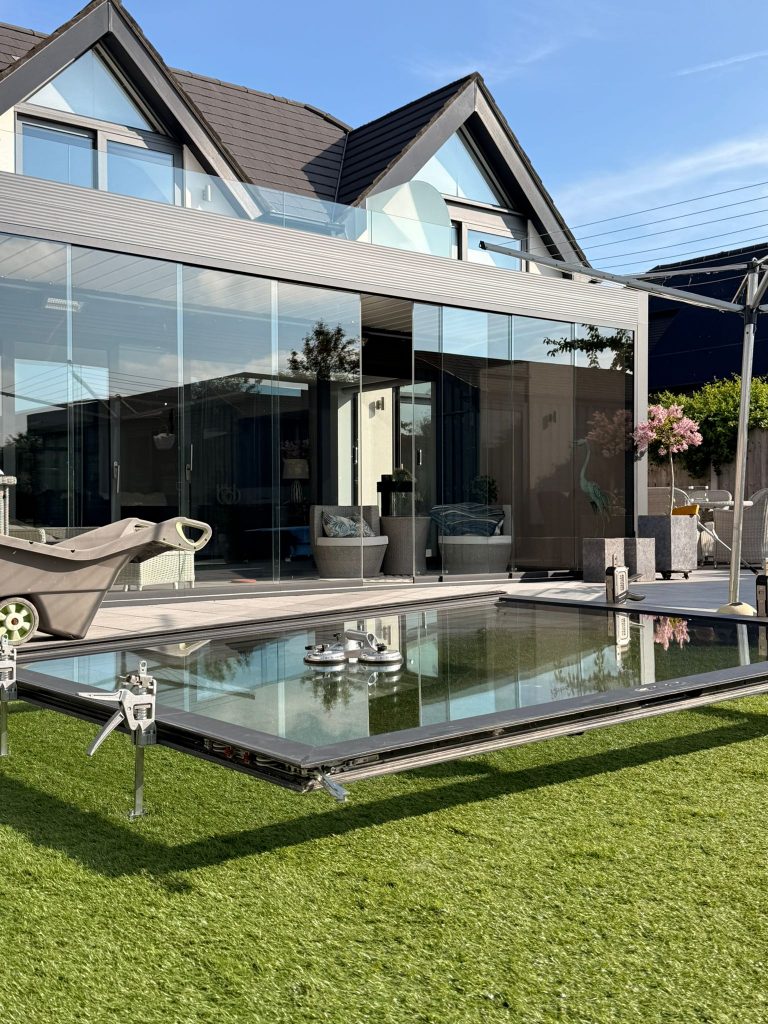


More real repairs


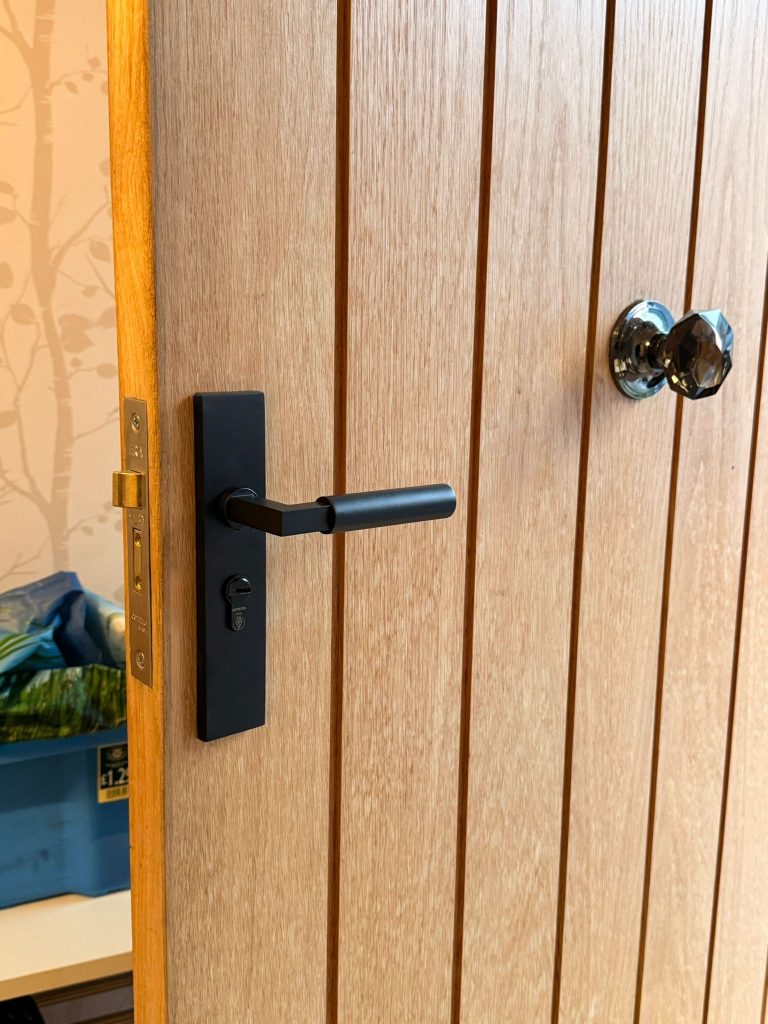

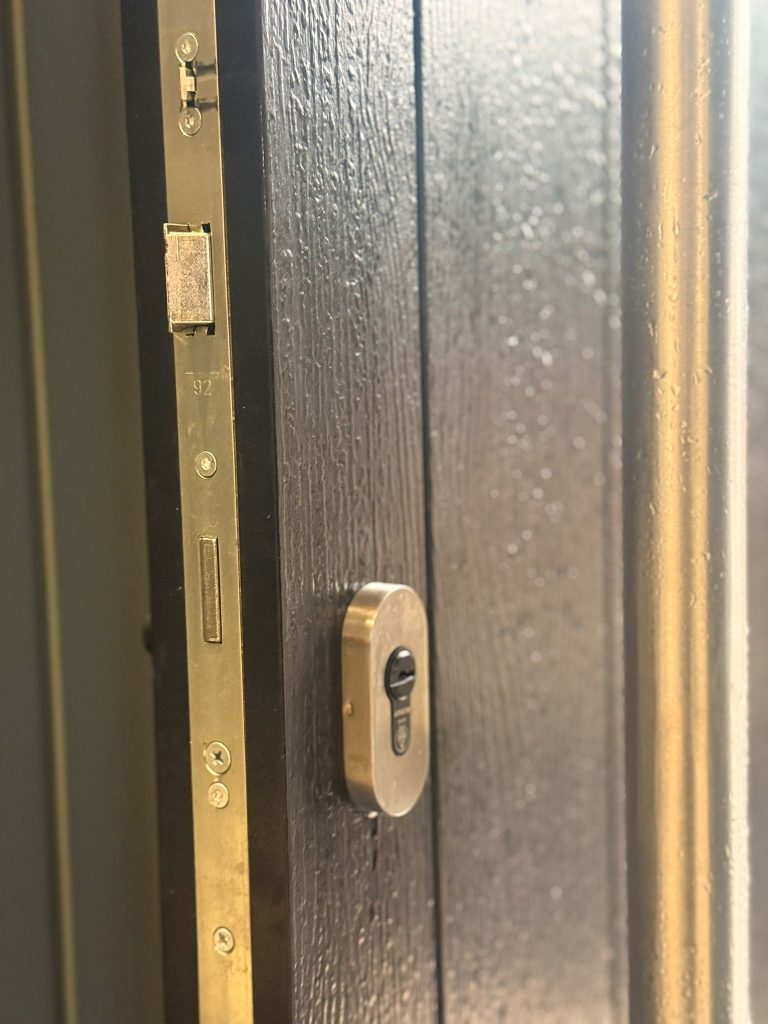

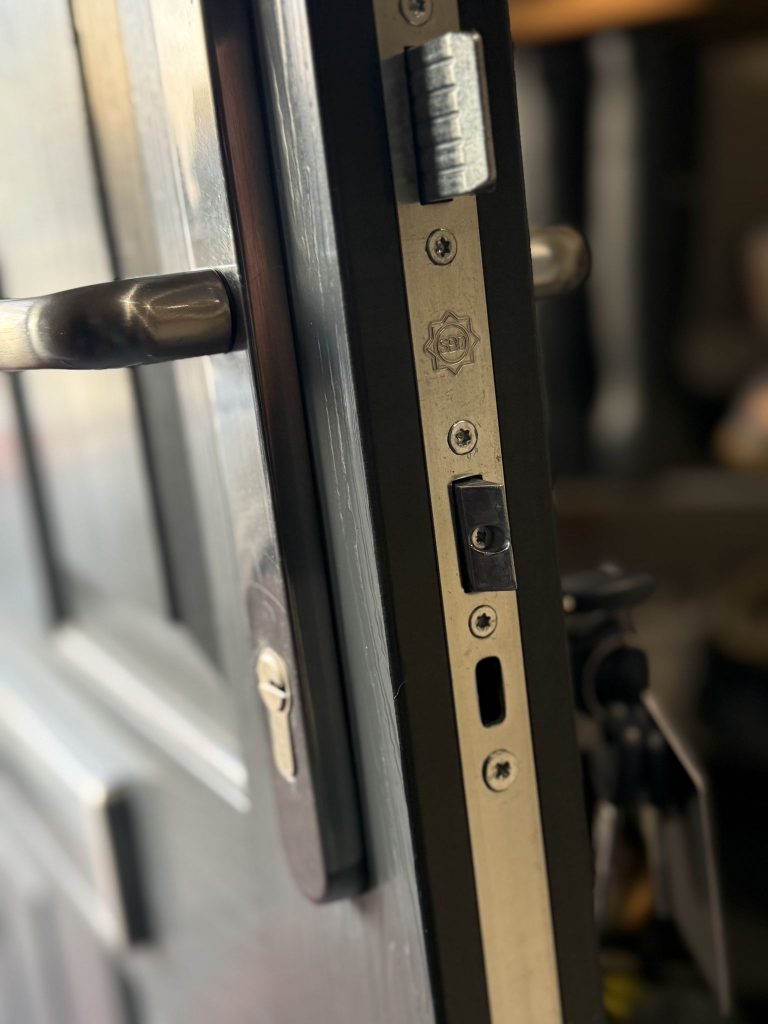


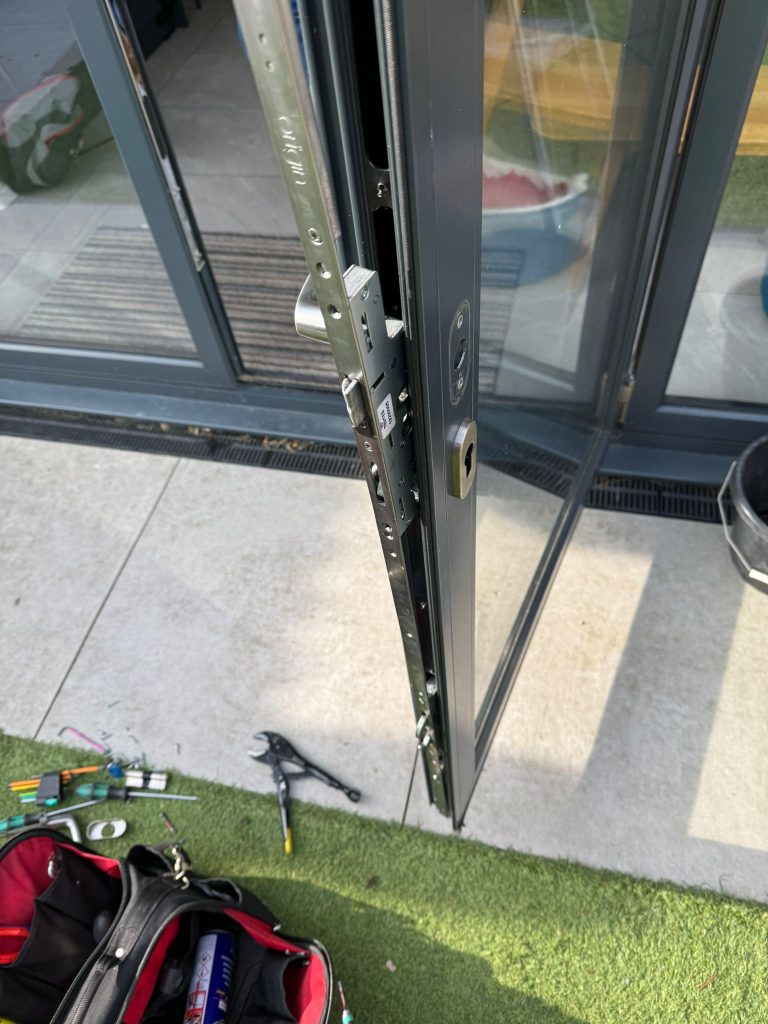
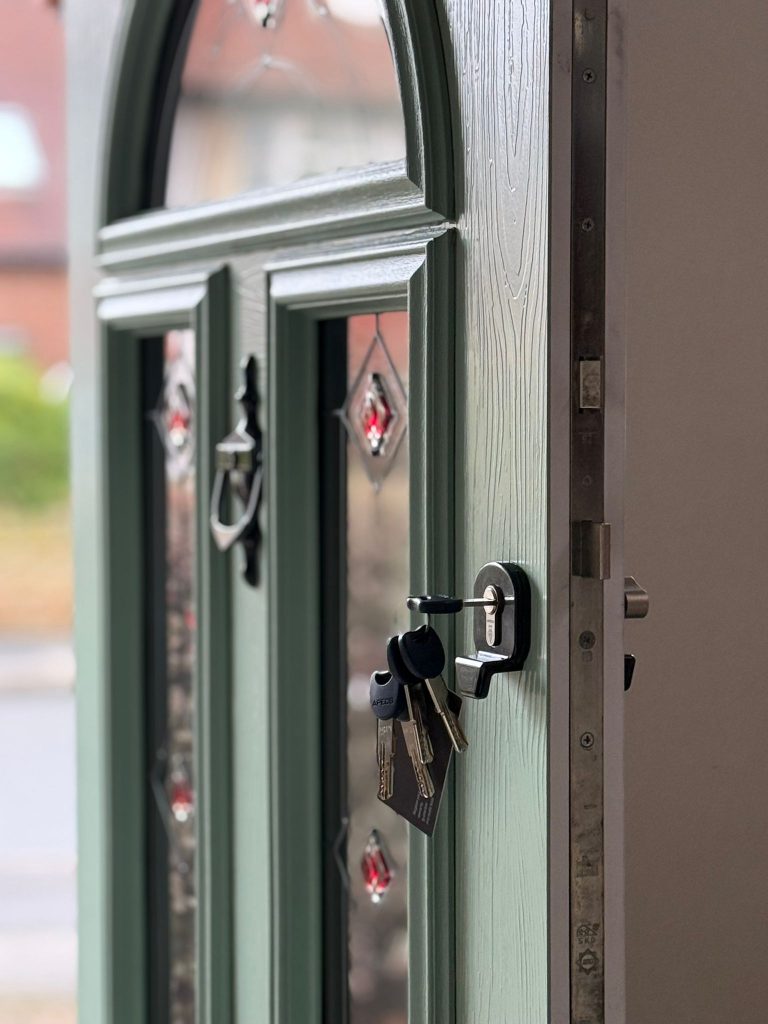
Every job is different. Tell Max what your door is doing.
Whether it’s a straightforward cylinder replacement or a complex specialist door system — call Max — 07552 421433 and describe what your door is doing. Photos and a description help us prepare. We confirm the repair and total price before work starts. No call-out fee.
What Customers Say About Max’s Door Repairs
Read what customers say about door alignment, handle repairs and locking faults. View all reviews on Trustindex →
“Amazing service! A locksmith was with me in 30 mins. He resolved the issue with my front door quickly and easily he also made some adjustments to the fitting of my door.”
“Ion turned up very promptly, very professional and polite, and had to align the door and fit a new barrel to the lock. Supplied 5 spare manufacturers' keys as well. Absolutely top job.”
“Professional and punctual. Well-executed handle and locking mechanism replacement.”
“Excellent service, very helpful. The multi lock mechanism had failed on our door locking us out.”
“Absolutely brilliant. I contacted Max late at night as my door mechanism had completely broken — quick response, arrived 30 mins later, needed to order parts but secured my door until the parts arrived.”
From first call to a working door
A clear repair process, whether the door needs attention today or you want to book ahead.
Tell Max what’s wrong
Share the postcode, door type and fault. A photo of the door and handle helps us understand what needs attention.
Agree the repair and price
We explain the likely work and costs. If an on-site check is needed, the repair and total price are agreed before work starts.
Choose your visit
Ask about same-day availability or book a suitable appointment. Max or one of our technicians attends the job.
Repair, check and paperwork
We check that the door opens, closes and locks correctly, provide your invoice and explain the applicable warranty.
Nottingham · Derby · Mansfield · Loughborough
Our four main hubs and their surrounding areas. Send the job postcode so we can confirm coverage and arrange a suitable visit. View full coverage →
Different doors need different repairs
From period timber doors to composite entrances, rental properties and commercial buildings: the door, its condition and the way it is used determine the right repair. Existing local service pages cover the individual areas.
Victorian Terraces — Lenton, Radford, Hyson Green, Mapperley
Nottingham’s inner-city Victorian terraces — NG3, NG7, NG1 — are predominantly timber front doors. Typical repair checks include timber condition, hinges, night latches and mortice locks. Frames have often shifted over decades, causing doors to stick. Max carries BS3621 mortice sets, night latch replacements and hinge sets suited to Victorian door profiles. Period properties also often have draughty ill-fitting doors that benefit from strike plate adjustment and draught seal fitting — included as part of any alignment repair.
Post-War & Council Estates — Clifton, Bulwell, Bilborough, Bestwood
Large Nottingham council estates across NG11, NG6 and NG8 were fitted with uPVC doors and windows predominantly in the 1990s–2005 period. Age alone does not decide whether a mechanism needs replacing; its condition and operation need checking. Mechanism failures, stiff handles and worn cylinders are the dominant callout type from these areas. Many still have non-anti-snap cylinders — making cylinder security upgrades particularly important in areas that historically see higher rates of opportunistic burglary.
Modern Estates — West Bridgford, Edwalton, Gamston, Clifton South
Newer private builds in the NG2 and NG12 postcode areas predominantly feature composite front doors — Solidor, Rockdoor and Distinction are common — and uPVC or composite bifold or French door systems at the rear. We check door alignment and hardware rather than assume a fault from the age of the property. West Bridgford door repairs have become one of Max’s most consistent areas of demand, with GU and Mila mechanisms being the most commonly replaced types. See the dedicated West Bridgford locksmith page for local detail.
Student & Rental Properties — Dunkirk, Lenton, Forest Fields, Arboretum
Nottingham’s large student population — drawn by both the University of Nottingham and Nottingham Trent — creates dense rental demand across NG1, NG7 and NG9. Lock changes between tenancies can help owners manage who has keys and Max works with landlords and letting agents across these areas regularly. HMO properties require fire door-compliant hardware. Landlords and agents can agree access, approve the repair and receive the paperwork while elsewhere.
City Centre Flats — NG1, Lace Market, Hockley, Castlegate
City centre apartment buildings in Nottingham’s NG1 present specific challenges: communal entry systems, steel security doors with non-standard cylinder sizes, and multi-lock configurations in converted commercial buildings. These properties often require specialist cylinder types and building-management-compliant replacements. Max works regularly with letting agents managing city centre apartment stock and can advise on the correct specification before attending.
Derby, Mansfield, Loughborough & surrounding areas
Max and the team cover Derby (DE1–DE23), Mansfield (NG18–NG19), Loughborough, Ilkeston, Long Eaton, Sutton-in-Ashfield and Kirkby-in-Ashfield. No extra travel charge for covered areas. Ask about same-day availability or a booked appointment. For Derbyshire properties, note that Derbyshire Constabulary also publishes burglary prevention guidance aligned with TS007 and BS3621 standards.
Door Repair Pricing
Most repairs use the labour charge below, plus parts only if needed. We explain the repair and agree the total price before work starts.
£85 labour + parts + VAT
20% VAT applies to labour and parts.
Anti-snap protection as standard — price rises with certification level (TS007 3★, SS312 Diamond), not branding.
Oval profile £20–£40 · Commercial mortise-threaded £35–£70 · Scandinavian £35+.
3 & 5 lever deadlocks and sashlocks. Share any insurance lock specification so we can check a suitable model.
Replacement handles for uPVC and composite doors. We check the handle and locking hardware before recommending which part needs replacing.
Brand and model dependent — Max carries common Nottingham patterns (Ferco, GU, Maco, Fuhr) in the van.
Genuine parts, never pattern copies — where genuine is discontinued, Max fits proven equivalents from long-trusted suppliers.
Flag, butt & rebate types — seized or dropped hinges cause most “door won’t close” call-outs.
Surface-mounted deadlatch, common on older wooden doors across Nottingham’s terraces.
Standard to BS-rated, including auto-deadlocking models for extra security.
Model and compatibility dependent. We confirm the hardware, fitting and setup in your quote.
Larger or more complex work
Quoted individually to suit the project. We agree the scope and price before work starts.
A suitable repair starts with the right part for your door and its fault. We explain what needs attention and why. If a part has to be sourced, we agree the next step with you.
Sources: MLA Locksmith Price Guide · MLA — How to Spot a Rogue Locksmith · Max’s full Nottingham price guide · uPVC door repairs in depth · composite door repairs in depth
Door repair questions, answered
Advice on faults, repairs and arranging a visit. If you are unsure what the door needs, describe the problem to Max and send a photo.
Costs & Pricing
How much does a uPVC door repair cost in Nottingham?
See the pricing and parts guide immediately above. Parts are only added if needed; larger or more complex work is quoted individually. We agree the total, including VAT on labour and parts, before work starts.
Can I book an appointment instead of an emergency call-out?
Yes. Ask about same-day availability or arrange a visit that suits you. Tell Max the postcode and fault so we can plan the work. The repair and total price are agreed before work starts.
Do you charge a call-out fee for door repairs?
No. There is no call-out fee for door repairs in our covered areas. We explain the work and agree the total before starting. Ask about same-day availability or choose a suitable appointment.
Is it cheaper to repair or replace a uPVC door?
Repairing the alignment, hinges or locking hardware can avoid the cost of replacing the whole door when the door and frame are in suitable condition. The comparison depends on the fault, parts and condition: we explain the repair and quote before work starts. If a lasting repair is not sensible, we tell you why.
uPVC Door Repairs
My uPVC door won't lock — what's causing it?
Possible causes include a dropped or misaligned door, locking points catching the keeps, a worn mechanism or a cylinder fault. Tell Max whether the handle lifts and whether the key turns; if you already know it locks with the door open but not closed, mention that too. Do not force it. We inspect the door and hardware before recommending the repair. Lock and mechanism repairs →
My uPVC door handle is stiff — is that serious?
Not necessarily. A stiff handle alone does not establish which part needs attention. We check the door and locking hardware before recommending adjustment, repair or replacement. Tell Max when the stiffness happens and whether it has become worse.
My uPVC handle drops after I release it — what does that mean?
We inspect the handle and locking hardware to find the cause. A loose or drooping handle does not automatically mean the whole locking mechanism needs replacing. Send a photo and describe whether the door still closes and locks; we explain the suitable repair after checking it.
Can you replace a uPVC door mechanism in Nottingham?
Yes. We identify the existing mechanism, its measurements and locking-point arrangement before fitting a compatible replacement. Common brands include GU, Mila, Fullex, ERA, Avocet and Winkhaus. For other systems, we check sourcing options and explain availability and any need for a return visit. uPVC door repairs →
Composite Door Repairs
Can you repair composite doors in Nottingham?
Yes. We repair composite doors across Nottingham, Derby, Mansfield, Loughborough and surrounding areas. We check the alignment, hinges, handles, cylinder and locking mechanism rather than assume a stiff handle means a failed mechanism. Common door brands include Rockdoor, Solidor, Endurance, Palladio, Distinction and Hurst. Send a photo and any identifying label so we can check suitable parts and availability.
My composite door is harder to lock in cold weather — is that normal?
Temperature changes can affect how a composite door fits, but increasing force or difficulty locking should be checked. We inspect alignment, hinges, keeps and the locking mechanism to establish the cause. Seasonal movement alone does not prove that the mechanism has failed.
Bifold, Patio & French Doors
Can you repair bifold doors in Nottingham?
Yes. We assess panels catching or coming off track, worn hinges, rollers, handles and locking faults. Common systems include Origin, Smart Systems, IQ Glass, Centor, Kloeber and Reynaers. Send a photo and any system label so we can check compatibility and parts availability; specialist parts may need ordering.
My bifold panel has come off the track — can you fix it same day?
Ask about same-day availability. The repair and timing depend on the fault and the parts needed. Send the postcode and photos of the door and affected hardware if it is safe to do so. If a specialist part needs ordering, we explain the next step and timing rather than promise a one-visit repair.
Can you repair patio sliding doors and French doors?
Yes. We repair sliding-door rollers, tracks, handles and locking hardware, and French-door hinges, handles and locking strips. Both leaves and their meeting points are checked together. We confirm compatible parts and availability before arranging any replacement; some specialist parts may need ordering.
Wooden & Period Doors
Can you fix a wooden door that sticks or has dropped in Nottingham?
Yes. We check the hinges, fixings, frame, clearances and timber condition first. The repair may involve adjustment, suitable new fixings or hinges, or careful trimming where appropriate. We also check that the door closes and locks correctly. The condition and cause determine the work, not just the symptom.
Do you fit BS3621 mortice locks on wooden doors in Nottingham?
Yes, we fit suitable BS3621-certified mortice locks where appropriate for the timber door. Tell Max if your insurer specifies a particular lock standard: we check the exact product and fitting requirements rather than assume every lock from a brand meets them. Lock installation →
My timber door sticks in summer but is fine in winter — is this a repair issue or just seasonal?
Timber can move as conditions change. If the door sticks, needs force or no longer locks properly, the hinges, frame, clearances and timber condition need checking. Adjustment or careful trimming may help, but the cause determines the repair.
Locks, Cylinders & Security
What is lock snapping and how do I protect my Nottingham home?
Lock snapping is an attack on a euro cylinder intended to defeat the lock. A suitable anti-snap cylinder can improve protection, but the correct size, specification and fitting matter. We assess the existing door and discuss compatible options, including TS007 3-star cylinders. Share any written insurance requirements so we can check the proposed product against them. Anti-snap cylinder upgrades →
Can I use WD-40 to fix a stiff door lock or handle?
No — and this is one of the most consistently damaging DIY approaches Max encounters across Nottingham. WD-40 is a water displacer and solvent, not a lubricant. It provides momentary relief then dries tacky within days, starts collecting dust and grit from inside the mechanism, and forms an abrasive paste that accelerates wear on every moving part it contacts. The correct product for door locks and mechanisms is a PTFE-based dry lubricant spray — WD-40 Specialist PTFE is a completely different product to standard WD-40, as is Molykote Dry Film or similar PTFE sprays. If your lock is stiff, apply PTFE lubricant first. If stiffness persists, call Max for advice before reaching for any other product.
What is the BS3621 standard and does my door need it?
BS3621 is a lock security standard often specified in home insurance requirements. Whether you need it depends on your policy and door. Share any written specification with Max before choosing a replacement. A brand name alone is not proof that an individual lock meets the required standard.
Can you change locks after a break-in in Nottingham?
Yes. Once the property is safe to access and any police requirements have been followed, we can assess damaged locks and door hardware and agree the work needed to secure the door. Tell Max about any written insurer requirements before choosing replacement hardware. We provide an invoice and can discuss any additional record of the work you need. After burglary service →
Landlords & Rental Properties
Do you provide door repair and lock change services for landlords in Nottingham?
Yes. We work with landlords, letting agents and property managers on door repairs, mechanism faults and lock changes. You can arrange the job while elsewhere: agree authorised access, who approves the quote and who receives the invoice before the visit. Share any property-specific hardware or fire-safety requirements when booking. Lock replacement →
What door security is required for an HMO property in Nottingham?
The required specification depends on the property, its licence conditions and fire-safety assessment. Confirm those requirements with the responsible person or local authority before arranging work. We assess the requested hardware against the particular door and agreed specification; replacing a lock alone does not establish compliance for a complete doorset. Discuss HMO lock work →
Credentials & Process
Is Max The Locksmith DBS checked and insured?
Yes. Max is Enhanced DBS checked, fully insured for public liability, and an approved Checkatrade member with independently verified reviews. All credentials are verifiable before you commit to anything. All work carries a 12-month warranty on parts and labour where applicable. If there’s an issue with Max’s work, he comes back and puts it right — no additional charge. Read more about Max →
How do I avoid rogue locksmiths for door repairs in Nottingham?
Rogue locksmiths — often appearing in Google ads as “local” results — typically quote a low call-out price, then charge hundreds once on site by claiming unexpected complexity. Warning signs: no verifiable independent reviews, refuses to give any price indication over the phone, pressure to approve work immediately on site. Always check independently verified reviews on Checkatrade before calling, confirm a price before agreeing to a callout, and use a DBS-checked tradesperson. Max’s Checkatrade profile shows all verified customer reviews — viewable before you call.
Can you diagnose a door problem over the phone?
A description and photos help us narrow down the likely cause and prepare for the visit. Share the postcode, door type and whether it opens, closes and locks. If you already know whether the lock works with the door open but not closed, mention that too—do not force or move an unsafe door to test it. The exact repair and final price may need an on-site inspection.
What payment methods do you accept for door repairs?
We accept cash, debit and credit cards, bank transfer, Apple Pay and Google Pay. Tell Max if a landlord, business or someone elsewhere will be paying so arrangements can be agreed. We provide a digital invoice for the work; check that your email address is correct before it is sent.
My door has dropped, is sticking or won't close — do I need a new door?
Not necessarily. We check alignment, hinges, frame condition and locking hardware first. If the existing door can be repaired sensibly, we explain the suitable adjustment or parts. If it cannot, we explain why rather than recommend repeated ineffective repairs.
Need your door working properly again?
Tell us your postcode and what’s wrong. Ask about same-day availability or book a convenient appointment. You can send a photo on WhatsApp.
Nottingham · Derby · Mansfield · Loughborough & surrounding areas
Full coverage area →