




Door Repairs That Can Prevent Costly Replacements
Your front door is one of the hardest-working parts of the house. It gets opened and shut thousands of times a year, holds the weather out, keeps the heat in and does the actual job of securing your home. Like anything used that heavily, it wears — but here is the part most people miss: the majority of doors that get ripped out and replaced never needed to be. The right door repairs, made at the right time, prevent replacement and can add years to the life of a door for a fraction of the cost. This guide is about the maintenance mindset that keeps a door out of the skip.
The pattern we see again and again is simple. A door develops a small habit — a slight stick, a handle with a bit of play, a key that needs jiggling — and because it still works, it gets ignored. Six months later that small habit has become a broken locking mechanism, a strained frame or a door that no longer secures. The fault did not appear overnight; it was quietly getting worse the whole time. Catch it early and it is a quick adjustment. Leave it and it can become the reason a perfectly good door gets condemned.
Why timely repairs beat replacement
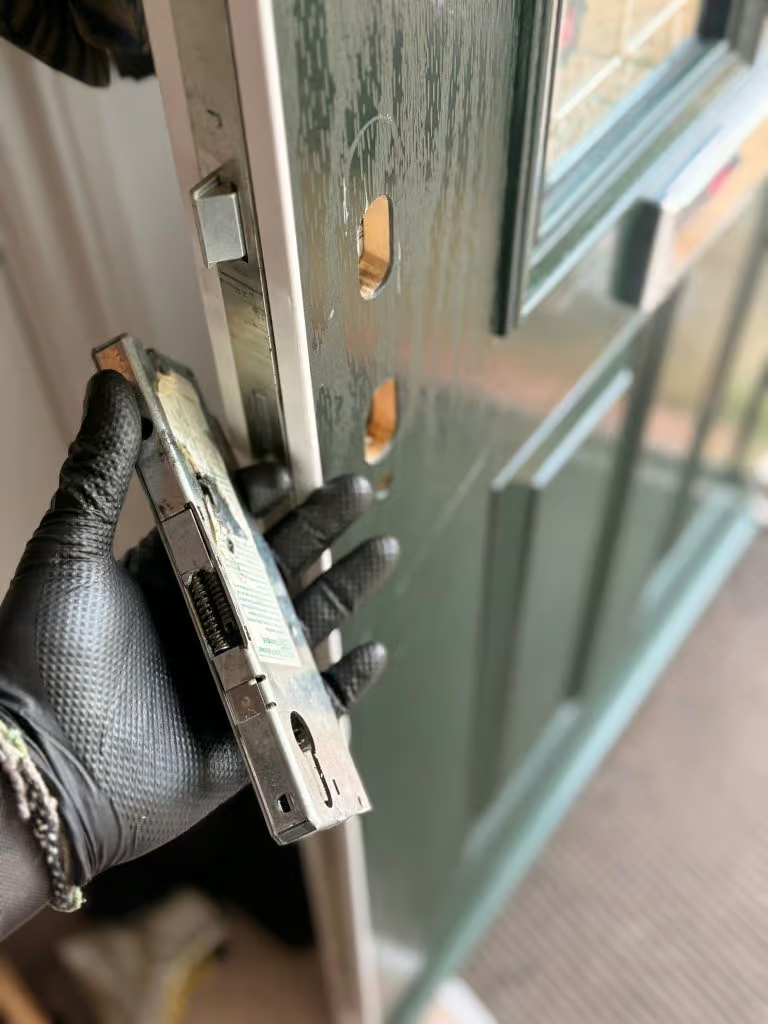
A door is a system, not a single object. The slab, the hinges, the frame, the handles and the locking mechanism all work together, and stress on one part gets passed to the others. A door that has dropped slightly puts load on the hinges and forces the locking mechanism every time you operate the handle. A perished weather seal lets the door move and the damp in, which speeds up wear everywhere else. Fix the small fault and you stop that chain reaction before it damages the expensive parts.
The benefits of repairing early rather than replacing late are consistent:
- Lower cost — a small adjustment or a single component is a fraction of a new door and installation.
- Faster resolution — most repairs are done in one visit, with no measuring, ordering or waiting weeks for a slab.
- Better security — a door that closes and locks properly protects you; one that is limping along may not.
- Longer life — timely maintenance genuinely adds years to a door that is otherwise sound.
- Less disruption — no hole where your front door used to be while you wait for the replacement.
The small repairs that stop a full replacement
These are the everyday jobs that, done in time, keep a door serviceable. None of them is dramatic. That is exactly the point — the cheap, unglamorous fixes are the ones that prevent the expensive outcome.
Realignment and hinge adjustment
Misalignment is the single most common door problem, and one of the cheapest to put right if caught early. Doors shift over time through settlement, seasonal movement and hinges working loose. The early signs are a door that rubs the frame, growing gaps, new draughts or having to lift it slightly to lock. Adjusting the hinges and repositioning the door restores smooth operation and — crucially — takes the strain back off the locking mechanism before that mechanism fails.
Servicing the locking mechanism
Many people assume a faulty door means a new door. In reality the fault is usually inside the multipoint mechanism on a uPVC or composite door, or the mortice lock on a timber one. Stiffness, a handle that no longer engages cleanly, or bolts that do not throw fully can often be resolved by servicing, adjusting or replacing a single component rather than the whole door. Left to grind on, a straining multipoint mechanism will eventually seize — which is when a small job becomes a big one.
Handle and handle-spring repairs
Handles get more use than any other part and often wear out long before the door does. A loose handle, one that flops, or one that no longer springs back usually points to a worn handle mechanism or a broken handle spring. Replacing the handle set or the spring restores normal operation and stops the extra strain being passed into the rest of the locking hardware.
Weather-seal replacement
Perished seals are cheap to replace and easy to overlook. Worn seals let in draughts and water, push up heating bills and — because they let the door rattle and move — accelerate wear on the hinges and mechanism. A fresh set of seals is one of the most cost-effective repairs there is.
Minor frame repairs
Small cracks, loose fixings and minor weather damage to the frame are worth dealing with early. The frame holds the keeps that the bolts drop into, so a frame that is moving or softening undermines both the security and the alignment of the whole door. Sorting a minor frame issue protects the door and the lock together.
Cylinder attention
A key that has started to stick, catch or need jiggling is a warning, not a quirk. People keep forcing it because it “still works, just about” — right up until it snaps or the cylinder fails at the worst moment. A worn cylinder is a quick swap; a snapped key in a failed cylinder on a cold evening is not.
A simple maintenance routine
You do not need tools or expertise to keep on top of most of this. A few minutes a couple of times a year prevents the majority of avoidable failures.
- Lubricate the moving parts. A little proper lock lubricant or a light dry PTFE spray on the cylinder and mechanism keeps things moving. Do not use general oil or WD-40 in a lock — it attracts grime and can gum up the mechanism, causing exactly the stiffness you are trying to avoid.
- Check the alignment. Look for new gaps, rubbing marks on the frame or a door that needs lifting to lock. These are early warnings worth acting on.
- Tighten loose fixings. Nip up loose handle and hinge screws before the play turns into wear.
- Inspect the seals. Feel for draughts and look for flattened or perished rubber.
- Act on small faults promptly. A stiff key or slightly floppy handle is far cheaper to sort now than after it has failed.
When to call a locksmith
Regular maintenance handles the small stuff, but some signs mean it is time for a professional look before the fault turns into a replacement. Call if you notice:
- The door sticking, dragging or catching on the frame.
- Difficulty locking or unlocking, or having to lift the handle hard.
- A loose, floppy or stiff handle, or one that no longer springs back.
- Visible gaps, new draughts or a door that has started to sag.
- Grinding, clicking or unusual noises when you operate the lock.
- A key that is getting harder to turn.
None of these means the door is finished. They mean the window to repair rather than replace is open — and acting while it is open is what saves the money. Our door lock repair service is built around exactly this kind of timely fix, and where a component genuinely is beyond saving, honest lock replacement is the sensible next step rather than a whole new door.
The repair-first ethos
Plenty of trades will quote you a new door because a new door is a bigger invoice. That is not how Max works. The starting position is always to diagnose the actual fault and repair it wherever it is safe and sensible to do so, keeping a sound door in service rather than upselling a replacement you do not need. Replacement is recommended only when the slab or frame is genuinely warped, split or no longer structurally secure — and when that is the case, you will be told plainly and shown why.
Pricing
Max the Locksmith charges a flat £85 plus parts if any are needed, with no call-out fee and no out-of-hours surcharge, and the same price right across the coverage area — Nottingham, Derby, Mansfield, Loughborough and the surrounding East Midlands towns and villages. Most door repairs are completed in a single visit and the price is agreed before any work begins. Max is certified, DBS-checked, Checkatrade-approved and fully insured, with more than 600 local reviews. For a door that will not secure and cannot wait, see the emergency locksmith service; to check the area, visit areas covered.
Frequently asked questions
How do I know whether my door can be repaired rather than replaced?
As a rule, if the door slab and frame are sound and the trouble is with alignment, hinges, handles, seals or the locking mechanism, it can be repaired. Replacement is only worth considering when the slab or frame is badly warped, split or no longer structurally secure. A quick assessment settles it, and in the great majority of cases repair is both possible and far cheaper.
What is the most common repair that prevents a replacement?
Realignment and hinge adjustment. A door that has dropped even slightly rubs, draughts and — most importantly — forces the locking mechanism every time you lock up. Catching that and adjusting it early stops the mechanism being strained to the point of failure, which is one of the main reasons doors get needlessly replaced.
Can looking after my door really make it last longer?
Yes, noticeably. Lubricating the mechanism correctly, keeping fixings tight, replacing tired seals and acting on small faults promptly prevents most avoidable failures and can add years to a door. The key is using proper lock lubricant rather than general oil or WD-40, which attracts grime and gums up the mechanism.
Is a door repair much cheaper than a new door?
In almost every case, yes. Repairing a mechanism, hinges, handle or seals is a fraction of the cost of a new door plus installation, and it is done far quicker. Early intervention usually prevents a minor fault from developing into the kind of failure that leaves replacement as the only option.
Can a faulty lock damage the rest of the door?
It can. A lock or mechanism that is binding puts extra strain on the door, frame, handles and hinges every time it is used, and over time that can pull the door out of alignment or damage the frame. Repairing a lock fault promptly protects the whole door, which is another reason not to let a small problem run on.
Sorted? What most readers check next
- Door repairs — uPVC, composite, wooden, patio & bifold
- Locksmith prices in Nottingham — the transparent 2026 guide
- How to Make a uPVC Door More Secure (Cheap Wins)
Need it sorted today? Call 07552 421433 — £85 + parts (+ VAT), no call-out fee, same price 7 days.