




How to Fix a Stiff Door Lock Properly
A stiff lock almost never starts as a big job. It usually begins with a key that needs a little wiggle, a handle that feels heavier than it did, or a door that only locks if you lift it slightly first. If you’re working out how to fix a stiff door lock, the honest answer is that it depends on what’s causing the resistance — a dry or dirty cylinder, a door that has dropped out of alignment, a worn key, or a lock that is genuinely wearing out. Some of these you can sort safely at home in ten minutes. Others need a locksmith. The one thing that never helps is force: leaning on a stiff key is how a quick clean turns into a snapped key and a lockout. This guide walks through the safe DIY steps, the right products to use, the ones to avoid, and the point where you should stop and call.
Work through it in order. Most stiff locks give in to the simple checks, and you’ll usually know within a few minutes whether you’re dealing with dirt, alignment or wear.
How to fix a stiff door lock without making it worse
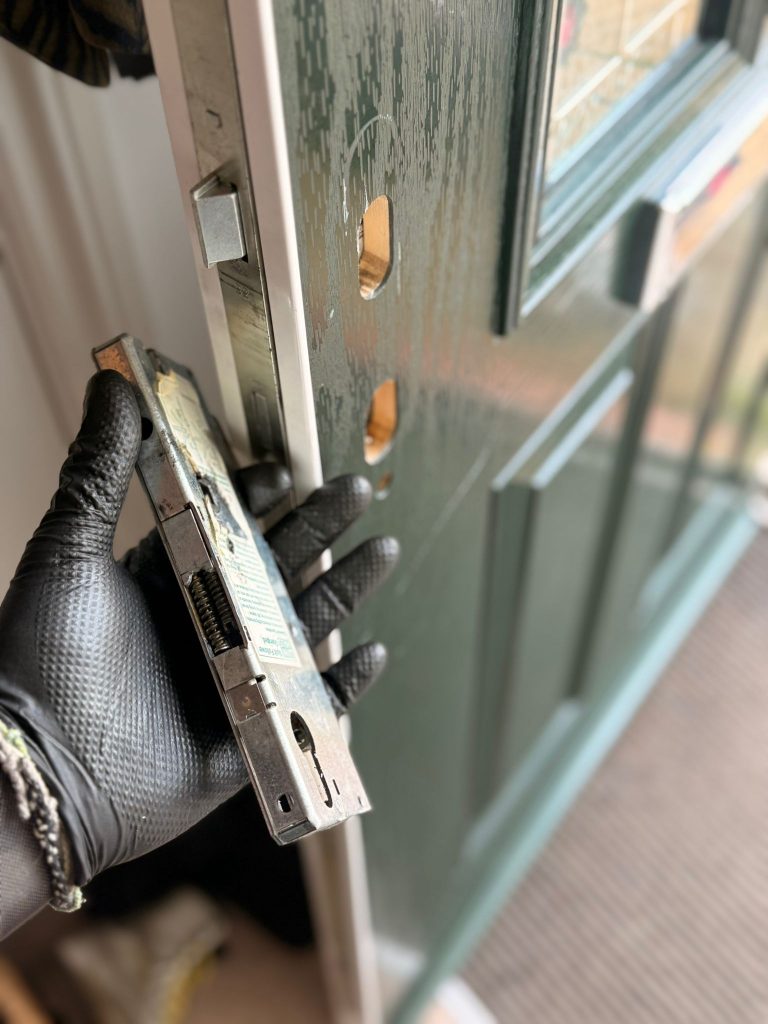
Start with the diagnosis, not the WD-40. Two quick tests tell you most of what you need to know.
Test one: open door versus closed door
Open the door fully and operate the lock and handle. Then close it and try again. If the lock is smooth with the door open but stiff when it’s shut, the lock itself is fine — the problem is alignment, meaning the door isn’t meeting the frame cleanly. If it’s stiff in both positions, the fault is inside the lock or the mechanism. This single test saves people from spraying lubricant into a lock that was never the issue.
Test two: try a spare key
A worn, bent or cheaply copied key can make a healthy lock feel faulty. Try your spare. If it turns more easily, the key is the culprit, not the cylinder — and continuing to force the bad key risks snapping it in the lock.
Clean and lubricate the lock the right way
A dry or dirty cylinder is one of the most common reasons a lock goes stiff, especially on front and back doors that get daily use and a face full of weather. Dust, fine grit and old lubricant build up inside the keyway over time.
Here’s the safe method:
- Use a lubricant made for locks. A PTFE lock spray or a graphite-based product is the right choice.
- Apply a small amount into the keyway. A short puff or a light dusting is plenty — do not flood it.
- Insert the key and work it gently in and out, then turn it a few times to spread the lubricant through the pins.
- If the key comes out dirty, wipe it clean and repeat once. Sometimes that alone restores smooth movement.
If a light clean and lubricate brings the lock back to life and it stays smooth, you’re done — that’s a genuine DIY win.
Why not WD-40, oil or grease?
This is where most stiff locks get made worse, so it’s worth being blunt about it. Do not use WD-40, 3-in-1 oil, cooking oil or general-purpose grease in a lock. They seem to help at first because they’re wet and slippery, but they are not designed for the fine tolerances inside a cylinder. Wet oils attract dust and grit and turn it into a sticky paste that clogs the pins. The lock feels better for a day or two, then becomes noticeably more sluggish than before — and now it’s contaminated, which makes a proper repair harder too.
The rule is simple: dry lubricant (PTFE or graphite) belongs in a lock; wet oils do not. If you’ve already put oil or WD-40 in, don’t panic, but mention it if you end up calling a locksmith, because it changes how the cylinder needs cleaning.
Check whether the door has dropped or shifted
If your earlier test showed the lock is only stiff when the door is closed, no amount of lubricant will fix it, because the lock isn’t the problem. The door has moved, and the latch or locking points are no longer entering the keep cleanly. This is common on uPVC and composite doors, but timber doors do it too.
Look for the tell-tale signs: bright scrape marks on the keep or strike plate, the door catching or rubbing on the frame, or needing a push to sit right before it will lock. On multipoint doors, even a small drop puts extra strain on the whole locking strip, which is why a lock that has felt stiff for months can suddenly fail shut. A minor case can sometimes be eased by adjusting the strike plate or keep screws, but on a uPVC or composite door the hinges are usually adjustable and that’s a job worth getting right rather than guessing at.
When the handle is stiff as well as the key
If the key is hard to turn and the handle feels heavy, reluctant to lift, or slow to return, the trouble is usually deeper than the cylinder. On uPVC and composite doors this points to the multipoint mechanism or the handle spring rather than the barrel alone. The parts work together, so a stiff mechanism can wear the cylinder and a failing cylinder can strain the mechanism.
The important thing here is to stop testing a stiff handle repeatedly. Each hard lift risks the mechanism seizing while the door is shut, which is far more inconvenient than catching it early. A drooping or loose handle is a sign to book a look, not to keep working it.
Stiff locks on wooden doors
On a traditional timber door with a mortice lock or a Yale-style night latch, stiffness usually comes from wear, dirt, paint build-up around the latch, or the door itself swelling and shrinking with the weather. If the key turns stiffly even with the door open, lubricate the cylinder first. If the bolt only sticks as it enters the frame, check the keep alignment — easing a strike plate or a slightly proud screw is often all it takes. But older mortice locks do wear internally: springs weaken and levers stop engaging cleanly, and once a timber-door lock feels rough or inconsistent, repair or replacement beats nursing it along.
Dirt or wear? How to tell the difference
| What you notice | Points to | What to do |
|---|---|---|
| Improves after cleaning and lubricating, stays smooth | Dirt or a dry cylinder | Job done — keep it clean occasionally |
| Improves briefly, then quickly stiff again | Wear inside the lock | Book a repair before it fails |
| Only stiff with the door shut | Alignment / dropped door | Adjust keep or hinges; call if unsure |
| Key must be pulled back or jiggled to turn | Worn cylinder or worn key | Try a spare key first, then replace cylinder |
| Handle heavy or drooping too | Multipoint mechanism / handle spring | Stop lifting it; get it looked at |
What not to do with a stiff lock
- Don’t keep forcing the key — it bends and snaps.
- Don’t spray WD-40, oil or grease into it. Use PTFE or graphite only.
- Don’t strip down a uPVC or composite mechanism unless you truly know the system; it’s easy to leave the door unable to lock or open.
- Don’t ignore a stiff handle and keep lifting hard — that’s how a mechanism seizes shut.
- If you’re a landlord, don’t settle for a temporary bodge on a tenant’s door; a part that half-works tends to fail fully at the worst moment.
When to call a locksmith
Stop the DIY and get it looked at if any of these are true: the lock is still stiff after a proper clean and the right lubricant; the door is clearly out of alignment; the key feels as though it might snap; the handle is stiff, floppy or crunching; or the lock only works with the door held in a certain position. These are signs of wear or mechanism trouble, and lubricant can’t fix a worn or broken part.
The value of calling early is that a locksmith can quickly tell whether the fault is the cylinder, the multipoint mechanism, the keeps, the hinges or general door movement — and replacing the wrong part wastes money and solves nothing. Across Nottingham, Derby and Mansfield we see this constantly: what looks like a sticky lock on the surface turns out to be alignment or a tiring mechanism underneath. Catching it while the door still opens and locks gives you more options and a simpler repair. Our door lock repair service covers exactly this kind of diagnosis, and if you’re already locked out or the door won’t secure, our emergency locksmiths in Nottingham can reach most of the area fast.
What it costs to sort a stiff lock properly
If the DIY steps don’t do it, the price is straightforward: £85 plus parts if any are needed, with no call-out fee and no out-of-hours surcharge, and the same price across the whole coverage area — Nottingham, Derby, Mansfield, Loughborough and the surrounding towns and villages. Max diagnoses the cause, agrees the price before starting, and completes most jobs the same visit by carrying the common cylinders and mechanisms as standard. Every job is done by a certified, DBS-checked, Checkatrade-approved and fully insured locksmith with 600-plus local reviews behind them, and the approach is always repair-first: fix what can be fixed rather than replace for the sake of it.
The better way to think about a stiff lock
A stiff lock isn’t just annoying — it’s an early warning that something is under strain. Sometimes the cure is a two-minute clean with the right lubricant. Sometimes it’s a door adjustment, and sometimes it’s a worn part that needs replacing before it fails completely. Deal with it while the door still opens and locks, and you get the cheapest, simplest outcome. Force it or leave it, and you invite a lockout. Start with the checks in this guide, use the right products, and know when to hand it over.
Frequently asked questions
What is the best lubricant for a stiff door lock?
A PTFE lock spray or a graphite-based product designed for cylinders. Apply a small amount into the keyway and work the key gently — don’t flood it. Avoid WD-40, oil and grease, which attract dirt and gum the lock up over time.
Why shouldn’t I use WD-40 on a stiff lock?
WD-40 and general oils are too wet for the fine tolerances inside a lock. They attract dust and grit, forming a sticky paste that clogs the pins. The lock feels better for a day or two, then becomes stiffer than before and needs a proper clean to put right.
My lock is only stiff when the door is closed — why?
That’s almost always alignment rather than the lock. The door has dropped or shifted and the latch or locking points aren’t entering the keep cleanly. Look for scrape marks on the keep and check the door gaps; adjusting the keep or hinges usually fixes it, and no amount of lubricant will.
When should I stop trying to fix it myself and call a locksmith?
Stop if the lock is still stiff after cleaning and lubricating, if the door is clearly misaligned, if the key feels about to snap, or if the handle is stiff, floppy or crunching. Those point to wear or mechanism trouble, which needs a repair rather than a spray.
How much does it cost to fix a stiff lock in Nottingham?
£85 plus parts if any are needed, with no call-out fee and no out-of-hours surcharge, and the same price across Nottingham, Derby, Mansfield, Loughborough and nearby areas. Most jobs are diagnosed and completed in a single visit.
Sorted? What most readers check next
- Door lock & mechanism repair — handles, gearboxes, multipoint systems
- Locksmith prices in Nottingham — the transparent 2026 guide
- 10 Signs Your Front Door Lock Needs Replacing
Need it sorted today? Call 07552 421433 — £85 + parts (+ VAT), no call-out fee, same price 7 days.