




How to Open a Jammed Composite Door
A composite door never jams at a convenient moment — it’s always as you’re leaving for work, wrestling the shopping in, or locking up at the end of a long day. If you’re searching for how to open a jammed composite door, the single most important thing is not to force it too early. Composite doors are built to be strong and secure, which is exactly why brute force works against you: the locking system inside is more sophisticated than an old internal latch, and once you start bending keys or heaving on a stuck handle, a small fault becomes an expensive one. This guide covers the safe methods to get a jammed composite door open without wrecking it, why forcing makes things worse, and what’s usually gone wrong underneath.
Before anything else, take the pressure off — literally and mentally. A jammed door is a nuisance, not usually a disaster, and calm, gentle troubleshooting opens far more doors than force ever does.
Door jammed right now? Max opens and repairs jammed composite doors same-day across Nottingham, Derby & Mansfield — see composite door repairs or call for any door repair. No call-out fee.
How to open a jammed composite door safely
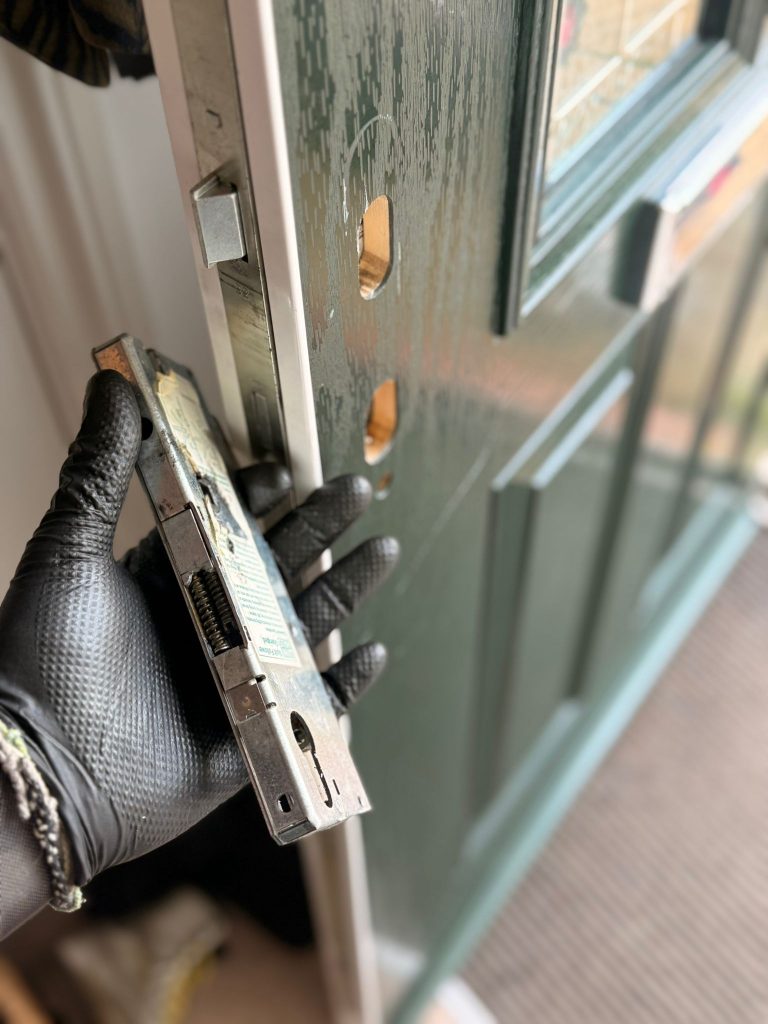
Start with one question that people skip in the heat of the moment: is the door actually locked, or just stuck in the frame? It sounds obvious, but many “the lock’s broken” calls turn out to be a door that has dropped and is binding on the frame while the lock is perfectly fine. If the door feels tight at the top or bottom and the handle still moves, alignment is the likely problem, not the lock.
Take the strain off the door
This is the safest first move and it solves a surprising number of jams. Gently pull the door towards you, then push it inwards, while you turn the key or lift the handle as you normally would. If the door has dropped a little on its hinges, changing the pressure on the frame can free the locking points just enough to release. You’re not trying to yank it open — you’re relieving the load on the mechanism so it can move.
If the key goes in but won’t turn
Don’t keep forcing it. First, check you’re using the correct key — it happens more than you’d think. Then try turning it gently while lightly rocking the door in and out. If it turns part way and stops, that usually points to a misaligned multipoint lock rather than a faulty key. A key that’s straining against a bound-up door is one hard twist away from snapping, and a snapped key inside the cylinder gives you two problems instead of one.
If the handle lifts but the door still won’t open
The hooks, rollers or bolts inside the locking strip may not be retracting properly. Repeated hard lifting here can make matters worse, because composite doors use a multipoint system and if one point won’t release, the whole door stays shut. Lift smoothly, try easing the door in the frame at the same time, and if it won’t give, stop.
Common reasons a composite door jams
Almost every jammed composite door comes down to wear, movement or a failed component. The door slab is solid and stable, but the locking mechanism inside is still made of moving parts, and those parts can stiffen, shift out of line or break.
Seasonal movement and a dropped door
The most common cause is the door and frame shifting with the weather. Hot spells, cold snaps and general settling move the frame, hinges and keeps just enough that a door which was fine last month starts catching. On a composite door the slab itself resists warping, but the alignment around it can still drift, and that’s often all it takes.
A failing multipoint mechanism
The multipoint mechanism is the central part that connects the handle, the key and the locking strip. As it wears, the handle can go floppy, stiff, or stop engaging the locking points properly. Sometimes the key turns but nothing happens; sometimes the handle lifts and then drops with no resistance. When this fails with the door shut, opening it needs the right approach rather than force.
Cylinder problems
A worn or damaged euro cylinder, or one under strain from a misaligned door, can make the key stick or refuse to turn fully. In some cases the lock is perfectly healthy but the keeps on the frame are too tight, so the key is fighting pressure every single time.
Dirt and lack of lubrication
Grit, old lubricant and general wear inside the cylinder can make everything feel rougher than it should. That said, not every stiff lock wants oil — and the wrong product attracts more dirt or gums things up, so reach for a proper lock lubricant, not the tin of WD-40.
Jam symptom and likely cause
| What the door is doing | Likely cause | Safe first move |
|---|---|---|
| Tight at top or bottom, handle still moves | Door dropped / stuck in frame (alignment) | Ease door in and out while operating it |
| Key won’t turn, worse in hot or cold weather | Misaligned multipoint lock or tight keeps | Rock door gently, turn key lightly — don’t force |
| Handle lifts but door won’t open | Locking points not retracting in the strip | Lift smoothly, ease door; stop if it won’t give |
| Handle floppy or drops with no resistance | Multipoint mechanism failing | Don’t keep lifting; call before it seizes shut |
| Opens from inside but not outside (or vice versa) | Cylinder or mechanism fault on one side | Note which side works; get it assessed |
What you can safely check before calling
There are a few sensible checks — and the key word is sensible. Composite doors are expensive, and attacking one with screwdrivers or brute strength usually just adds damage.
- Look at the alignment. Check the gap around the edge of the door. Tighter at the top than the bottom, or rubbing on one side, suggests it has dropped. Scrape marks where the locking points meet the keeps point towards adjustment or mechanism work rather than a full lock replacement.
- Test the handle carefully. Does it lift fully? Feel slack? Work from only one side? A handle that moves freely but won’t engage suggests an internal mechanism fault. A handle that’s rock solid can mean the locking points are stuck under pressure.
- Try a proper lock lubricant in the cylinder, but only if the key itself is what’s sticking. Use a product made for locks, not general-purpose oil. If the fault is in the multipoint mechanism, spraying anything into the keyhole won’t help.
- Leave parts alone. If the door is shut fast, don’t start removing handles unless you genuinely know that lock. Taking furniture off at the wrong stage leaves you with less control and can make the eventual repair harder if screws strip or parts are forced.
Why forcing a jammed composite door makes it worse
There’s a point where stopping is the cheapest option. If the key is bending, the handle is crunching, or the door feels solidly deadlocked, more force is a gamble you’ll usually lose. Composite doors are engineered for security, so once a lock case or multipoint mechanism fails internally, they don’t give way politely — they stay shut and you’ve added damage on top.
The drilling, prising and “card trick” methods you’ll find online are aimed at old-fashioned latches and simply don’t apply here. Composite doors run multipoint locks and anti-snap cylinders, and amateur attempts tend to damage the slab, the frame, the glazing or the locking strip — turning a repair into a replacement. It matters even more if the door is your only way in or out, or if the property can’t be properly secured afterwards. A jammed door can become a genuine safety and security issue very quickly, so knowing when to stop is part of doing it right.
How a locksmith opens a jammed composite door
A locksmith starts by working out whether the fault is alignment, the cylinder, the multipoint mechanism or the whole locking strip — because the opening method changes depending on what has failed. The aim throughout is to get the door open with as little damage as possible.
- If it’s alignment, careful manipulation and adjustment can often release the pressure and open the door without touching the lock.
- If the cylinder has failed, it may be removed in a controlled way so the mechanism can be operated and the door opened.
- If the multipoint mechanism has failed with the door shut, opening it is more involved and needs the right tools and experience rather than force.
Once the door is open, the real repair begins — and this is where a proper job differs from a quick release. Sometimes it’s a hinge adjustment and service. Sometimes it’s a new cylinder. Sometimes the multipoint lock needs replacing in full. A good fix deals with the cause, not just the next few hours. That’s why a specialist in uPVC and composite door repairs is worth having: opening the door is one skill, diagnosing why it jammed and putting it right is another.
When to call a locksmith
Call for help the moment forcing feels like the only option left — if the key is close to snapping, the handle is crunching, the door won’t budge with gentle pressure, or you’re locked out with no other way in. Don’t reach for screwdrivers or online “tricks” on a composite door; they cost more than they save. If the door has been jammed after an attempted break-in, or won’t secure once open, that’s a job for a professional straight away, and our after-burglary service covers the whole door rather than just the lock. If you’re already stuck, our emergency team reaches most of the area quickly.
What it costs to open and repair a jammed composite door
The pricing is simple and it doesn’t change with the time of day: £85 plus parts if any are needed, with no call-out fee and no out-of-hours surcharge, and the same price right across the coverage area — Nottingham, Derby, Mansfield, Loughborough and the surrounding towns and villages on our areas covered page. Max opens the door with minimum damage, diagnoses why it jammed, agrees the price before starting, and completes most jobs the same visit by carrying common cylinders and mechanisms as standard. Every job is done by a certified, DBS-checked, Checkatrade-approved and fully insured locksmith with more than 600 local reviews, and the approach is repair-first — adjusting or repairing where possible rather than replacing for the sake of it.
Stopping the same jam happening again
A composite door shouldn’t need constant attention, but a little care goes a long way. Doors rarely go from perfect to jammed without warning — the handle gets stiffer, the key turns more awkwardly, or the door needs a firmer push than it used to. Deal with those early signs and you’ll usually avoid the lockout. Keep an eye on how the lock feels day to day, avoid slamming the door or hauling it shut by the handle, and if you manage a rental or business premises, pass the same advice on to tenants and staff. Around Nottingham, Derby and Mansfield we see plenty of composite doors that gave small warnings for weeks before they jammed fully shut. The best next step is always the one that keeps damage to a minimum and gets your security back to normal — sometimes a quick adjustment, sometimes a worn part replaced, but never a fight with the door.
Frequently asked questions
How do I open a composite door that won’t unlock?
First check it’s actually locked and not just stuck in the frame. Gently pull the door towards you then push it inwards while turning the key or lifting the handle — this takes strain off a dropped door and often releases it. If the key won’t turn or the handle won’t open the door, stop before you force it and call, as composite locks don’t respond well to brute force.
Why has my composite door suddenly jammed?
The most common causes are seasonal movement dropping the door out of alignment, a failing multipoint mechanism, or a worn cylinder. A door that was fine last month can start catching because the frame and hinges have shifted slightly with the weather, putting strain on the locking points.
Can I force a jammed composite door open myself?
It’s strongly advised not to. Composite doors use multipoint locks and anti-snap cylinders, so forcing tends to damage the slab, frame, glazing or locking strip and turns a repair into a costly replacement. Gentle pressure while operating the lock is safe; drilling, prising and card tricks are not.
Will opening a jammed composite door damage it?
Not when it’s done properly. A locksmith works out whether the fault is alignment, the cylinder or the mechanism and chooses the opening method that causes the least damage — often opening the door with no damage at all where it’s an alignment issue.
How much does it cost to open a jammed composite door in Nottingham?
£85 plus parts if any are needed, with no call-out fee and no out-of-hours surcharge, and the same price across Nottingham, Derby, Mansfield, Loughborough and nearby areas. Most jobs are opened, diagnosed and repaired in a single visit.
Sorted? What most readers check next
- Composite door repairs — the full service guide
- Locksmith prices in Nottingham — the transparent 2026 guide
- Can You Replace a uPVC Door with a Composite Door?
Need it sorted today? Call 07552 421433 — £85 + parts (+ VAT), no call-out fee, same price 7 days.