




How to Tell Difference Between uPVC and Composite Doors
If you have ever stood on your doorstep wondering exactly what your front door is made of, you are in good company. The uPVC vs composite door question comes up constantly, usually the moment a lock needs replacing, the door starts catching, or someone is weighing up whether a repair is worth doing. At a glance the two can look almost identical, and both are fitted with similar multipoint locking systems, but they are genuinely different doors, and the difference matters for security, insulation, cost, lifespan and how the door behaves as it ages. This guide gives you a clear side-by-side comparison and a set of simple checks so you can work out which one you already have.
Need it fixed rather than diagnosed? Max repairs both door types across Nottingham, Derby & Mansfield — see uPVC door repairs or composite door repairs. £85 + parts, no call-out fee.
uPVC vs composite door: the quick comparison
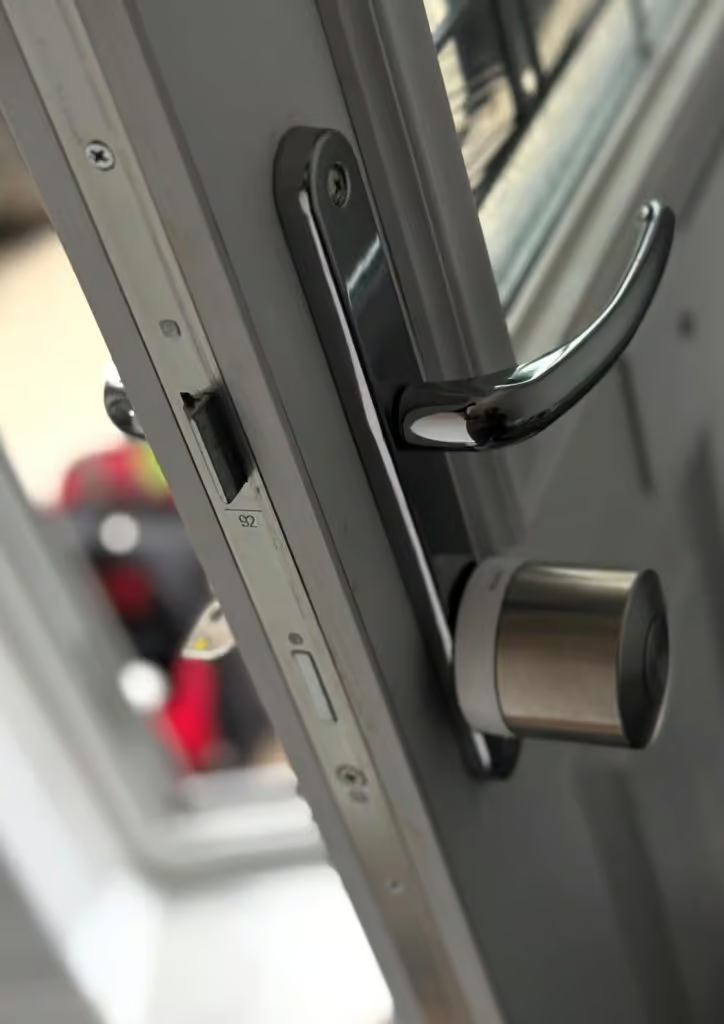
If you only want the headline differences, this table sums up how the two doors stack up on the things that actually matter. The detail behind each point follows below.
| uPVC door | Composite door | |
|---|---|---|
| Construction | Hollow uPVC shell with internal chambers and reinforcement | Solid or foam-filled core with a tough GRP skin |
| Weight and feel | Lighter, can flex slightly | Heavier, solid, rigid |
| Security | Good with proper reinforcement and a quality cylinder | Generally stronger against physical attack |
| Insulation and noise | Good | Usually better |
| Typical lifespan | Around 20 to 25 years | Around 30 to 35 years |
| Cost | The more affordable option | Typically the dearer of the two to buy and fit |
Neither door is automatically the right choice. A well-fitted, well-maintained uPVC door with a quality lock will outperform a neglected or badly installed composite door every time. The material is only ever part of the story.
How to tell which door you have
You do not need to take the door off its hinges or read a manufacturer’s label to get a good idea of what you are dealing with. A few quick checks usually settle it.
Feel the weight
This is the single most reliable everyday test. A composite door feels heavy and substantial on the hinges, much like a traditional timber door. A uPVC door is noticeably lighter and easier to swing. If you have another external door nearby to compare against, the difference is often obvious the moment you open both.
Knock on the panel
Rap the door firmly with your knuckles. A composite door sounds dense and solid because it has a substantial core behind the skin. A uPVC door tends to sound more hollow and lighter, because much of its strength comes from the frame and reinforced sections rather than the panel itself.
Look at the surface and edges
A uPVC door usually has a smoother, more uniform, slightly plasticky finish, especially in white, and can look a little flatter overall. A composite door is built to imitate a high-end timber door, often with a woodgrain texture, deeper detailing and a chunkier edge. Modern uPVC doors sometimes mimic a timber grain too, so this is a clue rather than proof, but the edge thickness is a good giveaway: composite doors generally look thicker and more solid along the edge.
Check for flex
As you close it, watch for a little give or movement in the leaf. Older uPVC doors can flex slightly. Composite doors are far more rigid and barely move. That rigidity is part of what makes them feel more solid, though it also means they must be fitted precisely, because a poorly hung composite door will still drop and strain its locking mechanism.
The real difference in construction
A uPVC door is made mainly from unplasticised polyvinyl chloride, formed into a shell with internal chambers and steel or reinforced sections in the areas that need strength. It is a practical, low-maintenance product that has been fitted across the UK for decades, and a good one does its job well.
A composite door is a blend of materials rather than a single shell. Depending on the manufacturer, it can combine a solid timber or laminated core, an insulating foam layer, a glass-reinforced plastic (GRP) skin and reinforced frame sections. The point of all that layering is to bring together strength, weather resistance, insulation and a premium appearance in one door. That more complex build is exactly why composite doors cost more and feel heavier in the hand.
Security: how they compare
People often assume the lock matters more than the door, but in truth the door leaf, frame, hinges, keeps, handle set and cylinder all work as one. On security, composite doors have the edge for straightforward reasons: their solid construction resists forced entry and impact better than a hollow uPVC panel, and under pressure they flex far less, so the locks and hinges take less strain.
That does not make every composite door secure or every uPVC door weak. A well-made uPVC door with proper reinforcement, a modern multipoint mechanism and a quality anti-snap cylinder is a genuinely sound choice. The bigger risk with any door is an ageing setup: once a frame shifts, a mechanism wears, or a door begins to bow, the locking points stop lining up cleanly and security drops regardless of the material. Whichever door you have, an anti-snap, anti-drill, anti-pick euro cylinder is the single most worthwhile upgrade, because cylinder snapping is the most common forced-entry method in the UK. Our door lock repair service can assess and upgrade the cylinder on either type.
Insulation and noise
Composite doors usually perform better on both heat retention and sound insulation. Their dense, foam-cored construction holds warmth in and keeps outside noise down more effectively than a standard uPVC panel. That said, the seal around the frame matters just as much as the door itself. Even the best composite door will leak heat and let in draughts if the hinges have drifted or the weather seals have perished. In plenty of the homes Max attends, the cold draught is not the door material at all but an alignment or seal problem that is quick and cheap to put right.
Cost and lifespan
uPVC is the more affordable option to buy and fit, which is why it became the default across UK housing. Composite doors cost more up front, typically a fair bit more, but they also tend to last longer, in the region of 30 to 35 years against 20 to 25 for uPVC, and they hold their appearance better over that time. Spread across their working life, the yearly cost gap narrows considerably, and once you factor in slightly better energy efficiency and kerb appeal, composite often makes sense as a long-term investment. If budget is the priority, though, a quality uPVC door is no compromise; it remains secure, well insulated and low maintenance for two decades.
How each door ages, and why the type matters for repairs
uPVC doors tend to reveal their years through discolouration, a dulling of the surface and occasionally a slight warp, with white doors in particular losing that crisp finish. Composite doors hold their looks better but are not maintenance-free: the hardware still wears, the mechanism can still fail, and the door can still drop on its hinges. This is the part homeowners most often get wrong. When a door becomes stiff to lock or needs lifting to close, the instinct is to assume the whole door is finished, when the actual fault is almost always the cylinder, the handle spring, the hinges, the keeps or the multipoint mechanism, all of which are repairable on either material.
Knowing which door you have still helps, because the repair approach can differ. A composite door that has dropped puts more strain on its mechanism because of the extra weight, while a uPVC door more often develops alignment problems from hinge wear or frame movement. From the outside the symptoms look identical, a stiff handle, a key that will not turn, a door that will not latch, but the correct fix is not always the same, which is exactly why a proper inspection beats guessing and swapping parts blindly. Our door repair service starts by identifying the door and the real fault, then fixing it.
When it is not obvious
Some doors sit in a grey area. A high-quality uPVC door can look smarter than you would expect, and some composite doors come with a deliberately simple finish. If the weight, sound and edge checks still leave you unsure, look for a manufacturer’s label on the hinge side of the door, dig out any paperwork from the installation, or have a locksmith confirm it. Once the door type is known, it is far easier to recommend the right repair and give clear, upfront pricing.
When to call a locksmith
Identifying the door is useful, but the moment it stops working properly is the moment to act. Call a locksmith if:
- The door has started sticking, dropping or catching on the frame
- The handle is stiff, loose or no longer lifts to lock
- The key is hard to turn or the door will not latch cleanly
- You are unsure how secure the door and its cylinder actually are
- You want an honest opinion on whether to repair or replace
Sorting a fault early is always cheaper and less stressful than waiting until you are locked out. If that has already happened, our emergency locksmith service covers Nottingham and the surrounding area.
What it costs
Whichever door you have, Max charges £85 plus parts if any are needed, with no call-out fee and no out-of-hours surcharge, and the same price across the whole coverage area, taking in Nottingham, Derby, Mansfield, Loughborough and the villages between them. Max is certified, DBS-checked, Checkatrade-approved, fully insured and has more than 600 local reviews. He works on both uPVC and composite doors, diagnoses the fault before touching anything, agrees the price with you first, and completes most jobs on the same visit. See the full list of areas on our areas covered page.
Frequently asked questions
What is the easiest way to tell a uPVC door from a composite door?
Feel the weight and knock on the panel. A composite door is noticeably heavier and sounds dense and solid, much like timber. A uPVC door is lighter and sounds more hollow. The edge is another giveaway: composite doors generally look thicker and chunkier along the edge, while uPVC doors look slimmer and more obviously moulded.
Is a composite door always more secure than uPVC?
Composite doors are generally stronger against physical attack because of their solid construction and rigidity, but a well-made uPVC door with proper reinforcement and a quality anti-snap cylinder is still very secure. On both door types, an anti-snap cylinder is the most important upgrade, since cylinder snapping is the most common forced-entry method.
Do uPVC and composite doors last the same length of time?
No. A composite door typically lasts around 30 to 35 years, while a uPVC door tends to last around 20 to 25. Composite also holds its appearance better over time. Both still rely on their hardware, though, and the lock, hinges and mechanism can wear out well within the door’s overall lifespan.
My door is stiff to lock. Does that mean I need a new one?
Almost never. A stiff or hard-to-lock door is nearly always down to the cylinder, handle spring, hinges, keeps or multipoint mechanism, all of which are repairable on both uPVC and composite doors. It is worth having the fault diagnosed before assuming the whole door needs replacing.
Does it matter which door I have when booking a repair?
It helps, because the weight, construction and adjustment points differ, but you do not need to know for certain before you call. Max identifies the door as part of the inspection, then recommends the right repair and gives clear pricing on the spot.
Sorted? What most readers check next
- Door repairs — uPVC, composite, wooden, patio & bifold
- Locksmith prices in Nottingham — the transparent 2026 guide
- Can You Replace a uPVC Door with a Composite Door?
- How to Make a uPVC Door More Secure (Cheap Wins)
Need it sorted today? Call 07552 421433 — £85 + parts (+ VAT), no call-out fee, same price 7 days.