




Lock Repair Nottingham: What to Do First
When a lock starts playing up, the first instinct is usually to reach harder for the key or give the door a shove. Resist that. Almost every job that needs proper lock repair Nottingham homeowners call us for begins the same way: a key that turns stiffly, a handle that has started to drop, or a door that only locks if you lift or lean on it. Caught at that stage, the fix is normally quick and inexpensive. Left to fail completely, the same fault turns into a lockout, a snapped key or a door that will not secure. The single most useful thing you can do first is stop, look at what the lock is actually doing, and be ready to describe it clearly.
The other thing worth knowing early is that the lock itself is often not the whole story. Doors move over the years, mechanisms wear, weather shifts alignment, and a rushed original installation can cause the same trouble again and again. A repair done properly deals with the cause, not just the symptom, and that starts with an honest diagnosis rather than a guess.
First steps when your lock starts playing up
Before you phone anyone, run through a few simple checks. They take a couple of minutes, they cost nothing, and they often tell you — and us — exactly where the problem sits.
- Stop forcing it. If the key is stiff or the handle feels reluctant, do not lean on it or jab the key in and out. Keys bend and snap, and a broken key inside the cylinder turns a simple visit into a longer one.
- Test with the door open, then closed. This is the most useful test there is. If the lock works smoothly with the door open but fights you when it is shut, the problem is almost always alignment. If it is stiff either way, the fault is inside the lock or the mechanism.
- Try a spare key. A worn, bent or poorly cut copy can make a perfectly good lock feel faulty. If the spare works better, the key is the issue, not the lock.
- Look and listen. Grinding, crunching, a gritty feel, or the key needing to be pulled back slightly before it turns all point to internal wear. Note it.
- Check for scrape marks. Bright marks on the keep or strike plate where the latch or bolts meet the frame tell you the door has dropped and the mechanism is straining.
None of this asks you to take anything apart. It simply gathers the information that makes a repair faster and more likely to be right first time.
How to describe the fault to a locksmith
A good description saves everyone time and helps us arrive with the right parts. When you call, the details below are the ones that matter far more than “the lock’s broken”.
- Door type. uPVC, composite, aluminium or timber. The internal setup is completely different, and so is the likely fault.
- What fails, and when. Key won’t turn? Handle won’t lift? Door won’t open at all? Does it happen only when the door is shut, only in cold weather, or every single time?
- Whether you’re locked out or locked in. A door that opens from the inside but not the outside is a very different job from one that is jammed solid.
- Any recent event. A knock to the door, an attempted break-in, a key that snapped, or a lock that has been getting gradually worse for weeks.
- The cylinder, if you can see it. A quick photo of the lock as it sits, and the make on the handle or faceplate if it’s visible, helps enormously.
With that information, most jobs across Nottingham can be diagnosed on the phone closely enough that the van turns up carrying the likely replacement parts, and the whole thing is sorted in one visit.
What a locksmith actually checks on arrival
Proper diagnosis is what separates a lasting repair from a temporary patch. When we look at a faulty lock, we do not just stare at the keyhole — we work through the whole door as a system, because on modern doors that is exactly what it is.
The cylinder
The euro cylinder is the barrel the key goes into. We check whether it turns cleanly, whether the pins are worn, and whether it is the right size and standard for the door. A worn or damaged cylinder is one of the most common single-part fixes.
The multipoint mechanism
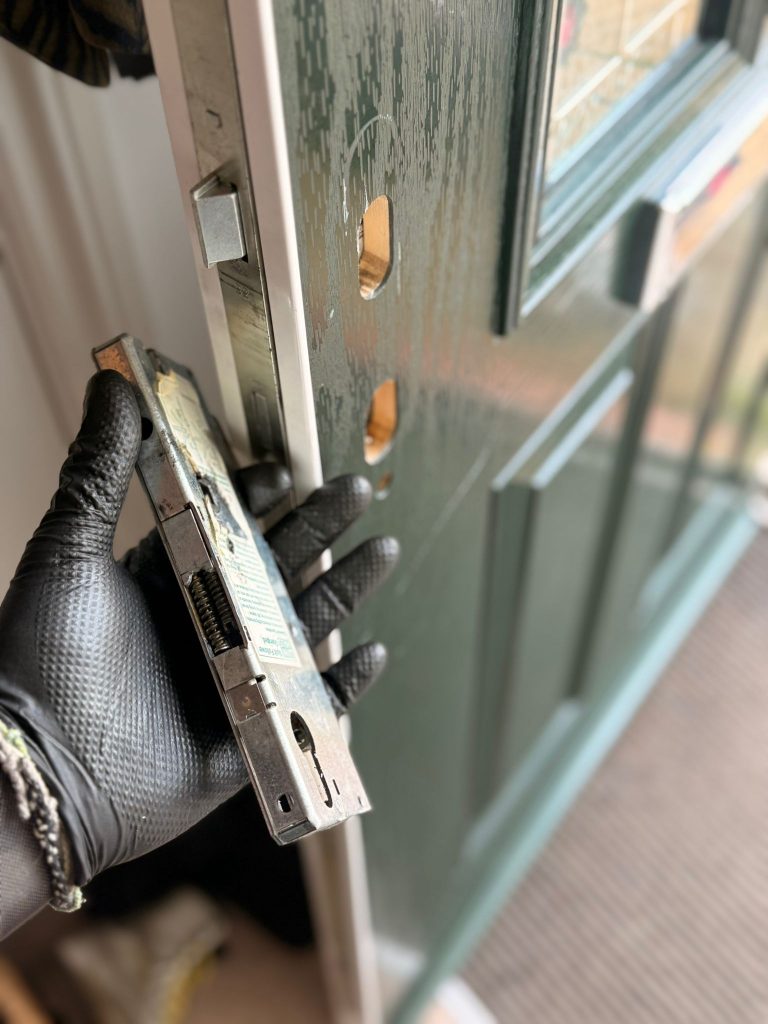
On uPVC and composite doors, the key and handle drive a multipoint mechanism — the strip of hooks, rollers and bolts down the edge of the door. We check whether the handle lifts cleanly, whether the locking points throw and retract properly, and whether the handle spring inside has weakened. A tired mechanism can make a healthy cylinder feel faulty, so getting this right matters.
Alignment, hinges and keeps
We check the gap around the door, the condition of the hinges, and whether the keeps on the frame line up with the locking points. A door that has dropped even a few millimetres puts strain on everything, and adjusting it often solves a “lock” problem without changing the lock at all.
The timber door hardware
On a traditional wooden door we look at the mortice lock or night latch, the springs and levers inside, the strike plate, and how the door sits in a frame that expands and contracts with the weather.
Common causes of lock failure in Nottingham homes
Locks wear out through ordinary use — a front door opened several times a day for years will eventually lose precision, springs weaken and cylinders roughen. But wear is rarely the only culprit.
Misalignment is one of the biggest causes we see across the city, from the older terraces around Sneinton and Radford to the newer estates out towards Clifton and Bulwell. Doors settle, hinges loosen, and the lock has to work harder every time. Poor-quality hardware fitted cheaply on a previous job is another common one — it may still work, but it fails early or offers weak security by current standards. Then there are the one-off events: lost or snapped keys, attempted break-ins, and slamming a door that was already binding.
Symptom, likely cause and first move
| What you’re seeing | Most likely cause | Sensible first move |
|---|---|---|
| Key stiff to turn, worse in cold weather | Dry or dirty cylinder, or a dropped door | Test with door open; note if it eases |
| Stiff only when the door is shut | Alignment — door has dropped or moved | Check gaps and scrape marks on the keep |
| Key turns freely but door won’t lock | Failed cam or worn spindle in the mechanism | Stop using it; the door isn’t secure |
| Handle drops, feels loose or floppy | Weak handle spring or worn multipoint mechanism | Avoid repeated lifting; call before it seizes |
| Grinding or crunching feel | Internal wear or metal-on-metal misalignment | Don’t force it; book a diagnosis |
Why we try to repair before we replace
Not every faulty lock needs replacing, and we do not pretend otherwise. Where the core parts are sound and the trouble is wear, alignment or a single failed component, a repair is usually the sensible route — it costs less, it disturbs less of the door, and it gets you working again the same visit. A worn cylinder can be swapped while the rest of the door gear stays. A misaligned door can be adjusted. A tired handle spring or mechanism can often be replaced on its own.
Replacement earns its place when the hardware is badly worn, outdated, has been forced, or no longer meets sensible security standards. There is no point nursing a lock that leaves the property vulnerable. The job of a straight-talking locksmith is to tell you honestly which camp your door falls into, and to price it before any work starts. If you want to weigh this up in more detail, our guide on whether a door lock can be repaired walks through the decision, and our lock replacement page covers what a proper upgrade involves.
Things to avoid before help arrives
- Don’t keep forcing the key — a snapped key adds a job.
- Don’t spray random oil or WD-40 into the lock. General-purpose oils attract dirt and gum up the cylinder; they feel better for a day, then worse. If you must, use a graphite or PTFE lock lubricant sparingly.
- Don’t dismantle a uPVC or composite mechanism unless you genuinely know the system. It is easy to leave the door unable to lock, or unable to open.
- After a break-in, disturb the lock as little as possible until it has been assessed. Our after-burglary service covers securing and repairing the whole door, not just the cylinder.
When to call a locksmith
Call in a professional when the simple checks point past a quick clean. Specifically: if the lock is still stiff after light lubrication, if the door is clearly out of alignment, if the key feels on the edge of snapping, if the handle has gone floppy or crunchy, or if the key turns but the door will not lock. A door that has been forced or damaged in an attempted break-in should always be looked at, because the frame, keeps and alignment often need attention alongside the lock.
The reason to call early rather than late is simple. A locksmith can tell you quickly whether the fault is the cylinder, the multipoint mechanism, the keeps, the hinges or general door movement — and replacing the wrong part wastes money and fixes nothing. For landlords and letting agents in particular, a proper diagnosis beats a patch that fails a week later and drags you back out. If you are locked out or the door will not secure right now, our emergency locksmiths in Nottingham can get to most of the area quickly.
What lock repair costs with Max the Locksmith
Pricing is deliberately simple: £85 plus parts if any are needed. There is no call-out fee and no out-of-hours surcharge, and it is the same price right across the coverage area — whether you’re in central Nottingham, out in Arnold or Beeston, or over towards Derby, Mansfield or Loughborough. Max diagnoses the fault, agrees the price before starting, and completes most jobs in the same visit thanks to carrying the common cylinders and mechanisms as standard. The work is done by a certified, DBS-checked, Checkatrade-approved and fully insured locksmith, backed by more than 600 local reviews. You can see the full areas covered if you’re unsure whether you’re in range.
Acting early is the whole trick
Most lock problems are cheaper and simpler when they are caught at the “it’s a bit stiff” stage rather than the “I can’t get in” stage. A sticky cylinder, a sagging handle or a door that needs lifting to lock might feel manageable, but those are exactly the faults that become awkward and expensive later. If something doesn’t feel right, run the quick checks, note what you find, and get it looked at before the door stops cooperating altogether. A good repair should leave you with a lock that turns cleanly, a door that closes as it should, and one less thing hanging over the house.
Frequently asked questions
How do I know if my lock needs repairing or replacing?
If the core parts are sound and the trouble is wear, dirt, alignment or a single failed component, a repair is usually enough. Replacement makes sense when the hardware is badly worn, outdated, has been forced, or no longer meets sensible security standards. A quick diagnosis tells you which applies, and Max always advises the repair-first option where it’s genuinely the right call.
Should I put oil or WD-40 in a stiff lock before you arrive?
No. General-purpose oils and WD-40 attract dust and gum up the cylinder, so the lock feels better briefly then worse. If you want to try something, use a graphite or PTFE lock lubricant sparingly. Never keep forcing a stiff key, as a snapped key makes the job harder.
How much does lock repair in Nottingham cost?
It’s £85 plus parts if any are needed, with no call-out fee and no out-of-hours surcharge. The price is the same across Nottingham, Derby, Mansfield, Loughborough and the surrounding towns and villages, and most jobs are completed in a single visit.
Can you fix the lock the same day?
Usually, yes. Max carries the most common cylinders and mechanisms as standard, so the majority of lock repairs are diagnosed and completed on the first visit rather than waiting for parts.
My key turns but the door won’t lock — is that urgent?
Yes. If the key spins freely without throwing the bolts, the mechanism has failed and the door isn’t secure. Stop using it and call, as this is the kind of fault that leaves a property vulnerable until it’s repaired.
Sorted? What most readers check next
- Locksmith Nottingham — all services
- Locksmith prices in Nottingham — the transparent 2026 guide
- Key Snapped in Lock? What to Do Next (Nottingham Guide)
Need it sorted today? Call 07552 421433 — £85 + parts (+ VAT), no call-out fee, same price 7 days.