




Can You Replace a uPVC Door with a Composite Door?
If your front door is warped, draughty, tired-looking or a daily fight to lock, it is natural to ask whether you can replace a uPVC door with a composite door. The short answer is yes, in most cases you can, and plenty of homeowners across Nottingham do exactly that. The more useful question is whether the new door can be fitted properly to your existing opening, whether it is genuinely worth the outlay, and whether the honest answer for your door might actually be a repair rather than a full replacement. This guide walks through the swap from start to finish: what is involved, roughly what it costs, when it makes sense, and when Max would tell you to keep the door you have got.
Can you swap a uPVC door for composite without changing the frame?
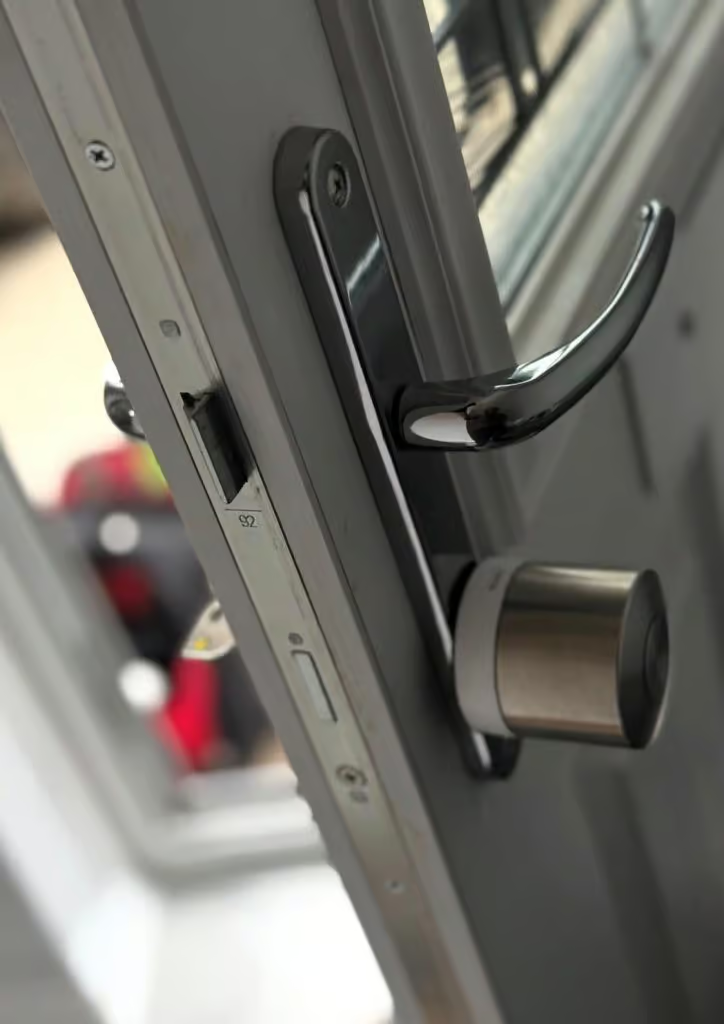
Sometimes, but not always, and this is where a lot of people get caught out. A composite door is generally thicker and heavier than a standard uPVC door. Because of that, an old uPVC frame may not be suitable even when the opening size looks about right. Some frames were never designed to carry the extra weight, and existing hinge positions, lock centres and rebate details often do not line up cleanly enough for a proper fit.
In theory, if the frame is in genuinely good condition and the measurements match the new door slab exactly, a door-only replacement can be possible. In practice, fitting a full door set, frame and door together, is frequently the better option. It gives you a matching frame, fresh seals, correctly aligned locking keeps and a cleaner finish inside and out. It also removes the risk of future headaches such as dropped hinges, stiff locking or gaps that let draughts in. If your current frame is bowed, cracked, loose or has already been patched, keeping it usually turns a straightforward job into a compromise.
Why homeowners swap from uPVC to composite
Most people are not changing doors on a whim. There is usually a clear reason behind it.
- Security. A well-fitted composite door with a proper multipoint mechanism and an anti-snap cylinder is a noticeable step up from an older uPVC setup, particularly if the existing mechanism is worn or the frame has movement in it.
- Insulation. Older uPVC doors let cold air in around tired seals or warped panels. Composite doors feel more solid and tend to hold heat and cut noise better.
- Appearance. A dated white uPVC door can age the whole front of a house. A composite door gives a neater, more modern finish, or a more traditional look where that suits the property.
- Reliability. If you are lifting the handle, jiggling the key and shouldering the door every day, that is a sign the door, frame or mechanism is past its best.
Is it worth replacing a uPVC door with composite?
For many homes, yes. If your current uPVC door is relatively new, secure and still working well, changing it purely for looks may not be urgent. But if it is older, draughty, worn at the locks or giving you regular trouble, moving to a composite door is a worthwhile upgrade. It is especially worth considering if you are already paying repeatedly for adjustments or lock work on a failing setup. There comes a point where patching costs more in hassle than fitting something that simply works.
Composite doors also tend to last longer, in the region of 30 to 35 years against 20 to 25 for uPVC, and hold their appearance better over that time, so spread across the door’s life the extra cost is easier to justify. For owner-occupiers the gain is usually a mix of better security, better kerb appeal and a door that feels right every time. For landlords and letting agents, the bigger win is reliability and fewer maintenance call-outs.
Roughly what does it cost?
As a general guide, a uPVC door tends to be the more affordable option to supply and fit, while a composite door is typically the dearer of the two, often by a meaningful margin, with a full door set costing more again than a door-only swap. Prices vary widely with the door specification, the glazing, the hardware and the state of the opening, so any figure worth acting on comes from an on-site assessment rather than a brochure. What is worth knowing is that spread over a composite door’s longer lifespan, and factoring in the energy and kerb-appeal benefits, the yearly cost gap against uPVC narrows considerably.
Please note that Max is a locksmith rather than a door showroom, so the value he adds here is honest, independent advice on whether a replacement is the right move, and expert work on the locking side of any new door. If a repair will serve you better, he will say so.
What needs checking before you order a new door
Before anyone orders a composite door, the opening needs assessing properly. Measurements come first, but not just width and height.
- Frame squareness and condition. A fitter should check whether the opening is square, the state of the brickwork fixing points, threshold levels and clearance. If the old frame has twisted over the years, the numbers on paper will not tell the whole story.
- The locking arrangement. Many uPVC doors use multipoint mechanisms with specific backsets, handle centres and keep positions. A composite door can absolutely be fitted with modern secure locking, but it has to be specified correctly, or you end up with a door that shuts but never quite locks smoothly.
- Hinges and reinforcement. Composite doors are heavier, so the hinge type and frame reinforcement must suit the weight, or the door will drop over time and become hard to close and lock.
- The threshold. If you have young children, elderly relatives or want easier access, this is the moment to improve the step height and weather sealing rather than copying the old arrangement.
Door only or full frame replacement?
This is usually the key decision. A door-only replacement looks cheaper at first, but it is only worth doing when the frame is genuinely sound and compatible. If the frame is older, discoloured, damaged or slightly out of shape, fitting a new composite door into it leaves you with a mismatch in both looks and performance. A full frame replacement costs more, but it often gives better long-term value: everything is installed as one system, so there are fewer weak points, the door seals correctly, the keeps sit where they should, and the finish is cleaner throughout. For landlords, the full door set is often the sensible route because it cuts the chance of call-backs for sticking locks, draughts or doors that need adjusting every few months.
How much disruption is involved, and what can go wrong?
In most straightforward cases, replacing a front or back door is not a major building job. Once the door has been made to measure and is ready to fit, the installation itself is usually completed within the day: the old door and frame come out, the opening is prepared, the new frame is fixed in place, and the door is hung and aligned before the handles, cylinder, keeps and seals are checked and finished off.
The part that matters most is not raw speed but a precise fit, so the door closes evenly, locks without force and sits square in the frame. A rushed job leaves you with a door as frustrating as the old one. The usual culprit is misalignment, the latch catching or the handle needing too much force, followed by weak sealing where the frame has not been packed correctly and lets in draughts or water. Lock compatibility gets overlooked too: not every cylinder or mechanism is worth fitting just because it is cheap, and on an external door quality matters. A door replacement is neither purely a joinery job nor purely a lock job, which is exactly why an experienced eye on the locking side is worth having. Our lock replacement service makes sure the cylinder and mechanism on a new door are specified and fitted properly. For the same reason, this is rarely a good DIY project: getting a heavy composite door aligned, packed and locking cleanly is where experience earns its keep, and a poor fit usually has to be paid for twice.
When to get the door checked instead of replaced
Not every uPVC door needs replacing, and this is where Max’s repair-first approach saves people real money. If the problem is a failed multipoint mechanism, a worn cylinder, a loose handle or a dropped sash, the door is very likely repairable. A great many doors that feel ready for the skip actually just need adjustment or replacement parts, especially where the panel and frame are still in good order. A sensible assessment should tell you honestly whether a repair will give you years more use or whether the frame and door have genuinely reached the end of the road. There is no point spending on a new door if a repair will do, and no point repeatedly patching a setup already on borrowed time. Our door repair service exists to make exactly that call.
When to call a locksmith
It is worth getting an independent opinion before committing to a costly replacement. Call a locksmith if:
- You are unsure whether your door needs replacing or just repairing
- A door company has quoted you for a full replacement and you want a second opinion
- Your new door has been fitted but does not lock smoothly or feels misaligned
- You want the factory-fitted cylinder on a new composite door upgraded to a higher-specification anti-snap unit
- Your existing door is sticking, dropping or failing to lock
If your door has failed and you cannot secure your home, our emergency locksmith service covers Nottingham and the surrounding towns.
What Max charges
For lock work, cylinder upgrades and door repairs, Max charges £85 plus parts if any are needed, with no call-out fee and no out-of-hours surcharge, and the same price across the whole coverage area, from Nottingham to Derby, Mansfield, Loughborough and the villages around them. He is certified, DBS-checked, Checkatrade-approved, fully insured and has more than 600 local reviews. Whether you are keeping your uPVC door or moving to composite, the fault or the requirement is assessed first, the price is agreed up front, and most jobs are done on the same visit. See where Max works on our areas covered page.
Frequently asked questions
Can you replace a uPVC door with a composite door in the same frame?
Sometimes, if the frame is in genuinely good condition and the measurements match the new slab exactly. Often, though, a full door set is the better choice, because composite doors are thicker and heavier and the old frame may not carry the weight or line up cleanly. A proper on-site assessment is the only reliable way to know which route suits your opening.
Is it worth replacing a uPVC door with a composite one?
If your uPVC door is old, draughty, worn at the locks or giving constant trouble, then yes, a composite door is usually a worthwhile upgrade for security, insulation and appearance, and it tends to last longer too. If your uPVC door is fairly new and still working well, replacing it purely for looks is less pressing, and a repair may be the smarter spend.
How long does it take to fit a composite door?
Once the door has been made to measure and is ready to fit, the installation itself is usually completed within a day in most straightforward cases. The important part is not speed but a precise fit, so the door closes evenly, locks without force and sits square in the frame.
Can I fit a composite door myself?
It is not a job most people should take on. Composite doors are heavy and must be aligned, packed and fixed precisely, or they will drop, stick or never lock smoothly. A poor fit can also compromise security and often has to be corrected later, so professional installation is the safer choice.
My uPVC door is playing up. Do I definitely need a new one?
Very often, no. Faults like a failed multipoint mechanism, a worn cylinder, a loose handle or a dropped door are usually repairable, especially where the panel and frame are still sound. It is well worth having the fault diagnosed before committing to a replacement, as a repair frequently gives years more use at a fraction of the cost.
Sorted? What most readers check next
- Door repairs — uPVC, composite, wooden, patio & bifold
- Locksmith prices in Nottingham — the transparent 2026 guide
- How to Make a uPVC Door More Secure (Cheap Wins)
- uPVC Door Handle Replacement: How to Measure & Fit
Need it sorted today? Call 07552 421433 — £85 + parts (+ VAT), no call-out fee, same price 7 days.