




uPVC Door Handle Replacement: How to Measure & Fit
Replacing a uPVC door handle looks simple until you’re stood in a shop or scrolling a website faced with a wall of near-identical handles — and the wrong one simply won’t fit. uPVC door handles aren’t sold as “one size fits all”; they’re specified by a small set of measurements that have to match your door exactly. Get them right and fitting a new handle is a ten-minute job. Get them wrong and you’ll be sending it back. Here’s how to measure properly, what to look for in a secure handle, and how the fitting itself works.
Why measurements matter so much here
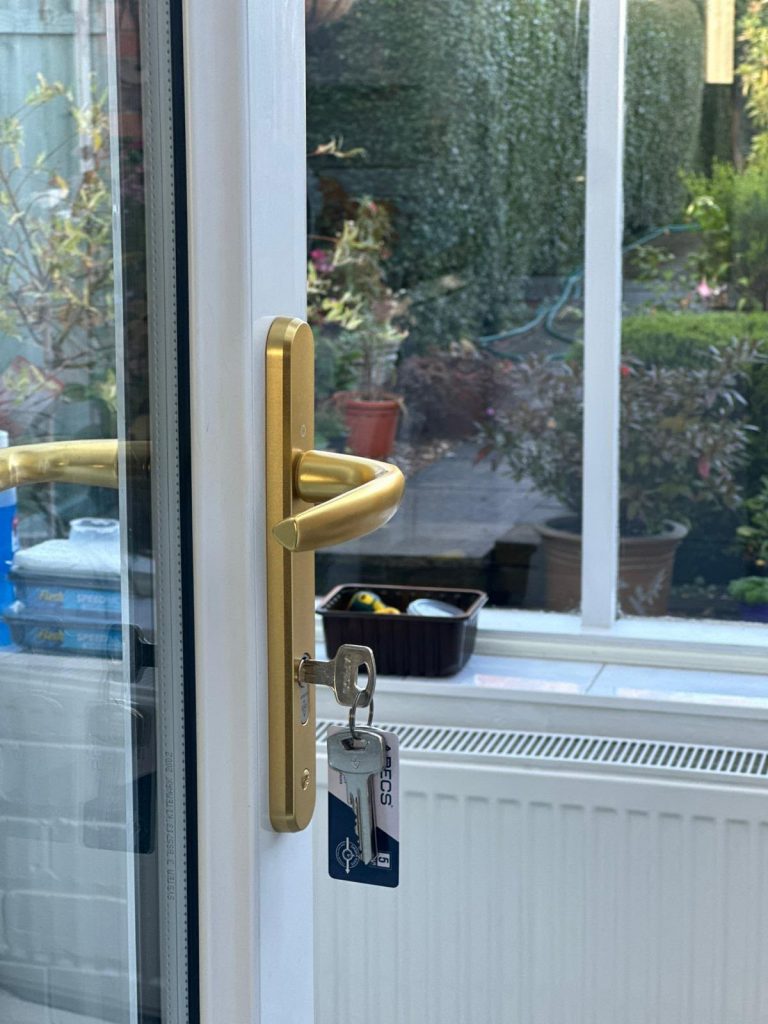
A uPVC door handle isn’t just a decorative lever — it connects directly to the multipoint mechanism inside the door edge via a metal spindle, and it sits over the euro cylinder via a keyhole cut-out. If the measurements are even a few millimetres out, the spindle won’t reach, the screw holes won’t line up, or the keyhole won’t sit over the cylinder. Three measurements matter, and all three need to be right.
The three measurements you need
1. PZ (the backset)
PZ — sometimes written “PZ 92” or similar — is the distance from the centre of the spindle hole to the centre of the keyhole, measured in millimetres. This is the single most important measurement, because it’s specific to your door.
How to measure it: remove your existing handle (or measure with it still on) and measure from the middle of the square spindle hole to the middle of the keyhole, in a straight horizontal line. The most common UK sizes are PZ 92mm and PZ 85mm, though other sizes exist, so always measure rather than assume. If you’re unsure which is which, the spindle hole is the larger, roughly square opening; the keyhole is the smaller opening the cylinder’s key slot sits within.
2. Screw-fixing centres
Separately from PZ, you need the distance between the two screws that hold the handle backplate to the door (the long screws that pass through to the handle on the other side). This is usually a fixed industry-standard distance, but measure it rather than assuming it matches the PZ measurement — the two are different things.
3. Spindle size
The spindle is the square bar running through the door that connects the two handles and drives the multipoint mechanism. UK uPVC doors almost always use an 8mm spindle, but check it, particularly on older doors, since a spindle that’s the wrong size or has excessive play means the handle won’t grip properly — the loose, wobbly symptoms covered in our guide on a loose or dropped uPVC door handle.
Measuring checklist
- [ ] Measure PZ: centre of spindle hole to centre of keyhole (commonly 92mm or 85mm)
- [ ] Measure screw-fixing centres between the two backplate screws
- [ ] Confirm spindle size (commonly 8mm)
- [ ] Note the finish/colour you need (chrome, satin, gold, white, black, etc.)
- [ ] Check whether your door uses a lever/pad, lever/lever, or pull handle style
Getting these right before you buy saves the return trip.
Choosing the right handle — and choosing a more secure one
Once you know your measurements, you’re choosing between a huge range of styles and finishes — that part’s down to taste. But there’s one decision worth making deliberately: standard handles versus security handles.
A standard handle does its job under normal use, but isn’t designed to resist attack. A technique called lock snapping targets the euro cylinder directly, and once a cylinder has snapped, a standard handle offers very little resistance to someone reaching through and operating the mechanism from inside.
Security handles — sometimes called anti-snap handles — are built differently. They typically incorporate a hardened steel plate or reinforced backplate that shields the cylinder, making it far harder to attack directly. Genuine security handles are tested and certified to TS007, the industry standard for door hardware security, rated using a star system — cylinders are rated 1-star or 3-star, and security handles are rated 2-star. A 1-star cylinder behind a 2-star handle gives the same protection as a 3-star cylinder on its own; the strongest set-up is a 3-star cylinder with a 2-star handle. Fitting a two-star rated handle alongside an anti-snap cylinder is one of the most cost-effective security upgrades available for a uPVC door.
If you’re replacing a handle anyway, it’s worth spending a little more here, particularly on a door that doesn’t already have an anti-snap cylinder fitted — our guide on lock replacement covers cylinder upgrades in more detail.
Fitting steps
- Remove the old handle. Undo the two long fixing screws (usually on the edge of the interior handle, or under a small cover). The plates separate and the old handle lifts away from the spindle.
- Check the spindle. If it’s worn, bent, or the wrong length, replace it now — fitting a new handle onto a worn spindle just reintroduces the same looseness.
- Fit the new backplate. Position the exterior handle, pass the spindle through, and offer up the interior handle so the screw holes line up.
- Insert and tighten the fixing screws evenly, a little at a time on each side, so the handle sits flush without binding.
- Test before fully closing the door. Lift the handle fully with the door open to confirm the mechanism engages smoothly, then test locking and unlocking with the door closed.
- Check the key still turns smoothly in the cylinder now the new handle is in place.
If the handle feels stiff or doesn’t spring back once fitted, don’t force it — double check the spindle size and PZ measurement, since a slightly wrong fit shows up exactly this way.
When to call a locksmith instead
Fitting a like-for-like handle is a manageable DIY job for most people once the measurements are confirmed. It’s worth calling a professional when:
- you’re not confident measuring PZ or spindle size accurately and don’t want to guess,
- you want a genuine TS007 2 Star security handle fitted correctly alongside a cylinder check,
- the spindle or multipoint mechanism needs attention as well as the handle, or
- the door has other issues — sticking, dropping, or not locking properly — that are worth diagnosing at the same time.
Max fits and replaces uPVC door handles across Nottingham, Derby, Mansfield, Loughborough and the surrounding towns and villages — £85 plus parts if any are needed, no call-out fee, and the same price wherever you are in the coverage area. See our full areas covered. Most handle replacements, including security upgrades, are completed on the first visit with the price agreed before work starts.
Frequently asked questions
What is PZ on a uPVC door handle?
PZ is the distance in millimetres from the centre of the spindle hole to the centre of the keyhole. It’s the key measurement for matching a replacement handle to your door — common sizes are 92mm and 85mm.
What size spindle do uPVC doors use?
Most UK uPVC doors use an 8mm spindle, but it’s worth checking on older doors or where the handle has been changed before, since a mismatched spindle causes looseness and poor engagement with the mechanism.
Are security handles worth fitting on a uPVC door?
Yes, generally. A TS007 2 Star rated handle, especially combined with an anti-snap cylinder, significantly improves resistance to lock snapping, which is one of the most common ways uPVC doors are forced.
Can I fit a uPVC door handle myself?
Yes, if you’ve measured PZ, screw centres and spindle size correctly. The fitting itself is a short job with a screwdriver. If you’re unsure of the measurements or want a security handle fitted properly, a locksmith can measure and fit it in one visit.
How much does it cost to replace a uPVC door handle in Nottingham?
Max charges £85 plus parts if any are needed, with no call-out fee, the same price across Nottingham, Derby, Mansfield and the surrounding area.
Related: uPVC & Door Lock Repair · Lock Replacement & Upgrades · Areas Covered · uPVC Door Handle Loose or Dropped?
Sorted? What most readers check next
- uPVC door repairs — mechanisms, gearboxes & alignment
- Locksmith prices in Nottingham — the transparent 2026 guide
- uPVC Door Handle Loose or Dropped? Causes and Fixes
- uPVC Door Lock Replacement Cost Explained
Need it sorted today? Call 07552 421433 — £85 + parts (+ VAT), no call-out fee, same price 7 days.