




Common uPVC Door Problems and How to Fix Them
uPVC doors are the workhorses of the British home. They are durable, well insulated and largely trouble-free, which is exactly why the common uPVC door problems that do crop up tend to catch people off guard. A door that has behaved perfectly for years starts sticking, the handle goes floppy, or the key suddenly refuses to turn on a cold morning. The good news is that the overwhelming majority of these faults are mechanical, predictable, and repairable, and Max sees every one of them week in, week out across Nottingham, Derby, Mansfield and Loughborough. This guide walks through each fault in turn, explains what is actually causing it, tells you what you can safely check yourself, and makes clear when it is time to call a locksmith before a minor niggle turns into a lockout.
Why uPVC doors develop faults in the first place
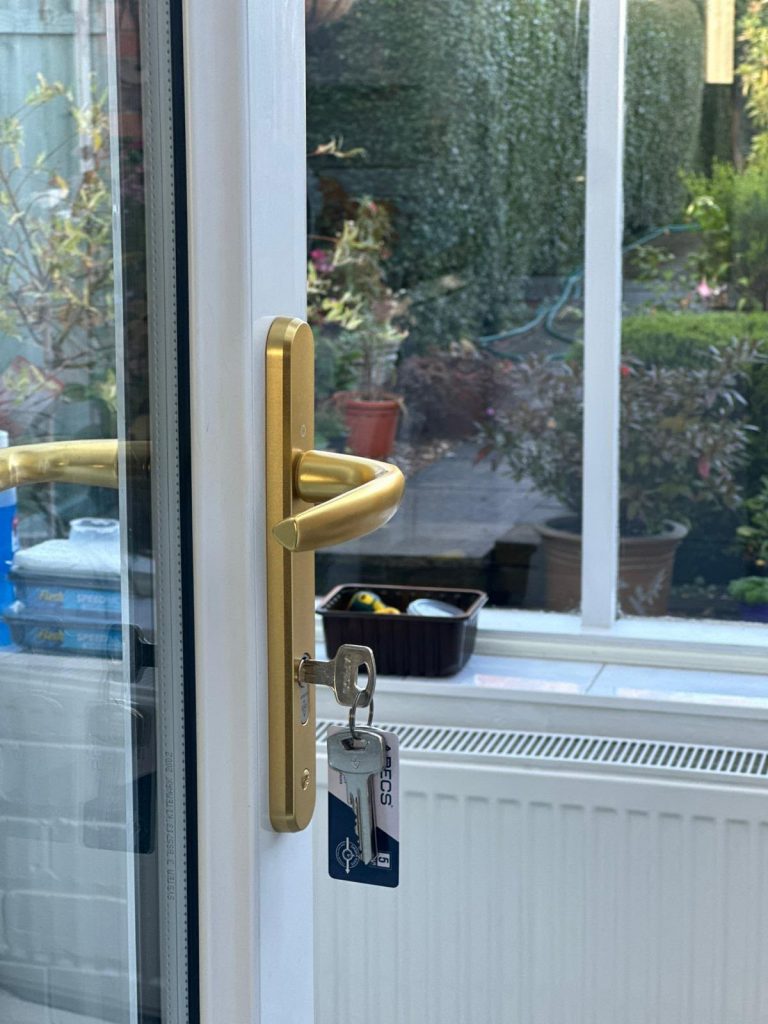
A uPVC door is a system, not a single object. You have the door leaf, the frame, the hinges, the weather seals, the euro cylinder, the handle set and the multipoint mechanism that runs the full height of the door edge. Every one of those parts is under load every time the door is opened, closed and locked. Wear is normal, and it tends to arrive in the same order.
The usual culprits behind uPVC door problems are:
- Daily opening and closing, which slowly wears moving parts
- Seasonal expansion and contraction as temperatures swing
- Minor settlement or movement in the building itself
- Hinges drifting out of position under the weight of the door
- A worn or under-lubricated multipoint mechanism
- Perished weather seals letting in draughts and damp
- An ageing euro cylinder that has become stiff or unreliable
Almost every symptom below traces back to one of those root causes. Diagnosing the actual fault, rather than throwing parts at it, is the difference between a lasting repair and a door that plays up again in six months.
Symptom-to-cause quick reference
Before we go through each fault in detail, this table maps the most common complaints to their likely cause and the typical fix. It is a starting point for diagnosis, not a substitute for a proper inspection.
| What you notice | Most likely cause | Typical fix |
|---|---|---|
| Door catches on the frame near the bottom or latch side | Dropped door / hinge drift | Hinge adjustment or re-fixing |
| Have to lift the handle hard before the key will turn | Alignment out, or worn multipoint mechanism | Realign door, service or replace mechanism |
| Handle is loose, floppy or drops on its own | Worn handle spring or sheared spindle | Replace handle set and spindle |
| Key is stiff or hard to turn in the cylinder | Dry, dirty or worn euro cylinder | Lubricate, or replace the cylinder |
| Handle lifts but the bolts never throw | Failed multipoint mechanism | Replace the multipoint mechanism |
| Cold draught or whistling around the edge | Perished weather seals | Replace the seals |
| Grinding or clicking when operating the lock | Wear or misalignment inside the mechanism | Inspect before it fails completely |
1. The door has dropped
A dropped door is the single most common uPVC complaint, and it is the root cause behind several others on this list. Over years of use, the weight of the leaf gradually pulls the hinges very slightly out of position. A drop of just two or three millimetres is enough to make the door catch on the frame, throw the locking points out of line with their keeps, and leave you fighting the handle every time you lock up.
Signs of a dropped door
- The door scuffs or catches on the frame or threshold as it closes
- Uneven gaps around the edge, wider at the top than the bottom on the latch side
- You have to lift or shoulder the door to get it to lock
- The latch no longer lines up cleanly with its keep
How it is fixed
Most uPVC hinges have adjustment built in, and a correct hinge adjustment usually brings the door back into square. It sounds simple, and on a good day it is, but getting all three or four hinges balanced so the door sits evenly and the locking points meet their keeps takes a practised eye. Over-adjusting one hinge just transfers the strain elsewhere and can leave the frame taking load it was never meant to carry. Fixing a dropped door early is one of the cheapest ways to protect the far more expensive mechanism behind it.
2. The door is difficult to lock
If locking the door has become a wrestling match, do not force it. A door that needs the handle heaving upward, or the key forced round, is telling you something is out of alignment or wearing internally.
Common causes
- A dropped door pulling the locking points off their keeps
- A worn or stiffening multipoint mechanism
- Dirt or grit inside the mechanism or cylinder
- Seasonal swelling of a timber-cored composite equivalent
The important thing here is what not to do. Forcing the handle or the key when a door is stiff is how a manageable adjustment turns into a snapped mechanism or a broken key. Once the mechanism shears, you are into a replacement rather than a service, and if it happens while the door is locked you may be shut out entirely. Ease off, and get it looked at while it is still merely annoying. Our door lock repair service exists precisely to catch faults at this stage.
3. The handle is loose, floppy or won’t lift the latch
Door handles take a beating. They are grabbed, yanked and leaned on countless times, and eventually the tension goes out of them.
What causes it
- A worn or broken handle spring, so the handle no longer springs back
- A sheared spindle, the square bar that connects the two handles
- Loose fixing screws behind the handle plate
- General wear inside the handle mechanism
How it is fixed
A handle that has simply worked loose can sometimes be tightened. More often, a floppy handle that drops under its own weight or no longer lifts the latch cleanly means the internal handle spring or the spindle has failed, and the handle set needs replacing. This is usually a quick job with the right part, and it does not mean touching the multipoint mechanism inside the door. Ignore it, though, and a failing handle can eventually leave you unable to operate the door at all.
4. The key is stiff or hard to turn
A key that has become harder to turn over time is one of the earliest warning signs that a euro cylinder is on its way out, or simply that it is dry and dirty.
Common causes
- Lack of lubrication inside the cylinder
- Dirt, dust or grit working into the mechanism
- Internal wear on the cylinder pins after years of use
- The door being slightly out of alignment, loading the cylinder
How it is fixed
The first step is a proper clean and lubrication with a suitable lock lubricant. Standard oil or general-purpose spray is the wrong choice here; it attracts dust and gums the mechanism up over time, making things worse. If the cylinder is genuinely worn, it is replaced, which is also the perfect moment to upgrade to an anti-snap, anti-drill, anti-pick cylinder if the current one is a basic unit. A stiff key is worth acting on quickly, because a cylinder that fails completely can leave the door unusable.
5. The multipoint locking mechanism has failed
Most modern uPVC doors lock at several points up the frame using a multipoint mechanism. When you lift the handle, hooks, rollers and bolts throw out along the door edge and engage into keeps in the frame. It is a genuinely good security design, but the mechanism is a mechanical assembly and it can wear out.
Signs the mechanism is failing
- The handle lifts but the bolts do not throw, or only some engage
- The locking points visibly miss their keeps
- The door will not secure properly even though it looks shut
- Excessive force is needed to operate the lock
How it is fixed
The reassuring part is that a locksmith can nearly always replace the multipoint mechanism itself without replacing the whole door or even the handle and cylinder. The old strip is removed from the edge of the door and a matching one fitted in its place. Identifying the correct replacement, from the many mechanisms on the market, is where local experience pays off, and it is a fraction of the cost of a new door. If you are weighing up whether the mechanism justifies a new door, our guide on uPVC door repair covers where that line sits.
6. The door won’t close properly
A door that no longer closes cleanly is not just an irritation; it compromises both security and warmth. If it will not shut, it cannot lock, and the heat pours out around it.
Common causes
- A dropped or misaligned door catching the frame
- Worn or shifted hinges
- Frame distortion or building movement
- Debris or a swollen seal in the way
A professional adjustment usually sorts this quickly, and dealing with it early prevents the extra strain a misaligned door puts on the locking mechanism every time you force it shut.
7. Draughts around the door
If you can feel cold air creeping in around a closed uPVC door, or you have noticed your heating working harder, the weather seals are the likely culprit. The rubber gaskets that run around the door and frame perish, flatten and split over time.
What to look for
- Cold spots or a felt draught near the door edges
- Whistling in windy weather
- Water getting in at the threshold
- Heating bills creeping up without obvious reason
Replacing the perished weather seals restores the door’s insulation and comfort, and it is an inexpensive, high-value fix, especially heading into a Nottinghamshire winter.
8. Grinding, clicking or crunching noises
Unusual noises from the lock or hinges are a door talking to you. They almost always mean something is wearing or misaligning inside the mechanism before it fails outright.
Possible causes
- Worn components inside the multipoint mechanism
- Misalignment forcing parts against each other
- Loose or dry hinges
- A cylinder or handle mechanism crying out for lubrication
Noise is your early-warning system. A quick inspection at this stage can identify the source and head off a full failure, which is far cheaper than dealing with the aftermath of a mechanism that has seized with the door locked.
9. The door is no longer secure
Sometimes a uPVC door still opens and closes but simply is not offering the protection it should. This is easy to overlook precisely because nothing has obviously broken.
Warning signs
- Play or movement in the door even when it is locked
- Locking points that do not fully engage
- An old, basic euro cylinder with no anti-snap rating
- The lock feeling loose or vague when you turn it
Upgrading to a modern anti-snap cylinder and tightening up worn locking components can transform how secure a door actually is. If you have recently experienced an attempted break-in, our after-burglary service restores security fast and honestly.
Preventing uPVC door problems before they start
A little maintenance goes a long way with uPVC doors, and most of it takes minutes. Looking after the moving parts dramatically reduces wear on the expensive mechanism inside.
- Lubricate the multipoint mechanism, cylinder and hinges once or twice a year with a proper lock lubricant
- Avoid slamming the door, which shocks the mechanism and hinges
- Check the alignment periodically and act on the first sign of catching
- Tighten any loose handle or hinge screws promptly
- Replace perished weather seals before draughts and damp set in
- Never force a stiff handle or key; treat stiffness as a prompt to get it checked
When to call a locksmith
Some checks are fine to do yourself, but there is a clear point where a repair is a job for a professional. Call a locksmith if you notice any of the following, and ideally before the fault becomes a lockout:
- The door is becoming difficult to lock or unlock
- The handle has gone stiff, loose or floppy
- The door has dropped, catches, or will not close cleanly
- One or more locking points are failing to engage
- The key is hard to turn or you have snapped a key in the lock
- You have any doubt about how secure the door actually is
Acting early almost always means a cheaper, simpler repair, and it is the surest way to avoid being shut out. If you are already locked out, our emergency locksmith service across Nottingham will get you back in without unnecessary damage.
Repair first, replace only when it’s genuinely needed
The single most important thing to understand about uPVC door problems is that dropped doors, faulty handles, failed mechanisms, stiff cylinders and poor alignment are almost always repairable. Door companies have an obvious incentive to steer you toward a full replacement, because a new door costs far more than a mechanism swap. Max’s approach is the opposite: diagnose the actual fault and repair it wherever a repair is a sound, lasting fix. Replacement is only genuinely necessary when the frame itself is damaged, has taken on water at the base, or has been drilled and reworked so many times over the years that a clean repair is no longer practical. If that is the case, he will tell you plainly.
What Max charges
Pricing is simple and there are no surprises. Max charges £85 plus parts if any are needed. There is no call-out fee and no out-of-hours surcharge, and it is the same price right across the coverage area, whether you are in Nottingham, Derby, Mansfield, Loughborough or a village in between. Max is certified, DBS-checked, Checkatrade-approved, fully insured and backed by more than 600 local reviews. Most uPVC door faults are diagnosed and fixed on the same visit, and the price is always agreed with you before any work starts. You can see the full list of towns and villages covered on our areas covered page.
Frequently asked questions
Why is my uPVC door suddenly difficult to lock?
The most common reason is that the door has dropped very slightly on its hinges, pulling the locking points out of line with their keeps in the frame. A worn multipoint mechanism, a stiff cylinder or a build-up of dirt can also be to blame. Whatever the cause, avoid forcing the handle or key, as that risks breaking the mechanism. A locksmith can usually realign the door or service the mechanism quickly.
Can a dropped uPVC door be repaired, or does it need replacing?
It can almost always be repaired. A dropped door is caused by the hinges drifting under the weight of the leaf, and adjusting or re-fixing the hinges brings it back into square. This is a routine, cost-effective repair, and dealing with it early prevents the strain a dropped door puts on the locking mechanism. Replacement is rarely needed for a drop alone.
My handle lifts but the door still won’t lock. What’s wrong?
If the handle lifts normally but the bolts do not throw or the door will not secure, the multipoint mechanism inside the door edge has most likely failed. In the great majority of cases a locksmith can replace that mechanism on its own, without fitting a whole new door or replacing the handle and cylinder, which keeps the cost well down.
Should I put WD-40 or oil in a stiff uPVC lock?
No. General-purpose oils and sprays attract dust and grit, which gums the mechanism up and makes stiffness worse over time. Use a proper lock lubricant designed for the job, applied sparingly. If a clean and lubricate does not free things up, the cylinder or mechanism may be worn and should be inspected rather than forced.
How often should a uPVC door be maintained?
Once or twice a year is plenty for most doors. Lubricate the mechanism, cylinder and hinges, check the seals, and make sure nothing is catching or has worked loose. This small amount of upkeep noticeably extends the life of both the door and its locking mechanism and heads off the faults that otherwise creep up on you.
Sorted? What most readers check next
- uPVC door repairs — mechanisms, gearboxes & alignment
- Locksmith prices in Nottingham — the transparent 2026 guide
- How to Make a uPVC Door More Secure (Cheap Wins)
- uPVC Door Handle Replacement: How to Measure & Fit
Need it sorted today? Call 07552 421433 — £85 + parts (+ VAT), no call-out fee, same price 7 days.