




Door Repair Service for Stuck or Damaged Doors
A door that suddenly drops, scrapes the floor, refuses to lock or will not close cleanly has a habit of hijacking the whole day. In most cases a proper door repair service for a stuck or damaged door is the quickest way to get things secure again without guessing, forcing the mechanism or turning a small fault into a big one. Doors rarely fail all at once. They warn you first: the handle feels loose, the key starts catching, the latch needs a shove, or the door only locks if you lift it. Those signs matter, and this guide explains what actually gets repaired, why doors stick and fail, and when it is time to call a locksmith.
The important thing to understand is that a stuck or damaged door is almost never a single problem. A door that is hard to lock might have a worn hinge, a dropped slab, a tired locking mechanism or a frame that has moved with the seasons, and often it is two or three of those at once. That is exactly why swapping one part on a hunch so often fails to fix it. A methodical door repair diagnoses the real cause first, then puts right only what needs putting right.
What a door repair service actually covers
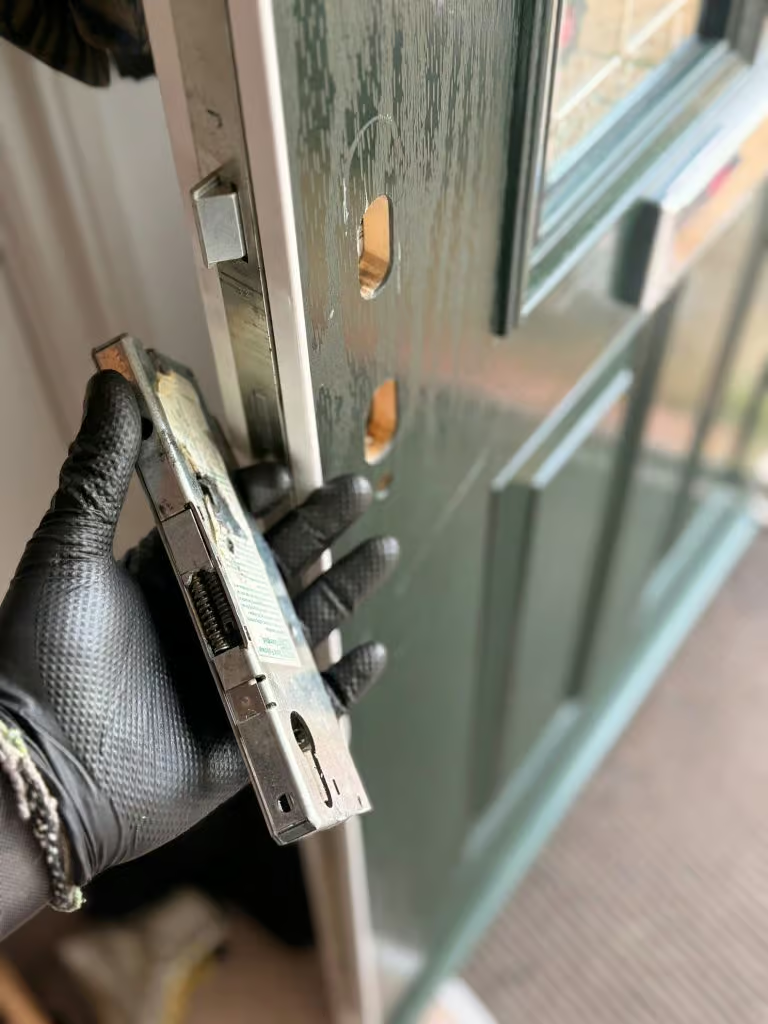
Most people picture a locksmith as someone who only opens locked doors. In practice, the larger part of the work is repairing doors that still open but no longer behave. On a typical stuck-or-damaged-door visit, the areas checked and repaired include:
- Alignment — where the door sits in the frame. A door that has dropped even a few millimetres will catch on the frame, drag on the floor or refuse to throw its bolts.
- Hinges — worn, loose or corroded hinges let the door sag, which pulls everything out of line and strains the lock.
- The locking mechanism — on uPVC and composite doors this is the multipoint mechanism running down the edge of the door; on timber doors it is usually a mortice lock. Both wear over time.
- Handles and handle springs — a floppy or stiff handle often points to wear in the handle mechanism or a broken handle spring rather than the handle itself.
- Euro cylinders and keeps — the barrel the key turns, and the metal plates in the frame the bolts drop into. Misaligned keeps are a very common cause of a door that “won’t lock”.
- Frames and weather seals — split, swollen or badly weathered frames, and perished seals that let in draughts and let the door move.
The goal is never to replace everything on sight. It is to find the fault, agree the fix, and get the door closing and locking as it should.
Why doors get stuck or stop locking
Nearly every stuck or damaged door comes down to wear, movement or accidental damage, and usually a combination.
uPVC and composite doors
These look simple from the outside, but the hardware inside is not. A family front door is opened and shut dozens of times a day, and over the years the hinges settle, the keeps shift slightly, the handles loosen and the multipoint mechanism begins to wear. Add seasonal expansion in warm weather and you get a door that gradually slips out of alignment until one day you have to lift the handle hard to lock it. Left alone, that strain eventually breaks the multipoint mechanism completely.
Timber doors
Older timber doors move with the weather. Damp makes them swell and stick in the frame; dry spells can open up gaps. Mortice locks fitted decades ago may no longer line up cleanly with a frame that has shifted. The wood itself can be sound while the door still needs easing, rehanging or a keep adjusting.
Accidental and forced damage
Doors get slammed, keys get forced, handles get yanked. After an attempted break-in a door may still close, yet the lock case, keeps or frame can be damaged in ways that leave the property far less secure than it looks. If your door has taken any kind of knock, it is worth having the security checked even if it seems to work — our after-burglary service covers exactly this.
Stuck door: quick diagnosis
Where the door catches usually tells you what has gone wrong. This is a rough guide, not a substitute for a proper look, but it helps you describe the problem when you call.
| Symptom | Likely cause | Typical repair |
|---|---|---|
| Catches along the top edge | Door has dropped on worn or loose hinges | Hinge adjustment or replacement, realignment |
| Drags on the floor / threshold | Sagging slab or settled frame | Rehang, adjust, ease and realign |
| Have to lift the handle hard to lock | Misalignment straining the multipoint mechanism | Realign keeps and door before the mechanism fails |
| Handle is floppy or stiff | Worn handle mechanism or broken handle spring | Replace handle set or spring |
| Key turns but nothing engages | Failed locking mechanism or cylinder | Replace the affected component |
| New draughts and gaps appearing | Movement in door or frame, perished seals | Realign and replace weather seals |
Repair or replace? An honest answer
Not every door needs replacing, and not every damaged part can sensibly be repaired. Being straight about that is the whole job.
In the large majority of cases, repair is the better option. If the door slab is sound and the trouble is alignment, hinges, handles, keeps or the locking mechanism, a repair is faster, cheaper and far less disruptive than measuring, ordering and fitting a whole new door. Our door repair service is built around fixing rather than replacing wherever it is safe and sensible to do so.
Replacement genuinely makes more sense when the slab or frame is badly warped, split or no longer structurally secure, or when parts are obsolete and a safe repair is not realistic. A good tradesperson should explain that clearly rather than reaching for the most expensive option. Circumstances matter too: a landlord may want a practical fix between tenants, a homeowner might repair now and plan an upgrade later, and a small business usually just needs the entrance secure and working the same day.
When to call a locksmith
Some faults obviously need dealing with straight away — burglary damage, a split frame, a bent handle, a door that will not shut at all. Others creep in and get dismissed as “one of those things”, which is where people get caught out. Call sooner rather than later if:
- The key is getting harder to turn or the handle is stiffening up.
- You have to lift, shove or slam the door to make it lock.
- You can feel play in the handle or hear grinding inside the mechanism.
- New gaps or draughts have appeared around the frame.
- The door technically locks but no longer sits square — it may not be giving you the protection you think.
- You have lost keys or the door has taken any kind of forced knock.
For landlords and letting agents, small tenant complaints about doors should never be brushed off. Tenants usually report the early signs before a complete failure, and sorting it early is far cheaper than an urgent call-out for a jammed lock and damaged mechanism later. If a door will not secure at all and you need help today, that is what our emergency locksmith service is for.
What to expect from a proper visit
A reliable door repair starts with diagnosis, not guesswork. That means checking how the door closes, where it catches, how the lock operates, whether the frame is true and which parts are actually failing — before anything is removed. From there the work is methodical: realignment, hinge adjustment, new keeps, a fresh cylinder, a handle set or a component change in the locking mechanism, whatever the fault turns out to be. Sometimes it is one thing; sometimes one visible problem has been caused by a hidden one, which is where experience earns its keep.
You should also expect straightforward pricing and, wherever possible, the job finished in a single visit. Max turns up with the common parts for the doors found in local homes, diagnoses the fault, and agrees the price before any work starts.
Pricing
Max the Locksmith charges a flat £85 plus parts if any are needed. There is no call-out fee and no out-of-hours surcharge, and it is the same price across the whole coverage area — Nottingham, Derby, Mansfield, Loughborough and the surrounding East Midlands towns and villages. You are told the cost before work begins, and most stuck or damaged door jobs are completed the same visit. Max is certified, DBS-checked, Checkatrade-approved and fully insured, with more than 600 local reviews.
Choosing the right local specialist
Not every trade covers door mechanisms properly. Plenty will happily change a cylinder but struggle when the fault sits deeper in the door. Look for someone who does lock and door security work day in, day out, has real experience across uPVC, composite and timber doors, and will tell you exactly what has failed, what can be repaired and what it will cost before starting. A good door repair service does more than fix what is broken — it gives you your routine back, secures the property properly and saves you from the bigger job that so often follows an ignored fault. See where Max works on the areas covered page.
Frequently asked questions
Can a stuck door be repaired, or does it need replacing?
In most cases it can be repaired. A door that sticks or drags is usually suffering from worn hinges, a settled frame or misalignment rather than damage to the slab itself. Realignment, hinge work and a keep adjustment normally solve it. Replacement is only the sensible route when the door or frame is badly warped, split or no longer structurally secure.
My uPVC door only locks if I lift the handle hard — is that urgent?
It is worth sorting quickly. Lifting the handle hard means the door has dropped out of alignment and you are forcing the multipoint mechanism every time you lock up. Left alone, that extra strain is one of the most common reasons the mechanism eventually breaks completely, turning a simple realignment into a part replacement. Catching it early is cheaper and less stressful.
Why won’t my door lock even though nothing looks broken?
The usual culprit is misaligned keeps — the metal plates in the frame the bolts are meant to drop into. If the door has moved even slightly, the bolts no longer line up, so the lock will not throw. It often looks like a broken lock but is actually an alignment fault that a locksmith can adjust without replacing anything.
Do you repair timber, uPVC and composite doors?
Yes. Max works across all three every day, from older timber doors with mortice locks to modern composite and uPVC doors with multipoint locking. The diagnosis and the right repair differ by door type, which is why it helps to use someone who handles them regularly rather than as an occasional add-on.
How much does a door repair cost with Max the Locksmith?
It is £85 plus parts if any are required, with no call-out fee and no out-of-hours surcharge, the same price across Nottingham, Derby, Mansfield, Loughborough and the surrounding area. You are given the price before work starts, and most jobs are completed the same visit.
Sorted? What most readers check next
- Door repairs — uPVC, composite, wooden, patio & bifold
- Locksmith prices in Nottingham — the transparent 2026 guide
- uPVC Door Not Closing Properly? How to Tell If It Needs a Repair or a Replacemen
Need it sorted today? Call 07552 421433 — £85 + parts (+ VAT), no call-out fee, same price 7 days.