




Signs You Need a Lock Replacement for Better Home Security
Most people think about home security in terms of alarms and cameras, but the single biggest factor in whether a burglar gets in is the lock on the door. That is why the signs you need a lock replacement are worth knowing well before anything goes wrong. A lock does not have to be broken to be a weak point. It can turn perfectly and still be the easiest way into your home, either because it is out of date, because it never met a decent standard in the first place, or because you no longer know who holds a key.
At Max the Locksmith, we look at lock replacement through the lens of security rather than simple mechanics. A lock that merely works is a low bar. The question we ask on every visit across Nottingham, Derby, Mansfield and Loughborough is whether the lock in front of us would actually resist a determined attempt to get past it, and whether it gives the household genuine peace of mind. The signs below are the ones that matter most for security, grouped by the reason they leave you exposed.
Signs your lock has physically worn out
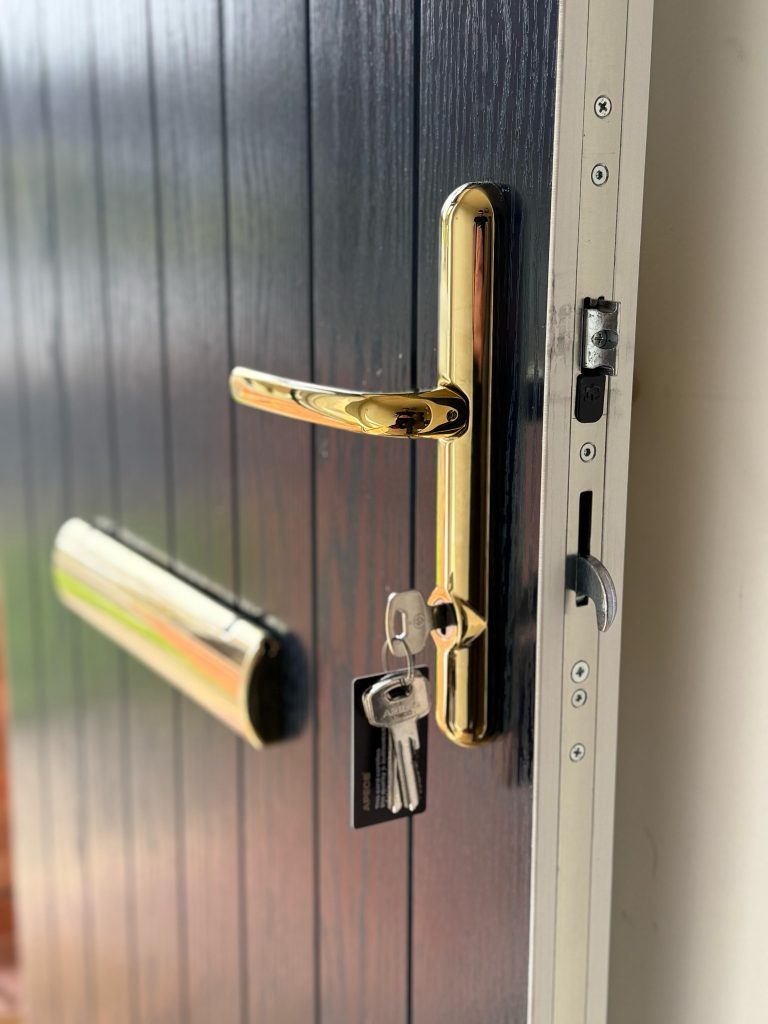
Wear is the most obvious category, and it is where most people start. A lock that has been in daily use for a decade or more will eventually show its age, and worn components are both less reliable and easier to defeat.
- The key sticks or grinds. Internal wear in the cylinder means the pins no longer move freely. It starts as an occasional nuisance and ends as a seizure, often at the worst possible moment.
- The lock or handle is loose. Play in the cylinder or handle mechanism points to worn fixings or failing internal parts, and a loose lock is a softer target than a solid one.
- There is rust or corrosion. A weathered cylinder face, flaking metal or a gritty feel when you turn the key all mean corrosion has reached the mechanism. Corroded locks fail without warning.
None of these is worth nursing along indefinitely. If lubrication and a minor adjustment do not settle the problem quickly, a lock replacement is the more secure and more economical long-term answer.
Signs your lock is outdated for modern break-in methods
This is the category most homeowners overlook, because the lock still works. The trouble is that burglary techniques have moved on, and locks that were fine years ago are now easy pickings.
The clearest example is lock snapping. Standard euro cylinders, fitted to the vast majority of uPVC and composite doors in the UK, can be snapped in seconds using basic tools, giving direct access to the mechanism. If the cylinder on your door does not specifically say it is anti-snap, assume it is not. Older locks can also be vulnerable to bumping, picking and drilling.
Replacing a standard cylinder with an anti-snap version rated to TS007 3-star or SS312 Diamond is one of the most cost-effective security upgrades available. The outer section is designed to sacrifice itself if attacked, leaving the internal mechanism intact and the door locked. It is a quick job with a large payoff, and it is the first thing we recommend on any door still running a basic cylinder.
Signs you have lost control of who holds a key
A lock can be brand new and in perfect condition and still be a security problem if the wrong people can open it. Key control is a genuine part of security, and there are a few situations where it should trigger an immediate replacement.
- You have lost your keys. If there is any chance the keys could be linked to your address — lost with post, a loyalty card, or an address tag — change the lock the same day.
- Your keys were stolen. A theft removes any doubt. Replace the affected locks straight away.
- You have just moved in. You cannot know how many copies previous owners, tenants, cleaners or tradespeople still have. A fresh lock hands you complete control.
Changing a lock in these cases is rarely disruptive, and it is far cheaper than dealing with an intruder who simply let themselves in.
Signs your locks would fail an insurer’s requirements
Security and insurance are closely linked, and this is a sign worth checking before you ever need to make a claim. Many UK home insurance policies specify that final-exit doors must be fitted with British Standard locks, typically to BS3621, for cover to be valid. A BS3621 mortice lock has at least five levers and displays a BSI Kitemark.
If your locks do not meet the standard your policy requires, an insurer may reduce or refuse a payout, and not only for break-in claims. The fix is straightforward: a locksmith can check what you have and fit approved locks where needed. It costs far less than discovering the shortfall at claim time. It is always worth reading your own policy wording alongside a professional check.
Signs your home has already been targeted
After a burglary or an attempted one, every targeted lock should be replaced, even if it still turns. The damage from a snapping, drilling or levering attack is not always visible, but the mechanism may be compromised. Look for scoring around the cylinder, bent components, or damage to the strike plate on the frame.
This is also the moment to upgrade rather than replace like for like. Fitting anti-snap cylinders and checking every external door and accessible window is the most effective way to reduce the risk of a repeat, which is sadly common after a first incident. Our after-burglary service is built around exactly this: secure the property, then strengthen the weak points that were exposed.
The quick guide below shows how each sign tends to translate into action.
| Sign | Why it is a security risk | Usual action |
|---|---|---|
| Worn, sticking or corroded lock | Unreliable and easier to defeat | Repair if minor, replace if worn out |
| Standard, non-anti-snap cylinder | Can be snapped in seconds | Upgrade to TS007 3-star / SS312 Diamond |
| Lost or stolen keys | Unknown keyholders | Replace the same day |
| Locks below insurer’s standard | Claim may be reduced or refused | Fit BS3621-approved locks |
| Damage after a break-in attempt | Mechanism may be compromised | Replace and upgrade to anti-snap |
Repair, replace, or upgrade?
We work repair-first, and plenty of lock problems come down to alignment or a single worn part rather than a lock that needs binning. A dropped door throwing the multipoint mechanism out of line, for instance, is usually a door repair rather than a new lock. But security is the deciding factor. If a lock is out of date, has been forced, or no longer gives you confidence, replacing and upgrading it is the sensible investment even when it technically still works.
When to call a locksmith
It is worth getting security-critical locks looked at sooner rather than later. Contact a locksmith promptly if:
- Keys have been lost or stolen and could be traced to your home.
- You have moved into a property and want certainty over who can get in.
- Your door still runs a standard, non-anti-snap euro cylinder.
- You have been broken into, or someone has tried.
- You are not sure your locks meet your insurer’s requirements.
A short phone call is often enough for Max to advise whether you need a repair, a replacement, or a security upgrade. For urgent situations, our emergency locksmiths in Nottingham handle most jobs the same day.
What a lock replacement costs
Max charges a flat £85 plus parts if any are needed. There is no call-out fee and no out-of-hours surcharge, and the price is the same across Nottingham, Derby, Mansfield, Loughborough and the surrounding East Midlands, day or night. Parts vary with the lock: a standard euro cylinder is inexpensive, an anti-snap cylinder rated to TS007 3-star or SS312 Diamond costs a little more, and a BS3621 mortice lock sits higher again. The price is agreed before any work starts, most jobs are done in a single visit, and all parts and labour carry a twelve-month warranty. You can see the full areas we cover for details.
Frequently asked questions
How do I know if I need a lock replacement rather than a repair?
Stiffness, minor wear and poor alignment can often be repaired or adjusted. Replacement is the safer choice when the lock has been forced, is corroded, is out of date, or no longer gives you confidence in your security. Max works repair-first and will give you an honest recommendation after a quick inspection, so you are not paying for a new lock you do not need.
Is an anti-snap cylinder really worth it for home security?
Yes, for most uPVC and composite doors it is the single most worthwhile upgrade. Lock snapping is one of the most common ways burglars defeat these doors, and a standard cylinder offers little resistance. An anti-snap cylinder rated to TS007 3-star or SS312 Diamond sacrifices its outer section under attack and keeps the door locked. It is inexpensive and quick to fit.
Will replacing my locks help with home insurance?
If your current locks do not meet the standard your policy specifies, usually BS3621 on final-exit doors, fitting approved locks keeps your cover valid. Insurers can reduce or refuse a claim where locks fall short of the policy wording. Checking and upgrading is inexpensive compared with the cost of a rejected claim, so it is worth confirming before you ever need to rely on it.
Should I replace all the locks after moving into a new home?
At minimum, replace the locks on all external doors, because you cannot know how many keys are still in circulation from previous keyholders. If you own the property this is entirely your call. If you rent, you will need the landlord’s permission first, but you can ask, and many landlords will arrange it or accept a copy of the new key.
How long does a lock replacement take?
A standard euro cylinder swap usually takes around thirty to forty-five minutes. A BS3621 mortice lock or a full multipoint mechanism can take up to an hour, depending on the door. Max carries common parts and aims to complete the work in a single visit, so in most cases your security is restored the same day.
Sorted? What most readers check next
- Lock replacement — quality locks, anti-snap as standard
- Locksmith prices in Nottingham — the transparent 2026 guide
- 10 Signs Your Front Door Lock Needs Replacing
- uPVC Door Lock Replacement Cost Explained
Need it sorted today? Call 07552 421433 — £85 + parts (+ VAT), no call-out fee, same price 7 days.