




Dropped Door? Why Doors Stick at the Bottom Corner — Hinge Adjustment Explained
The short answer: a door that scrapes at the bottom corner, needs a lift to lock, or leaves a rub mark on the frame has dropped on its hinges — and on uPVC and composite doors that’s an adjustment, not a replacement. Hinge and keep realignment is a standard £85 + VAT visit; new hinges, when genuinely worn out, run £10–£50 each on top.
How to tell your door has dropped
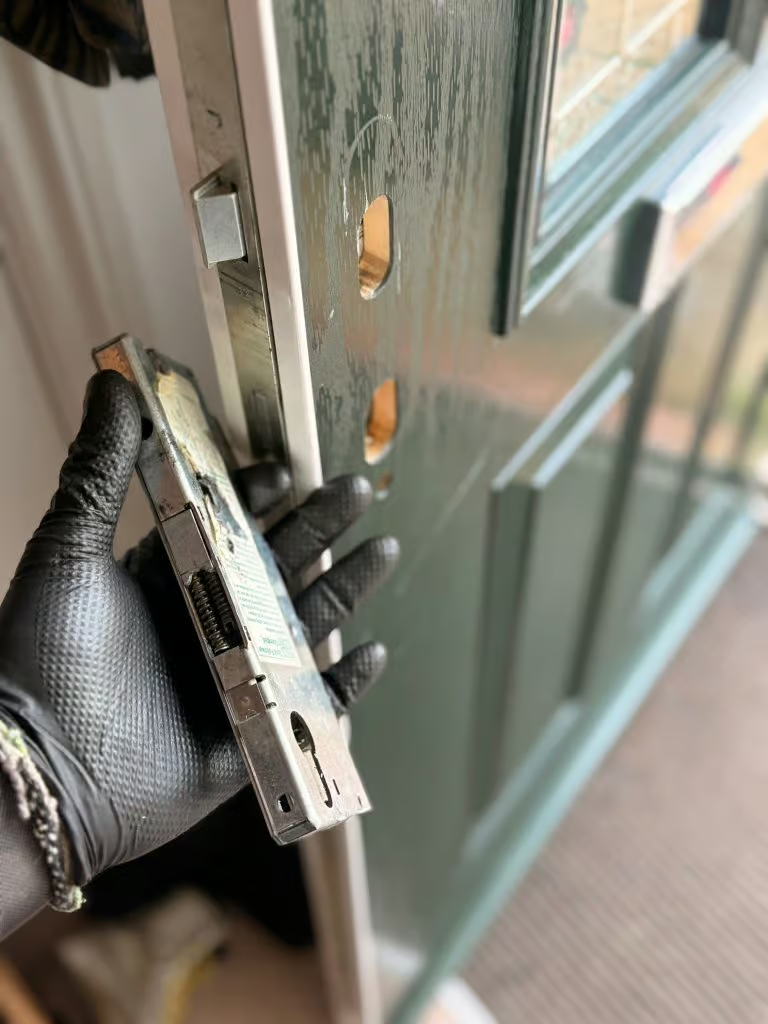
Four giveaways: a scuff line on the frame or sill at the latch-side bottom corner; having to lift the handle-side of the door to get the key to turn; daylight showing unevenly around the seal (tight at the top hinge, gappy at the bottom latch corner); and locking that’s easy in the morning but stubborn after the door’s been used all day. If the sticking only arrives with hot afternoons, read the summer swelling guide first — different cause, same fix family.
Why doors drop
Weight and time. A glazed composite slab can weigh 40kg+, and every open-close cycle loads the hinges. Kids swinging on handles, wind snatching the door, and self-closers set too fast all accelerate it. uPVC and composite doors hang on adjustable hinges precisely because the manufacturers expect this — the adjustment is designed in.
The three adjustments hiding in your hinges
Height lifts the whole slab back up. Lateral moves it toward or away from the hinge side, re-centring the locking points on their keeps. Compression sets how hard the door squeezes the gasket — the difference between a door that locks with two fingers and one that needs a shoulder. Flag hinges (the chunky rectangular blocks on most uPVC doors) adjust in all three; butt and T-hinges on composites vary by pattern. The skill isn’t turning the screws — it’s knowing which axis, in which order, and re-testing the locking points after each change.
What a visit looks like
Max checks the frame is square first (a dropped FRAME is a different, rarer animal), adjusts the hinges to re-hang the slab true, realigns the keeps so hooks and rollers glide instead of scrape, and resets compression evenly top to bottom. That’s the standard £85 flat — and it’s the same visit price if two doors need doing… or one door and a stiff window, typically around £45 more in labour, often nothing.
When hinges actually need replacing
Seized adjusters (usually from paint or corrosion), stripped threads from previous DIY attempts, cracked hinge bodies, or hinges that simply have no travel left. Replacements run £10–£50 per hinge depending on type — see the full price guide — and it’s still a single-visit job.
Leave it and it gets expensive
A dropped door forces the gearbox to work at an angle it was never designed for. Gearboxes are £20–£180 in parts; full multipoint strips £40–£250. The £85 adjustment is the cheap version of this story — the mechanism replacement after six months of forcing is the dear one.
Quick answers
Can I adjust the hinges myself? You can turn the screws — the risk is chasing one axis and making the locking alignment worse. If you try, mark the starting positions and move in quarter turns.
Door still scrapes after adjustment? Then the frame has moved or the slab has bowed — both fixable, both diagnosed on the same visit.
Completely stuck shut? That’s an emergency call-out — 30-minute target, same flat pricing.
Sorted? What most readers check next
- Door repairs — uPVC, composite, wooden, patio & bifold
- Locksmith prices in Nottingham — the transparent 2026 guide
- uPVC Door Handle Loose or Dropped? Causes and Fixes
- Can You Replace a uPVC Door with a Composite Door?
Need it sorted today? Call 07552 421433 — £85 + parts (+ VAT), no call-out fee, same price 7 days.
What a Hinge Adjustment Costs
Adjustment-only visits are £85 flat — that covers rehanging on the hinges, resetting keeps and getting the door to lock without a lift-and-fight. If a hinge has genuinely failed, hinges are modest parts on top of the same flat labour. No call-out fee, evenings and weekends the same price — details on the price guide.
Quick Answers
How do I know my door has dropped?
It scrapes the frame or sill, the latch misses unless you lift the handle, and the gap along the top edge is wedge-shaped instead of even. All three point at hinges, not the lock.
Can a dropped door be fixed without replacing it?
Almost always. Flag and butt hinges adjust in three axes, and composite or uPVC sashes can be repacked (toe-and-heel) to square the sash inside its own frame.
Why does my door only lock when I pull it towards me?
The hooks are missing their keeps because the door sits low or twisted. That is an alignment fault — fitting a new lock would change nothing.
Related reading: Door repairs service · Composite door dropped or bowed · uPVC door won’t lock