




French & Patio Door Problems: Rollers, Alignment and Locks — What’s Fixable
French and patio doors fail differently from front doors. They’re bigger, heavier, mostly glass, and they close against each other or slide on rollers rather than shutting into a solid frame — so their faults are all about geometry and moving parts. Here’s what actually goes wrong across Nottingham, Derby, Mansfield and Loughborough, and what each fault takes to put right.
Sliding Patio Doors: Rollers, Track, Then Everything Else
A sliding door that’s become a two-handed workout hasn’t “dropped” — its rollers have worn flat or seized. The sash sits on wheeled carriages running along an aluminium track; once they stop rolling, the door grinds, the track scars, and eventually the lock stops meeting its keep because the whole sash is sitting low. New rollers and a dressed or renewed track restore the glide, and adjusting the carriages lifts the sash back to height so the hook lock lands properly again. We recently rebuilt exactly this on an older aluminium slider in Loughborough — mechanism, rollers and track renewed in the same visit, a door that had been shoulder-barged for years moving on a fingertip.
French Doors: A Geometry Problem in Disguise
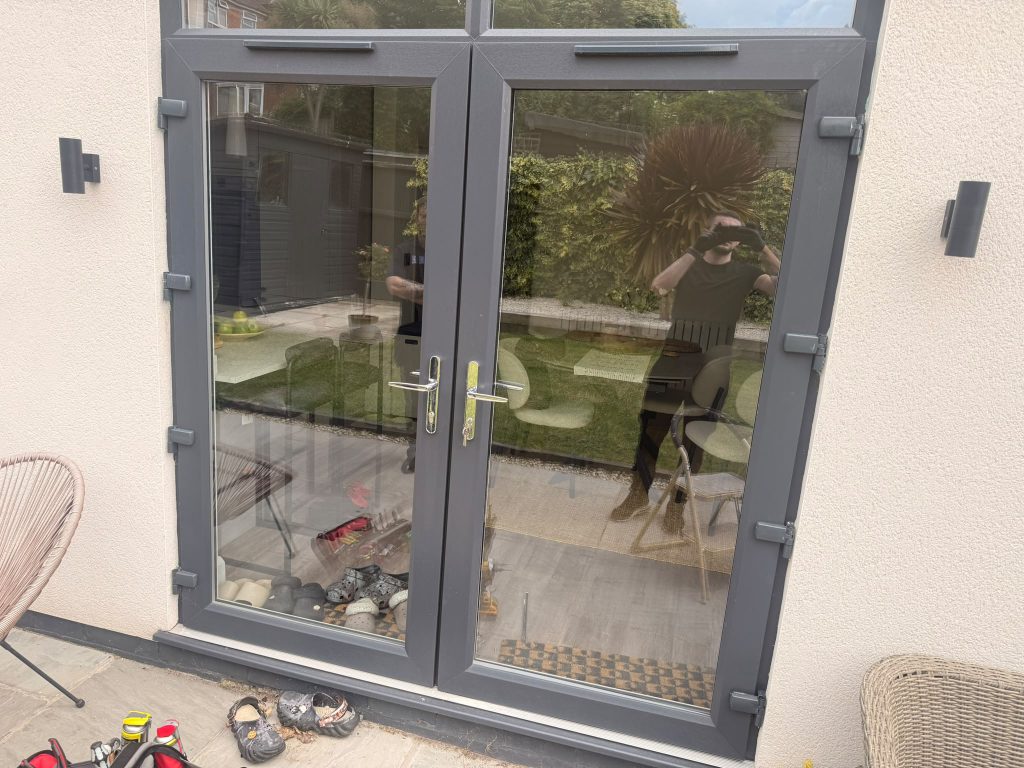
French doors are two leaves meeting in mid-air. The passive leaf anchors top and bottom with shootbolts; the active leaf locks into it through an espagnolette — so every fault compounds: a hinge sags, the leaves clash or gap, the shootbolts miss their keeps, and the handle needs force it was never designed for. That force is what kills the mechanism. The repair order matters: alignment first — hinges, keeps, packers — then the mechanism only if the gearing has genuinely worn. Fitting a new strip to misaligned doors just wears the new strip out.
The Locks Themselves
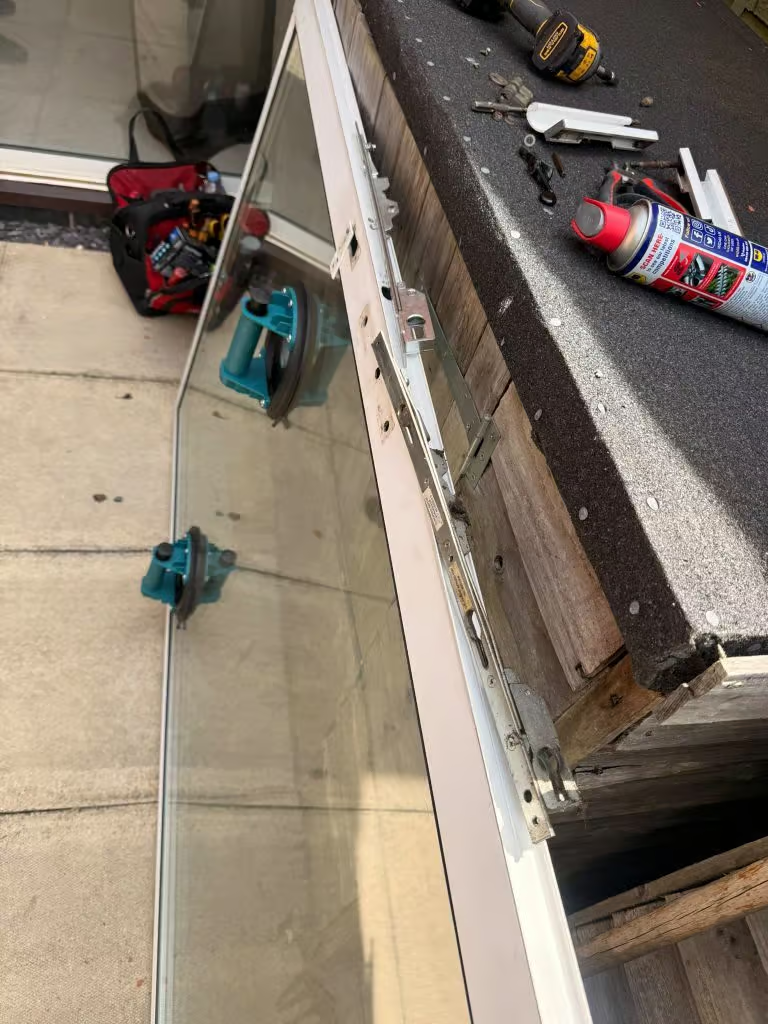
French doors run espagnolettes with shootbolts; sliders run hook locks; both take standard euro cylinders — which means both benefit from the same anti-snap (Kitemark / TS007 3-star) upgrade as any front door. Discontinued patterns aren’t a dead end either: strips are matched to the original routing, the same approach as any multipoint mechanism. Handles, restrictors and anti-lift blocks round out the security side — older sliders especially deserve anti-lift protection, because a sash that lifts in its track is a sash that can be lifted out of it.
Swelling, Seals and the Seasonal Door
Big glazed doors move with the weather. A composite or timber French door that binds every July and frees itself in October is telling you its clearances are marginal — a summer adjustment sorts it permanently, the same logic as our guide to doors that swell in the heat. Gaskets that have compressed flat are replaceable too, and often transform both the draught and the slam.
What It Costs
The same flat structure as everything we do: £85 labour plus parts and VAT, no call-out fee, emergencies and appointments priced identically. Rollers, keeps, cylinders and even full mechanism strips are modest parts against the cost of new doors — and a repair is almost always the right call. The full service lives on the door repairs page, with pricing on the price guide.
French & Patio Door Questions, Answered
Why has my sliding patio door become so heavy to open?
Worn rollers. The sash runs on small wheeled carriages, and when they flatten or seize the door grinds along the track instead of rolling. New rollers — and a cleaned or replaced track — bring back the one-finger glide. Left alone, the grinding chews the track and turns a cheap fix into a bigger one.
Why do my French doors no longer meet in the middle?
Dropped hinges or moved keeps. French doors close against each other rather than a fixed frame, so a few millimetres of sag on either leaf shows up as a gap, a clash, or bolts that miss their keeps. Realignment — hinges, keeps and packers — usually sorts it without any new parts.
Can the multipoint lock on a French or patio door be replaced?
Yes. French doors typically run an espagnolette with shootbolts top and bottom, and sliding doors use hook locks into the frame. Both are standard, replaceable strips — matched to the original routing even when the exact pattern is discontinued.
What does patio or French door repair cost in Nottingham?
A flat £85 labour charge plus parts and VAT — no call-out fee, same price for emergencies and appointments. Rollers, locks and keeps are modest parts; you get the exact figure confirmed before any work starts.
Are patio doors a security risk?
Older sliders with a single hook lock and no anti-lift protection can be. Modern multi-hook mechanisms, anti-lift blocks and — on French doors — properly engaging shootbolts close the gap. If your patio door lifts visibly in its track, have it looked at.
Door grinding, gapping or refusing to lock? Door repairs covers French, patio, bifold and every other type — same-day across Nottingham, Derby, Mansfield, Loughborough and the villages between.