




Garage Door Lock Repair: Common Problems & Fixes
A garage door lock that’s seized, spinning, or simply refusing to turn is one of those problems that seems minor right up until you’re stood outside in the rain unable to get your bike, tools or car out. Garage locks live a hard life — they’re outside, exposed to the weather, and often used less often than a front door lock, which means faults can creep up unnoticed until the day you actually need it.
This guide covers the lock and mechanism side of garage door problems specifically — the part that a locksmith deals with. It doesn’t cover springs, door panels or electric opener motors, which are mechanical door issues for a garage door specialist, not a locksmith fault.
The main types of garage door lock
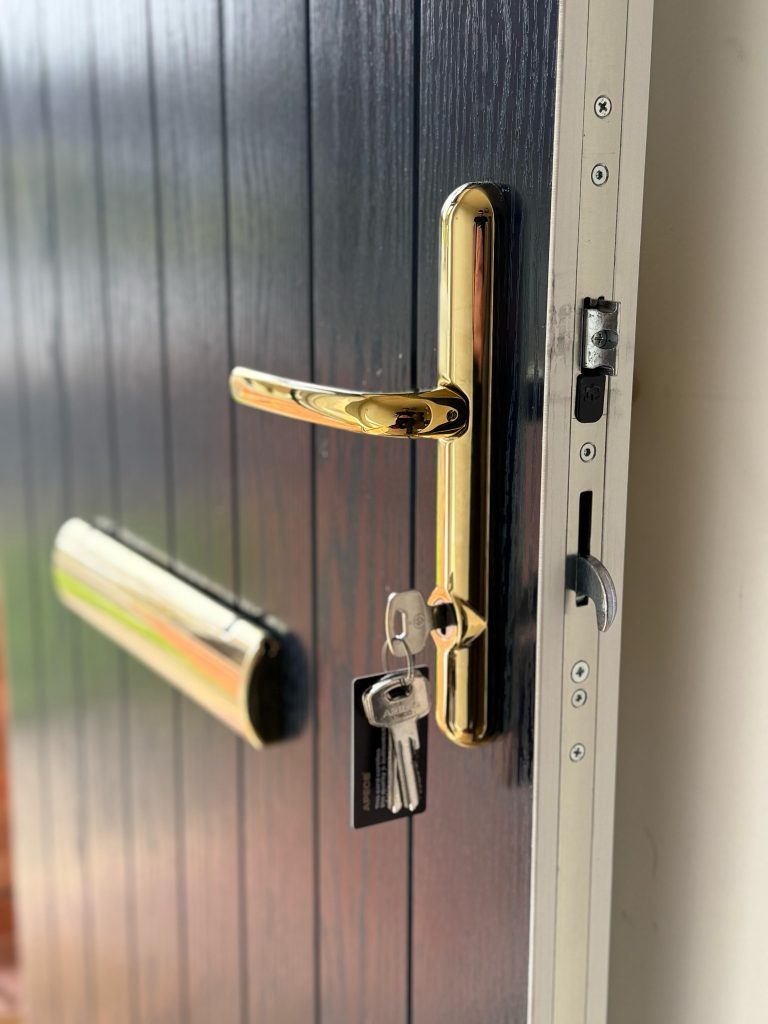
Knowing which type you’ve got makes it much easier to diagnose the problem and to describe it accurately if you do need to call someone.
T-handle locks
Common on up-and-over garage doors. A T-shaped handle sits in the middle of the door; turning the key rotates the handle and retracts the locking bolts via a rod-and-cam mechanism. These are simple, robust, and among the easiest garage locks to repair or swap out.
Euro cylinder locks (and euro cylinder conversions)
Some garage doors — particularly side-hinged doors or converted up-and-over doors — use a standard euro cylinder, the same type found in many uPVC front and back doors. A euro cylinder conversion (fitting a euro cylinder into a garage door that previously used a different lock type) is a popular upgrade, since euro cylinders are widely available and simple to replace like-for-like in future without matching an obscure, discontinued garage-specific lock.
Up-and-over door locks
This isn’t a single lock type so much as a category — most up-and-over doors use either a T-handle or a slam lock (which locks automatically when pushed shut) connected to a locking mechanism inside the door frame. The lock itself can wear or seize independently of the door’s springs and tracks, which are a separate system entirely.
Roller-shutter locks
Roller-shutter garage doors typically use a floor-mounted bolt lock, a cylinder lock built into the guide rail, or a hasp-and-padlock arrangement. These take a lot of exposure to grit and weather since they sit at ground level, so they’re especially prone to seizing if not used or lubricated regularly.
Common garage door lock problems
The key won’t turn, or the lock feels stiff
Usually down to a lack of lubrication rather than a broken lock. Garage locks sit outside and often go weeks between uses, so dirt and grime build up inside the cylinder. Try a proper lock lubricant (not household oil, which attracts more dirt over time) sprayed into the keyway, then work the key gently back and forth. If it still won’t turn, the internal pins or cylinder may have corroded, which usually means replacement rather than repair.
The handle spins without doing anything
If the T-handle turns freely but nothing happens — the bolts don’t move, the door doesn’t unlock — the connection between the handle and the internal locking mechanism has failed. This is typically a sheared pin, a stripped fixing, or a worn linkage, and it’s a mechanical lock fault rather than anything to do with the door’s springs or panel.
The lock is seized solid
Common on roller-shutter and ground-level locks that don’t get used often. Rust and grit accumulate inside the mechanism until the key won’t turn at all, or turns but nothing releases. Regular lubrication (a couple of times a year, more in exposed spots) prevents most of this. Once a lock is fully seized, forcing the key is a good way to snap it off inside the cylinder, so it’s worth stopping and getting it looked at rather than pushing harder.
Lost or missing garage keys
If you’ve lost the only set of keys, or moved into a property where you don’t know who else might have a copy, replacing the lock (or the cylinder, if it’s a euro cylinder type) is the straightforward, secure fix — the same logic as changing a front door lock after losing keys. A garage often provides direct or indirect access into the house, so a lost garage key is worth treating just as seriously as a front door key.
Worn or damaged keeps and strike plates
Just like a front door, the parts the bolts or hooks engage into can wear, bend or work loose over time, especially on a door that gets slammed rather than closed gently. If the key turns fine but the door still doesn’t lock securely, the keep or strike plate — not the lock itself — may be the problem.
Repair or replace: how to decide
- Repair usually makes sense when: the lock is stiff or a little sticky but still functions, the fault is a worn keep rather than the lock body, or the mechanism just needs cleaning and proper lubrication.
- Replacement is usually the better call when: the lock is fully seized despite lubrication, the key has snapped inside the cylinder, you’ve lost the only keys, the handle spins freely with no connection to the mechanism, or the lock is old enough that parts are no longer available.
As a general rule, if a garage lock has been fighting you for months rather than days, repeated attempts to nurse it along tend to cost more in the long run than a straightforward lock replacement done properly once.
What this guide doesn’t cover
Garage door springs, panels, and electric opener motors are a different trade entirely — a garage door engineer or opener specialist handles those, not a locksmith. If your garage door is heavy to lift, sagging, or the electric opener isn’t responding, that’s a mechanical or electrical issue, separate from the lock. This guide, and Max’s garage door work, is specifically about the lock and locking mechanism — the key, cylinder, handle mechanism, or the bolts that secure the door.
When to call a locksmith
A bit of stiffness that clears up with proper lubrication is a fair DIY job. It’s worth calling a professional when:
- the lock is seized solid and won’t budge even after lubrication,
- the handle spins freely with no connection to the locking mechanism,
- a key has snapped off inside the cylinder,
- you’ve lost the only set of keys to the garage,
- you’re considering a euro cylinder conversion for simpler future key replacement, or
- you’d simply rather have it diagnosed and fixed properly first time, without risking further damage by forcing it.
Max handles garage door locks and locking mechanisms across Nottingham, Derby, Mansfield, Loughborough and the surrounding East Midlands towns and villages — £85 plus parts if any are needed, no call-out fee, and the same price wherever you are in the area. Most jobs are sorted on the first visit, with the price agreed before any work starts. Check the door lock repair page for more on repair versus replacement, or the full areas covered list to confirm you’re in range. If it’s urgent, the emergency locksmith service covers same-day call-outs too.
Frequently asked questions
Why has my garage door lock suddenly seized up?
Almost always a build-up of rust, dirt or grit inside the cylinder, especially on locks that sit outside and aren’t used often. Proper lock lubricant applied into the keyway, worked gently with the key, clears most cases. If it’s still solid afterwards, the internal mechanism has likely corroded and needs replacing.
Can a garage door lock be repaired, or does it always need replacing?
It depends on the fault. Stiffness, dirt and worn keeps can usually be repaired or cleaned up. A fully seized lock, a snapped key, a spinning handle with no connection to the mechanism, or lost keys usually call for replacement instead.
What’s a euro cylinder conversion for a garage door?
It’s fitting a standard euro cylinder lock — the same type used in many uPVC doors — into a garage door that previously had a different, often garage-specific, lock. It’s popular because euro cylinders are cheap, widely stocked, and easy to replace again in future without hunting for an obscure part.
Does a locksmith fix garage door springs or the electric opener?
No — springs, door panels and electric opener motors are handled by a garage door specialist, not a locksmith. Locksmith work on a garage door covers the lock and locking mechanism only: the cylinder, handle mechanism, and the bolts or keeps that secure the door.
How do I stop my garage lock seizing up again in future?
Lubricate it with a proper lock lubricant a couple of times a year, more often if it’s very exposed to weather, and use the lock regularly rather than leaving it untouched for months at a time — locks that get used stay freer than locks that don’t.
Related: uPVC & Door Lock Repair · Lock Replacement & Upgrades · Areas Covered · Emergency Locksmith
Sorted? What most readers check next
- Door repairs — uPVC, composite, wooden, patio & garage
- Locksmith prices in Nottingham — the transparent 2026 guide
- 10 Signs Your Front Door Lock Needs Replacing
- uPVC Door Lock Replacement Cost Explained
Need it sorted today? Call 07552 421433 — £85 + parts (+ VAT), no call-out fee, same price 7 days.