




uPVC Door Not Closing Properly? How to Tell If It Needs a Repair or a Replacement
When a uPVC door starts sticking, dropping or refusing to lock, the question every homeowner asks is the same: is this a repair, or does the whole door need replacing? It is a fair question, and an expensive one to get wrong. The honest answer, and the one Max gives every week across Nottingham, Derby, Mansfield and Loughborough, is that a uPVC door not closing or locking properly is repairable far more often than not. Door companies have every reason to reach for a full replacement, because a new door set costs several times what a mechanism repair does. This guide shows you how to read the symptoms yourself, understand what is genuinely wrong, and know the small number of situations where replacement really is the better call.
Most uPVC door faults are repairable
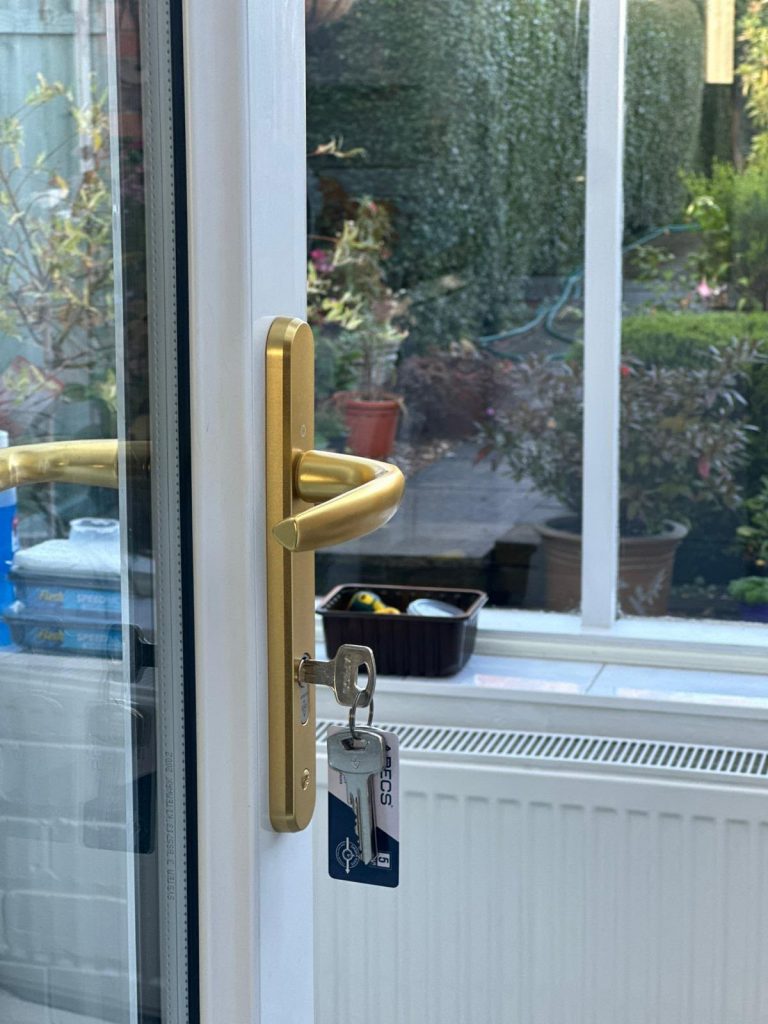
There is a persistent assumption that a uPVC door which is not behaving needs to be ripped out and replaced. In reality, the vast majority of faults Max attends are mechanical wear in parts that can be adjusted or swapped: stiff and sticking multipoint mechanisms, doors that have dropped and catch on the frame, handles that have lost their tension, hinges that have shifted over the years, and euro cylinders worn to the point of being unreliable. The door leaf and frame are usually still perfectly sound. Understanding what the symptoms are pointing to is the first step to knowing what the job actually involves, and roughly what it should cost.
Read the symptom before you reach for a quote
Different faults on a uPVC door produce different tell-tale signs. Learning to read them means you walk into any conversation with a tradesperson already knowing whether you are likely looking at a quick fix or something bigger.
| Symptom | Likely cause | Repair or replace? |
|---|---|---|
| Door catches on the frame or drags on the floor | Dropped door, hinges out of position | Repair — hinge adjustment |
| Handle has to be forced up before the key turns | Alignment out, or worn multipoint mechanism | Repair — realign or replace mechanism |
| Handle is floppy or won’t lift the latch | Sheared spindle or failed handle spring | Repair — new handle set |
| Locking point visibly misses its keep | Door movement or mechanism wear | Repair — realign or service mechanism |
| Key stiff or unreliable in the cylinder | Worn or dry euro cylinder | Repair — new cylinder |
| Corner of the frame cracked or split, water at the base | Frame damage or damp ingress | Replacement likely |
The door drops, catches, or feels heavy
A uPVC door that drops over time is one of the most common issues, and it almost always comes down to the hinges. Modern uPVC and composite doors are heavy by design, and the hinges carry that load every single time the door swings. Over several years, particularly on an exterior door used many times a day, the hinge positions can drift a couple of millimetres, which is more than enough to make the door rub against the frame at the bottom or the latch side.
The fix is usually a hinge adjustment or, at most, a hinge replacement, rather than anything drastic. Many uPVC hinges have adjustment screws that can be reached without removing anything, but getting the alignment genuinely right takes time and experience. A clumsy adjustment simply moves the problem and can leave the frame carrying strain it was never designed for. This is firmly a repair, and a cheap one at that.
The handle has dropped or no longer lifts the latch
A handle that has gone floppy, drops under its own weight, or no longer lifts the latch cleanly usually means the spindle has sheared or the handle spring inside the handle mechanism has failed. It is a common fault on doors that have been in heavy use for five years or more.
In most cases the handle and spindle are replaced without touching the multipoint mechanism in the door itself. The job is typically quick and straightforward, provided the right replacement part is to hand. Max carries a range of standard spindles and handles and can usually complete the repair on the same visit. Again, this is a repair, not a reason to change the door.
The door won’t lock, or the locking points miss the keeps
If the door locks but only after you heave the handle up hard, or one of the locking points is visibly missing its keep in the frame, the mechanism or the door alignment needs attention. Multipoint locking systems rely on every locking point engaging together when the key turns. If the door has shifted, or the mechanism has lost some of its travel, one or more points will fail to seat properly and the door will either feel unsecured or demand excessive force to operate.
A locksmith who works with uPVC day in, day out can quickly tell whether this is a door alignment issue, a mechanism issue, or a combination of the two, and advise whether the mechanism can be serviced or needs replacing. Our door lock repair service covers exactly this diagnosis. It remains a repair in the overwhelming majority of cases.
When a repair is genuinely the wrong answer
Repair-first does not mean repair-always. There is a small set of situations where replacing the door, or the full door set, is honestly the better use of your money, and Max will say so rather than patch something that will fail again shortly.
- The frame itself is compromised. Physical damage, a cracked or split frame, or a failed weld on a corner joint undermines the whole door, and no amount of mechanism work fixes a failing frame.
- Water has got into the base of the frame. Prolonged damp ingress at the threshold rots and weakens the structure from the bottom up.
- The door has been reworked too many times. A very old door that has had several mechanisms fitted over the years, with the frame drilled and rerouted repeatedly, may no longer take a clean repair.
- The security simply is not there. If the door design predates modern anti-snap protection and the frame has movement in it, a modern replacement can be a genuine step up in security.
Even then, the decision is worth making with a locksmith rather than a salesperson. If replacement is the right answer, our lock and door replacement options are specified properly, with correctly aligned keeps and a secure cylinder, rather than whatever comes as standard.
What about composite doors?
Composite doors share many of the same mechanical issues as uPVC, with a few characteristics of their own around swelling, frame movement and hinge wear. The door skin itself is more resilient than uPVC, but the mechanisms and hinges are broadly similar and wear in the same ways. Composite doors sticking in humid weather, handles failing, or cylinders wearing out are all common and all repairable. Because a composite door is heavier, a drop can load the mechanism more, so catching alignment issues early matters even more. Max works on both uPVC and composite doors right across the region and carries the most common mechanisms and components as standard.
When to call a locksmith
It is worth getting a professional opinion before a minor fault becomes a lockout or before you commit to an expensive replacement you may not need. Call a locksmith if:
- The door is sticking, dropping or catching on the frame
- You are lifting, jiggling or forcing the door to get it to lock
- The handle has gone stiff, loose or floppy
- A locking point is clearly not engaging
- You have been quoted for a full replacement and want an honest second opinion
If the door has already failed and you cannot secure your home, our emergency locksmith service covers Nottingham and the surrounding towns, getting you secure again without unnecessary damage.
Honest pricing, agreed before any work
Max charges £85 plus parts if any are needed, with no call-out fee and no out-of-hours surcharge, and the same price across the whole coverage area, from Nottingham to Derby, Mansfield, Loughborough and the villages around them. He is certified, DBS-checked, Checkatrade-approved, fully insured and has more than 600 local reviews behind him. The fault is diagnosed, the price is agreed with you up front, and most repairs are completed on the same visit. Because the ethos is repair-first, you will never be pushed toward a replacement you do not need. You can check the towns and villages covered on our areas covered page.
Frequently asked questions
Is it cheaper to repair or replace a uPVC door?
In the great majority of cases, repair is far cheaper. Faults like a dropped door, a floppy handle, a worn cylinder or a failed multipoint mechanism are all fixable for a fraction of the cost of a new door set. Replacement only becomes the sensible option when the frame itself is damaged, has taken on water, or has been reworked so many times that a clean repair is no longer practical.
My uPVC door won’t lock unless I lift the handle really hard. Is that a repair?
Almost always, yes. That symptom usually means the door has dropped slightly and the locking points are no longer meeting their keeps, or the multipoint mechanism is wearing. Realigning the door or servicing the mechanism resolves it. Forcing the handle in the meantime risks shearing the mechanism, so it is best to stop forcing it and have it looked at.
How long does a uPVC door repair take?
Most uPVC door repairs are completed in a single visit. Hinge adjustments, handle replacements and cylinder swaps are typically quick jobs, and Max carries the most common parts as standard so the work can usually be finished on the spot rather than waiting for parts to be ordered.
When is a uPVC door genuinely beyond repair?
When the frame is cracked, split or has a failed corner weld, when water has rotted the base of the frame, or when a very old door has been drilled and reworked so many times that no clean repair remains. In those cases a replacement is the honest answer, and Max will tell you plainly rather than patching something that will only fail again.
Can a composite door be repaired the same way as uPVC?
Yes. Composite doors use similar mechanisms and hinges and suffer similar faults, so the same repair-first approach applies. Because composite doors are heavier, a drop can put more load on the mechanism, so it is worth acting early. Max repairs both uPVC and composite doors across the region.
Sorted? What most readers check next
- Door repairs — uPVC, composite, wooden, patio & bifold
- Locksmith prices in Nottingham — the transparent 2026 guide
- uPVC Door Handle Replacement: How to Measure & Fit
- uPVC Door Lock Replacement Cost Explained
Need it sorted today? Call 07552 421433 — £85 + parts (+ VAT), no call-out fee, same price 7 days.