




Are Anti-Snap Locks Worth It? A Straight Answer
Anti-snap cylinders get recommended a lot, and it’s fair to wonder whether it’s a genuine security upgrade or just an easy upsell. Having replaced a great many standard cylinders with anti-snap ones on uPVC and composite doors, our honest answer is: yes, for almost every home with a uPVC or composite door, it’s worth it. Here’s the reasoning, not just the recommendation.
What lock snapping actually is
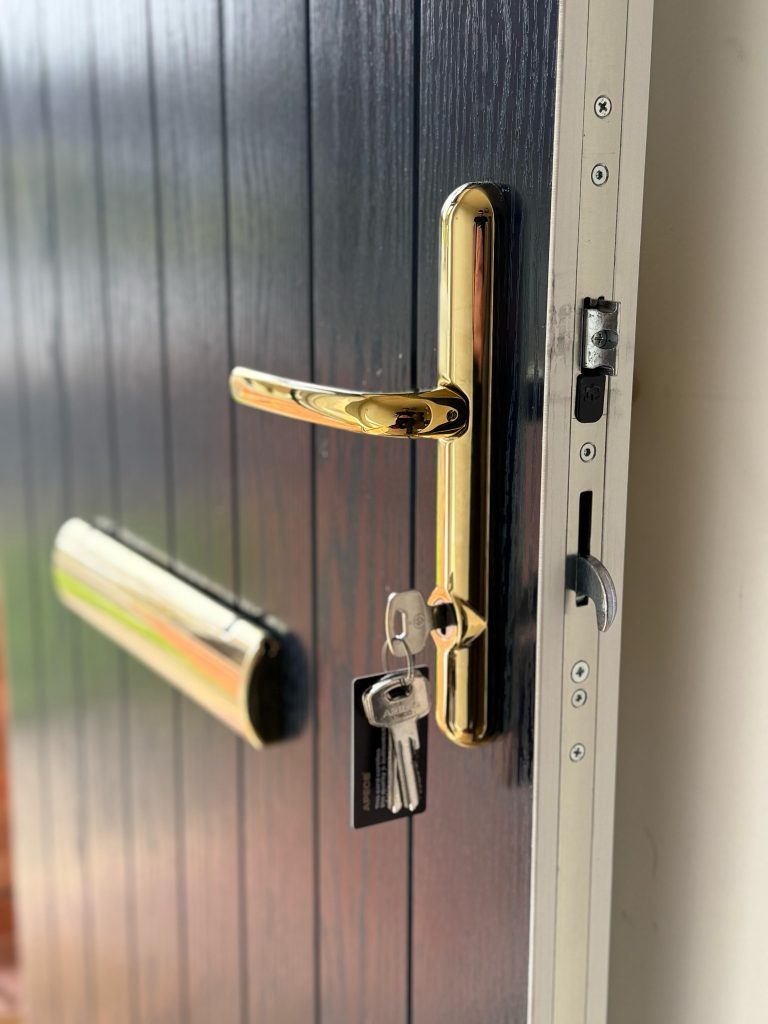
Most uPVC and composite doors use a euro cylinder — the barrel-shaped lock you see poking through the handle. Standard euro cylinders have a narrow, weak point roughly in the centre, where the two halves of the cylinder meet at the fixing screw. That weak point sits almost exactly level with the edge of the door.
Lock snapping exploits this directly. Using a wide flat tool — commonly a screwdriver or a specialist snapping tool — an attacker grips the exposed part of the cylinder and applies sharp leverage. On a standard cylinder, this snaps the barrel cleanly at its weak point, and once it’s broken the internal mechanism can be turned or pulled out by hand, giving direct access to the door’s locking mechanism.
It became popular with burglars for a simple reason: it’s fast, it’s quiet compared to forcing a door, and it doesn’t require picking skills. A vulnerable door can be forced in under a minute.
What an anti-snap cylinder actually does differently
Anti-snap cylinders (sometimes called snap-secure cylinders) are built with a sacrificial section engineered to snap away cleanly under exactly that kind of attack — but crucially, the snap happens on the outside of the weak point, leaving the internal locking cams and the working part of the mechanism intact and undamaged. The door remains locked and secure even after the attacker has successfully snapped the visible part of the cylinder.
Some anti-snap cylinders go further with additional features:
- Anti-drill pins — hardened steel pins that resist drilling attacks.
- Anti-pick mechanisms — false gates and sprung elements that make picking far harder.
- Anti-bump protection — resistance to a technique using a specially cut key and sharp taps to force pins into position.
The standards that actually matter
Two certifications are worth checking for when buying or having a cylinder fitted:
- TS007 3-star (or the 1-star cylinder plus 2-star security handle equivalent) — the British Standards Institution kitemark scheme specifically testing resistance to snapping, picking, drilling and bumping.
- Sold Secure Diamond — a rating from the independent testing body Sold Secure, considered the toughest standard a euro cylinder can achieve, testing against the most current attack methods used in real break-ins.
A cylinder carrying either of these has been independently tested against snapping attacks, not just described as “anti-snap” on the packaging. It’s worth asking specifically which certification a replacement cylinder holds — genuine anti-snap cylinders will have a visible kitemark or rating stamped on the cylinder face.
Cost versus risk
A quality anti-snap cylinder plus fitting is a modest cost compared to almost any other home security measure, and considerably less than the cost, disruption and stress of a break-in — quite aside from what’s actually taken. It’s also one of the few upgrades that takes well under an hour to fit and needs no ongoing maintenance beyond normal use.
Set against that, standard (non-rated) euro cylinders remain widely fitted, particularly on:
- older uPVC doors that haven’t been upgraded since installation,
- rental properties where landlords haven’t reviewed security,
- doors where a previous locksmith fitted a replacement without confirming its rating.
If your door was fitted more than a few years ago and you’ve never specifically checked or upgraded the cylinder, there’s a reasonable chance it’s still a standard one.
So, worth it or not?
For a ground-floor front or back door, a side or garage door, or any door visible from a street or passage — yes, an anti-snap cylinder is worth fitting. It’s a genuine, tested defence against the most common method of forcing uPVC and composite doors, it’s inexpensive relative to the risk it addresses, and it typically takes less time to fit than a locksmith visit for almost anything else.
Where it matters less is on doors that are already extremely difficult to access — a small first-floor door onto a flat roof with no external access, for example — though even then, most people upgrade anyway simply because the cost difference from a standard cylinder is small.
If you’ve had a break-in where the door was forced this way, it’s also worth having the whole door checked rather than just the cylinder, since a snapping attack can sometimes damage the frame, keeps or locking mechanism as well as the cylinder itself.
When to call a locksmith
Checking whether your current cylinder is rated, and upgrading it if it isn’t, is one of the simplest and most worthwhile things a locksmith visit can achieve. Our lock replacement and upgrades service includes fitting TS007 3-star or Sold Secure Diamond anti-snap cylinders correctly sized and fitted flush to the handle, which matters just as much as the rating itself.
Max covers Nottingham, Derby, Mansfield, Loughborough and the surrounding towns and villages — £85 plus parts if any are needed, no call-out fee, and the same price wherever you are in the coverage area. Most upgrades are completed on the first visit, with the price agreed before any work starts. If you’ve already had a break-in, our after burglary service covers assessing and securing the property properly, not just replacing what was damaged.
Frequently asked questions
Is lock snapping still common?
It remains one of the most common ways forced entry happens through uPVC and composite doors, particularly where the cylinder hasn’t been upgraded. It’s quick, quiet, and doesn’t require specialist skill, which is exactly why anti-snap cylinders were developed.
How can I tell if I already have an anti-snap cylinder?
Check the face of the cylinder (the part visible through the handle) for a TS007 kitemark, a star rating, or a Sold Secure Diamond stamp. If there’s no visible rating, it’s likely a standard cylinder.
Does an anti-snap cylinder make my door unbreakable?
No lock makes a door completely unbreakable, but an anti-snap cylinder removes the fastest and most common method used to force uPVC and composite doors, which meaningfully reduces the risk.
Is it expensive to upgrade to an anti-snap cylinder?
It’s one of the more affordable security upgrades for a uPVC or composite door, and the job itself is usually quick once the correct cylinder size has been measured.
Should I upgrade the handle as well as the cylinder?
It’s worth considering, particularly on ground-floor doors. A 2-star security handle paired with even a basic cylinder gives protection equivalent to a 3-star cylinder on its own, and pairing a 3-star cylinder with a 2-star handle gives the strongest combination available.
Related: Lock Replacement & Upgrades · After Burglary Service · uPVC & Door Lock Repair
Sorted? What most readers check next
- Lock installation — TS007 3★ anti-snap & BS3621 insurance-grade
- Locksmith prices in Nottingham — the transparent 2026 guide
- Landlords: Changing Locks Between Tenants (Best Practice)
- Insurance Approved Door Locks: BS3621 Explained
Need it sorted today? Call 07552 421433 — £85 + parts (+ VAT), no call-out fee, same price 7 days.