




Insurance Approved Door Locks: BS3621 Explained
“Insurance approved locks” isn’t a phrase with one fixed legal meaning — there’s no single national law dictating exactly what lock every home must have. What matters is what your insurer’s policy specifies, and most UK home insurance policies do specify a minimum standard. Get it wrong and, in the worst case, a claim after a break-in can be reduced or refused entirely. Here’s what to actually check.
Why this matters more than people realise
Home insurance policies are contracts, and most include conditions relating to the security of the property — not just “keep your doors locked,” but often a specific named standard the locks must meet. If a break-in happens and the locks in place don’t meet what the policy requires, the insurer can argue the condition of cover wasn’t met, and reduce or reject the claim.
This isn’t a rare technicality. It comes up regularly with older properties, with tenanted properties where the locks haven’t been reviewed in years, and with uPVC doors where the original cylinder was never checked against modern standards.
BS3621: the standard for wooden doors
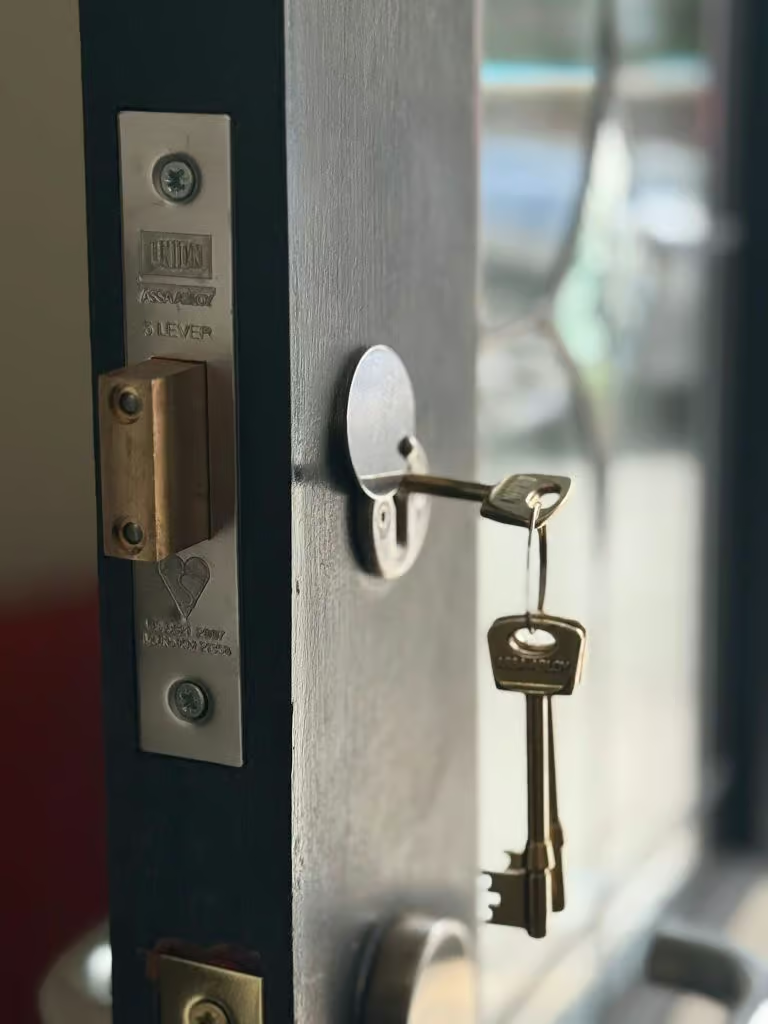
BS3621 is a British Standard for thief-resistant locks, most commonly relevant to mortice locks fitted to timber (wooden) doors. To be certified, a lock must meet requirements including:
- A minimum of 5 levers (a 5-lever mortice lock, sometimes written as 5-lever BS3621).
- Key-locking from both sides — meaning the door can be locked and unlocked with a key from inside as well as outside, which also prevents someone smashing a nearby window and reaching through to turn a latch.
- Resistance to picking and drilling to a tested standard.
- A kitemark stamp on the lock’s faceplate confirming certification.
Most UK home insurers explicitly ask for BS3621 on external timber doors, and it’s often written into the policy wording word for word. If your front or back door is wooden and has an old rim lock or a mortice lock without the kitemark, it’s very likely not BS3621 and worth checking.
What insurers expect on uPVC and composite doors
uPVC and composite doors don’t typically use a mortice lock — they use a euro cylinder operating a multipoint locking mechanism. BS3621 doesn’t apply in the same way here, so insurers generally look for a different standard:
- TS007 3-star rated euro cylinders (or a 1-star cylinder combined with a certified 2-star security handle, which is a recognised equivalent), covering resistance to snapping, picking, drilling and bumping.
- Some insurers specifically reference Sold Secure Diamond, an independent rating considered the toughest available for euro cylinders.
- For new doors and windows, PAS 24 is the standard tested as part of the whole door assembly (frame, lock and hardware together) for resistance to forced entry, and is a common requirement in new-build specifications.
If your policy simply says “five-lever mortice lock to BS3621” and doesn’t mention uPVC doors or euro cylinders at all, it’s worth contacting the insurer directly to clarify what they expect for your actual door type, rather than guessing.
How to check what you’ve got
You don’t need to be a locksmith to do a basic check:
- Wooden door with a mortice lock: open the door and look at the edge — the metal faceplate of the lock should have a kitemark and “BS3621” stamped or engraved on it. If there’s nothing there, or the numbers are worn away, treat it as unconfirmed.
- uPVC or composite door: look at the cylinder (the barrel visible through the handle) for a stamped star rating or TS007 kitemark. No visible rating usually means an older, unrated cylinder.
- Check your actual policy wording, not just what you assume “adequate locks” means — insurers vary, and some are considerably more specific than others.
Why claims genuinely get refused over this
It’s worth being direct about this: insurers don’t refuse claims lightly, but security conditions are one of the more common reasons a payout is reduced. The pattern is usually the same — a break-in occurs, the insurer’s investigator or loss adjuster inspects the point of entry, and it becomes clear the lock in place (often an old rim lock, or a standard non-rated euro cylinder that had been snapped) didn’t meet the standard named in the policy. At that point, the insurer is often within their contractual rights to reduce the settlement or decline the claim.
The frustrating part is that this is usually avoidable. A compliant 5-lever BS3621 mortice lock or a TS007 3-star cylinder both cost a fraction of what’s typically at stake in a claim, and fitting either is a straightforward job.
What to do if you’re not sure
- Pull out your actual insurance policy document and search for “lock,” “BS3621,” “TS007” or “security requirement.”
- If your doors don’t obviously meet what’s specified, get them checked and upgraded rather than waiting until after an incident.
- If you’re moving into a new property, don’t assume the existing locks are compliant just because the door looks new — always check.
- Keep any receipt or invoice from lock work, as proof of the standard fitted can help if a claim is ever queried.
When to call a locksmith
Checking whether your current locks meet BS3621 or TS007 3-star, and upgrading them if they don’t, is one of the most straightforward things a locksmith visit can resolve. Our lock replacement and upgrades service covers fitting certified 5-lever BS3621 mortice locks to timber doors and TS007 3-star anti-snap cylinders to uPVC and composite doors, with the correct kitemarks and ratings confirmed on the parts we fit.
Max covers Nottingham, Derby, Mansfield, Loughborough and the surrounding towns and villages — £85 plus parts if any are needed, no call-out fee, and the same price wherever you are in the coverage area. Most upgrades are completed on the first visit, with the price agreed before any work starts. If you’ve already had a break-in, our after burglary service can assess and secure the property, and provide clear documentation of the work carried out.
Frequently asked questions
Do all home insurers require BS3621 locks?
Most do for external timber doors, but the exact wording varies by insurer and policy, so it’s worth checking your own policy document rather than assuming. Some policies are more specific than others about uPVC doors and euro cylinders.
How do I know if my mortice lock is BS3621?
Look at the metal faceplate on the edge of the door for a kitemark stamp with “BS3621” engraved or printed on it. If there’s no visible marking, treat the lock as unconfirmed and have it checked.
Does BS3621 apply to uPVC doors?
Not directly. uPVC and composite doors typically use a euro cylinder rather than a mortice lock, so insurers usually look for TS007 3-star rated cylinders (or an equivalent 1-star cylinder with 2-star handle) instead.
Can an insurance claim really be refused because of the wrong lock?
Yes. If a policy specifies a security standard and the locks in place at the time of a break-in don’t meet it, the insurer may reduce or refuse the claim. It’s a genuine risk, not just small print.
How much does it cost to upgrade to insurance-compliant locks in Nottingham?
Max charges £85 plus parts if any are needed, with no call-out fee and the same price across the coverage area. Most upgrades are completed on the first visit.
Related: Lock Replacement & Upgrades · uPVC & Door Lock Repair · After Burglary Service
Sorted? What most readers check next
- Lock installation — TS007 3★ anti-snap & BS3621 insurance-grade
- Locksmith prices in Nottingham — the transparent 2026 guide
- Landlords: Changing Locks Between Tenants (Best Practice)
Need it sorted today? Call 07552 421433 — £85 + parts (+ VAT), no call-out fee, same price 7 days.