




Key Snapped in Lock? What to Do Next (Nottingham Guide)
That sudden give, followed by half a key still in your hand and the other half nowhere to be seen — it’s one of the more stomach-dropping moments of homeownership, but it’s rarely a disaster if you handle it calmly. Here’s what’s worth trying yourself, what to leave well alone, and when it’s time to pick up the phone.
Why keys snap in locks
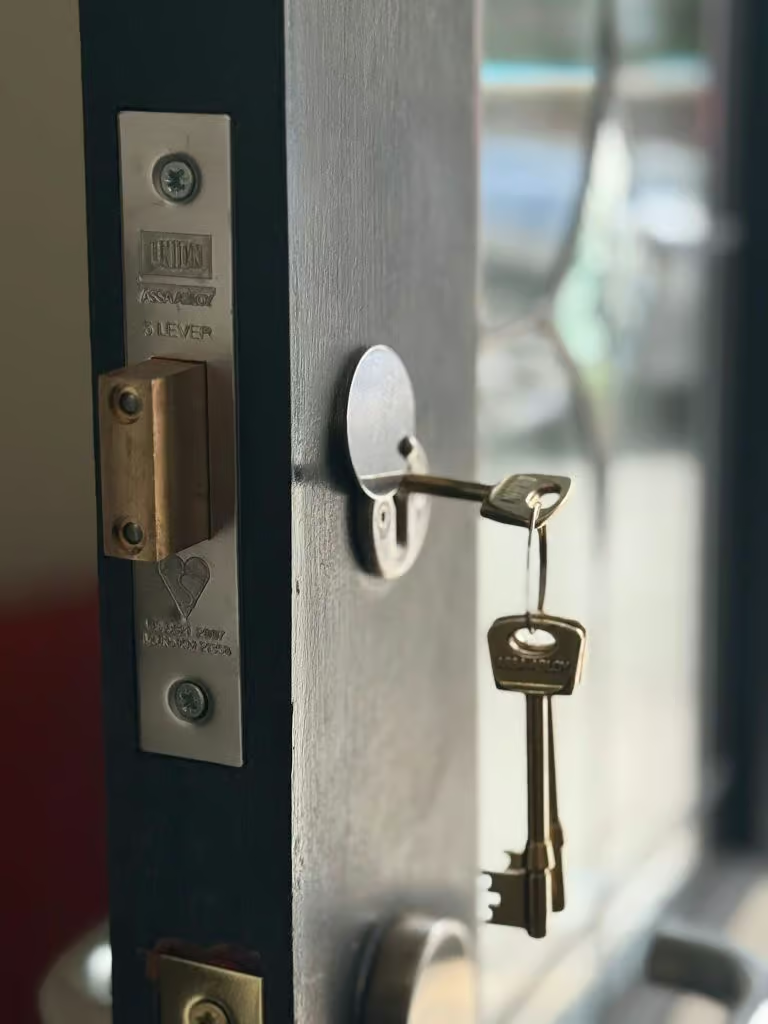
A few things usually cause it, and it helps to know which applies to you because it affects what happens next:
- Metal fatigue. Keys flex slightly every time you use them. Over years, especially on a key that’s used daily, the metal weakens at its narrowest point — right where it enters the cylinder — until it eventually gives.
- A worn or damaged cylinder. If the lock itself is stiff, gritty, or slightly misaligned, the key has to work harder to turn, putting more strain on it each time.
- Forcing a stick lock. Turning a key hard against resistance — because the door’s dropped, the lock’s dirty, or the mechanism has caught — is one of the most common causes of snapping. The key takes the strain that the lock is putting up.
- A cheap or worn key. Copies of copies wear thin. A key cut from a worn original, or cut from soft metal, is more likely to snap than the original ever was.
- Cold weather. Metal contracts in low temperatures, and a key already under strain in a stiff lock is more likely to fail on a cold morning.
What to do straight away
- Stop turning. If the key has only just started to give — you feel it flex or hear a crack but it hasn’t fully separated — stop immediately. Continuing to turn is how a partial crack becomes two pieces.
- Check whether it’s turned enough to unlock or lock. If the mechanism has actually thrown or retracted, you may still be able to close or open the door, which takes the pressure off.
- Don’t slam or force the door. If you’re locked out, resist the urge to force it — this can damage the frame or push the broken key fragment further into the cylinder, making removal harder.
- Look at what’s showing. If a visible stub of the key is still poking out of the cylinder, that changes what tools will work.
Safe extraction attempts
If a small stub of the key is visible and the door isn’t urgently needed open, a careful attempt at removal is reasonable. A few methods that can work:
- A broken key extractor tool. These are inexpensive, purpose-made tools — thin, barbed or serrated strips of metal designed to slide alongside the broken key and hook onto it as you withdraw. They’re the safest DIY option because they’re built for exactly this job and are far less likely to push the fragment deeper.
- Fine-nosed pliers or tweezers, but only if enough of the key protrudes to get a firm grip. Pull straight and steady, in line with the key’s original direction of travel — never at an angle, which can bend the fragment and jam it sideways.
- A thin coping saw blade or fret saw blade, very carefully, can sometimes be worked in alongside the fragment to grip and rotate it out — this needs a steady hand and isn’t for everyone.
What NOT to do
- Don’t use superglue. It’s a commonly suggested trick — dab glue on a matchstick or spare key blank, press it to the broken fragment, and pull. In practice it’s unreliable and risky: glue can run into the cylinder’s pins and springs and set there, turning a broken-key job into a full cylinder replacement. We’d steer you away from this one.
- Don’t poke at it with a screwdriver, knife, or anything not designed for the job. These tend to push the fragment deeper or scratch and damage the pins inside the cylinder, which can turn a simple extraction into a lock that needs replacing regardless.
- Don’t force the door open by other means (leaning on it, kicking it, prising the frame) — you risk damaging the door or frame on top of the lock problem you already have.
- Don’t keep trying if it’s not coming. Two or three careful attempts is a reasonable limit. Past that, you risk pushing the fragment further in or damaging the cylinder’s internals, which makes a locksmith’s job harder and potentially more costly.
When to call a locksmith
Call sooner rather than later if:
- no part of the key is visible or reachable — it’s snapped flush with, or behind, the cylinder face,
- you’ve tried once or twice and it’s not shifting,
- the door is the only way in or out and you need it working again promptly, or
- you can’t tell whether the mechanism locked or unlocked before the key snapped, since forcing a door in the wrong state can cause more damage.
A locksmith carries proper extraction tools and, in most cases, can remove a broken key without damaging the cylinder at all — meaning your existing key (the spare, if you have one) still works afterwards. If the cylinder has been damaged, either by the break itself or a DIY attempt, it can be replaced on the spot. Our door lock repair service covers both scenarios.
If you’re locked out because of it — especially outside normal hours — Max’s emergency locksmith service covers Nottingham, Derby, Mansfield, Loughborough and the surrounding towns and villages, at £85 plus parts if any are needed, no call-out fee, and no out-of-hours surcharge. The price is the same whenever you call and wherever you are in the coverage area — check areas covered to confirm. Most call-outs are resolved on the first visit.
Frequently asked questions
Can I get a snapped key out of a lock myself?
Sometimes, if a stub is visible and reachable — a broken key extractor tool or fine pliers, pulled straight and steady, can work. If nothing is visible or a couple of careful attempts haven’t worked, stop and call a locksmith rather than risk pushing it in further.
Does superglue work to remove a broken key?
It’s a commonly suggested trick but not one we’d recommend. Glue often runs into the cylinder’s pins and springs, which can turn a straightforward extraction into a full cylinder replacement.
Will a locksmith need to replace my whole lock if my key snaps?
Not usually. In most cases the key can be extracted without damaging the cylinder, so the existing lock and any spare keys still work afterwards. Replacement is only needed if the cylinder itself has been damaged.
Why do keys snap in cold weather?
Metal contracts slightly in low temperatures, and a key that’s already under strain — from a stiff or worn lock — is more likely to fail on a cold morning than a mild one.
How much does it cost to remove a broken key from a lock?
Max charges £85 plus parts if any are needed, with no call-out fee and no out-of-hours surcharge, the same price anywhere across the coverage area.
Related: Emergency Locksmith Nottingham · uPVC & Door Lock Repair · Areas Covered
Sorted? What most readers check next
- Emergency locksmith — 24/7 across Nottingham, Derby & Mansfield
- Locksmith prices in Nottingham — the transparent 2026 guide
- 10 Signs Your Front Door Lock Needs Replacing
Need it sorted today? Call 07552 421433 — £85 + parts (+ VAT), no call-out fee, same price 7 days.