




Moving Into a New Property in Nottingham? Change the Locks First
Moving into a new home is one of those milestones where the excitement tends to outpace the practical jobs. You have negotiated the sale or the tenancy, booked the removals van and spent weeks planning what goes where. Deciding to change the locks when moving into a new home rarely makes the list, yet it belongs near the top. The reason is blunt: on completion or move-in day, you have no idea how many copies of the existing keys are already out there, or who holds them. This guide covers who might have a key, which locks to deal with, the difference between changing the cylinder and replacing the whole lock, the rough cost, and how to time it around your move.
Nearly every home you move into comes with a key history you cannot see. Changing the locks is how you draw a line under it and take genuine control of who can get in — from day one.
A real Nottingham break-in: the one door they didn’t change
This week’s call-out says more than any checklist. The homeowners had done almost everything right — certified anti-snap cylinders on the front door and the side door, fitted properly. But the back patio door still carried the lock it came with: a cheap, outdated, uncertified cylinder, probably older than the fence around the garden.
The burglars didn’t argue with the certified locks. They walked past both of them, round to the back, and snapped the old cylinder in seconds — the standard attack on any unprotected euro profile, and the reason certification exists at all.
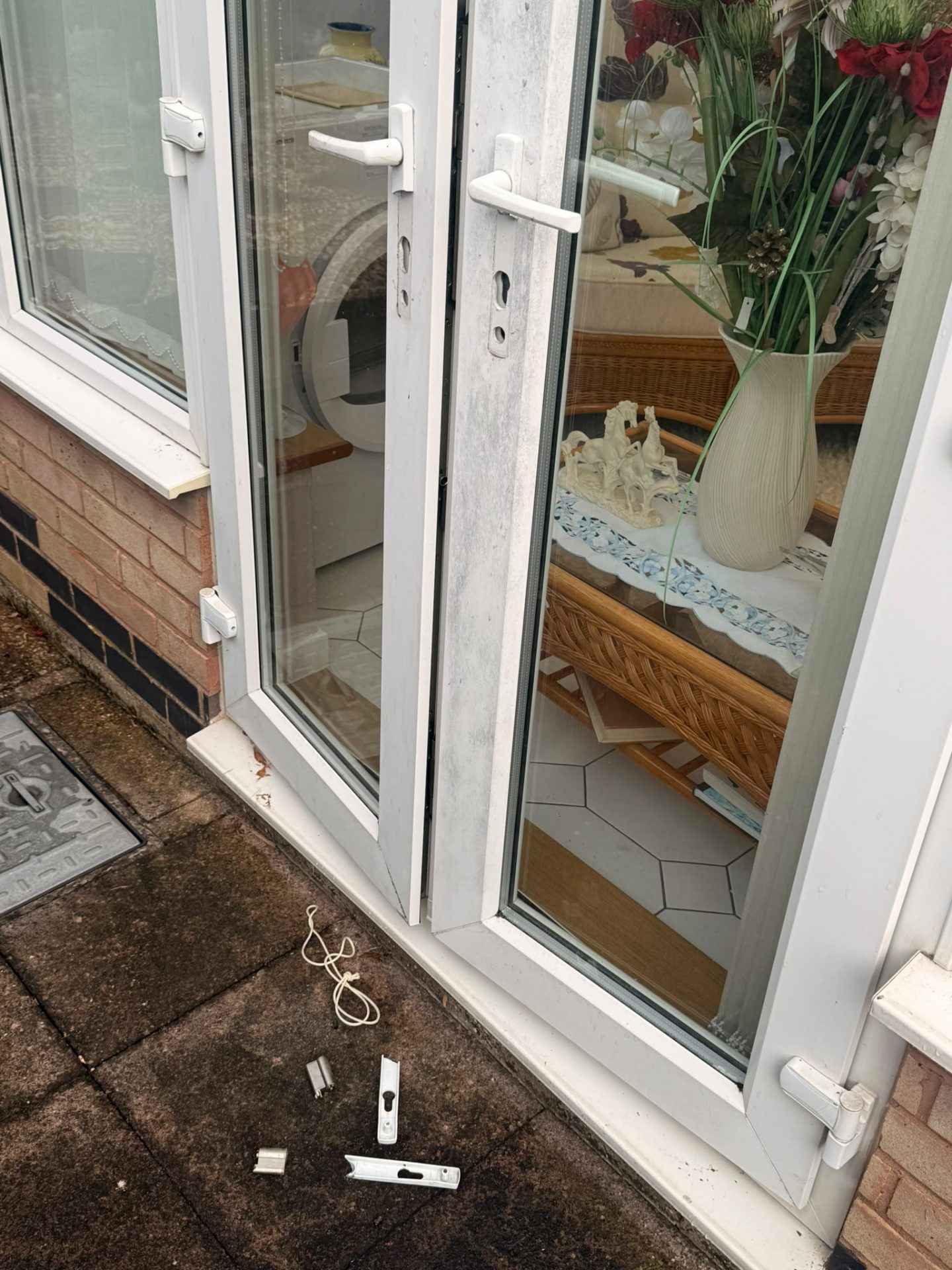
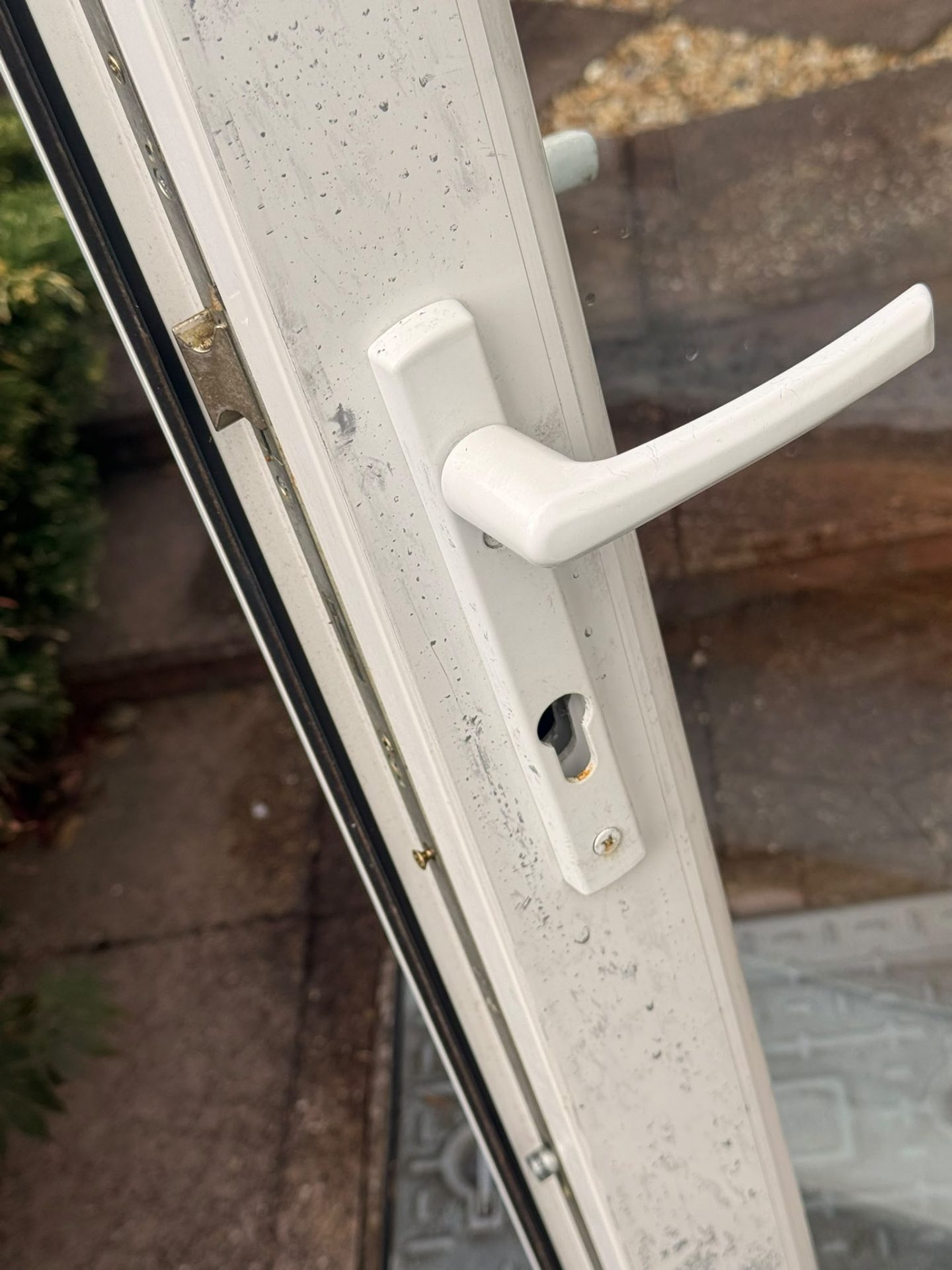
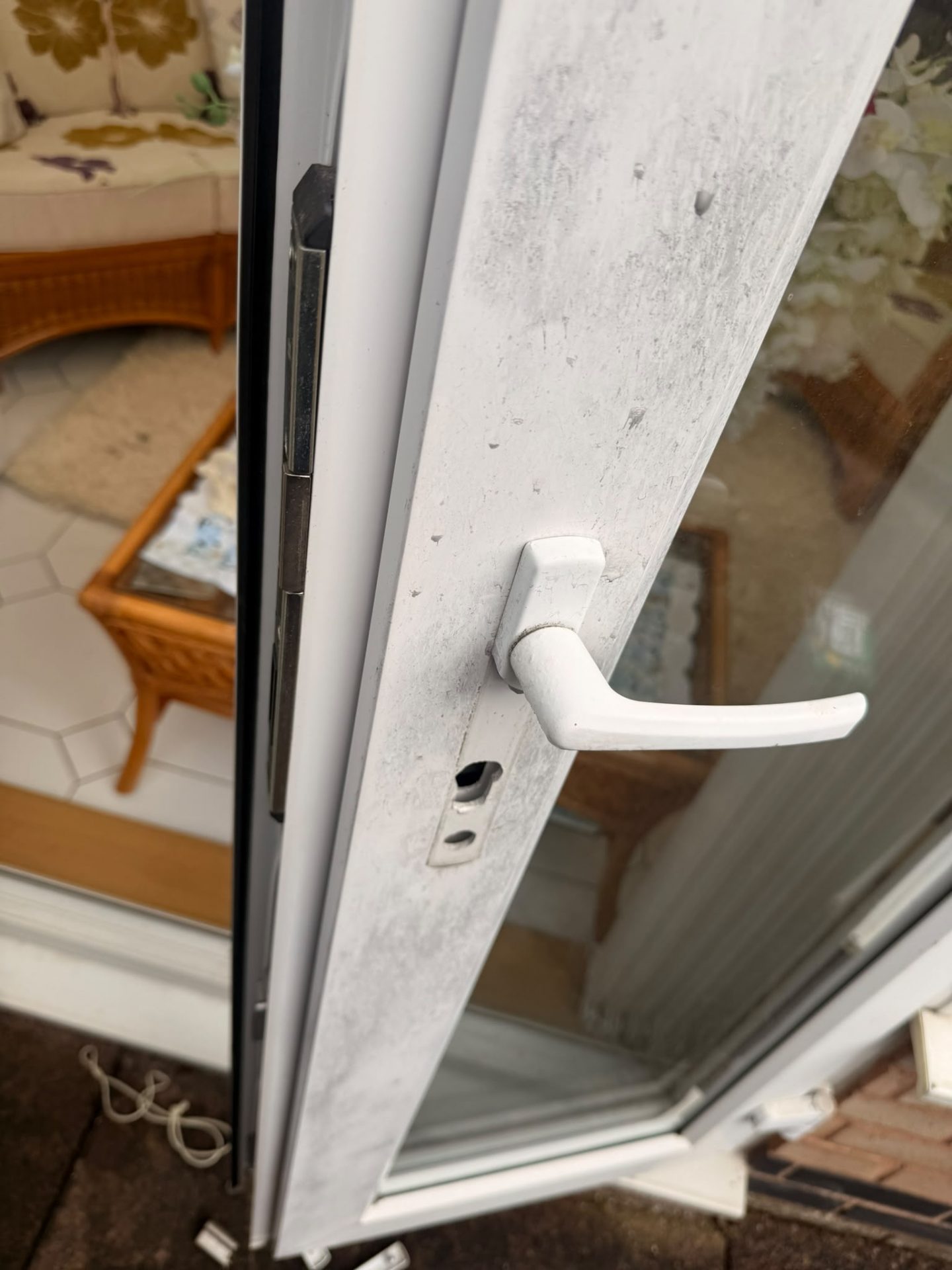
The repair visit: entry secured, mechanism checked, and the patio door brought up to the same standard as the rest of the house — TS007 3-star anti-snap cylinders and new handles, the same spec their front door already had.
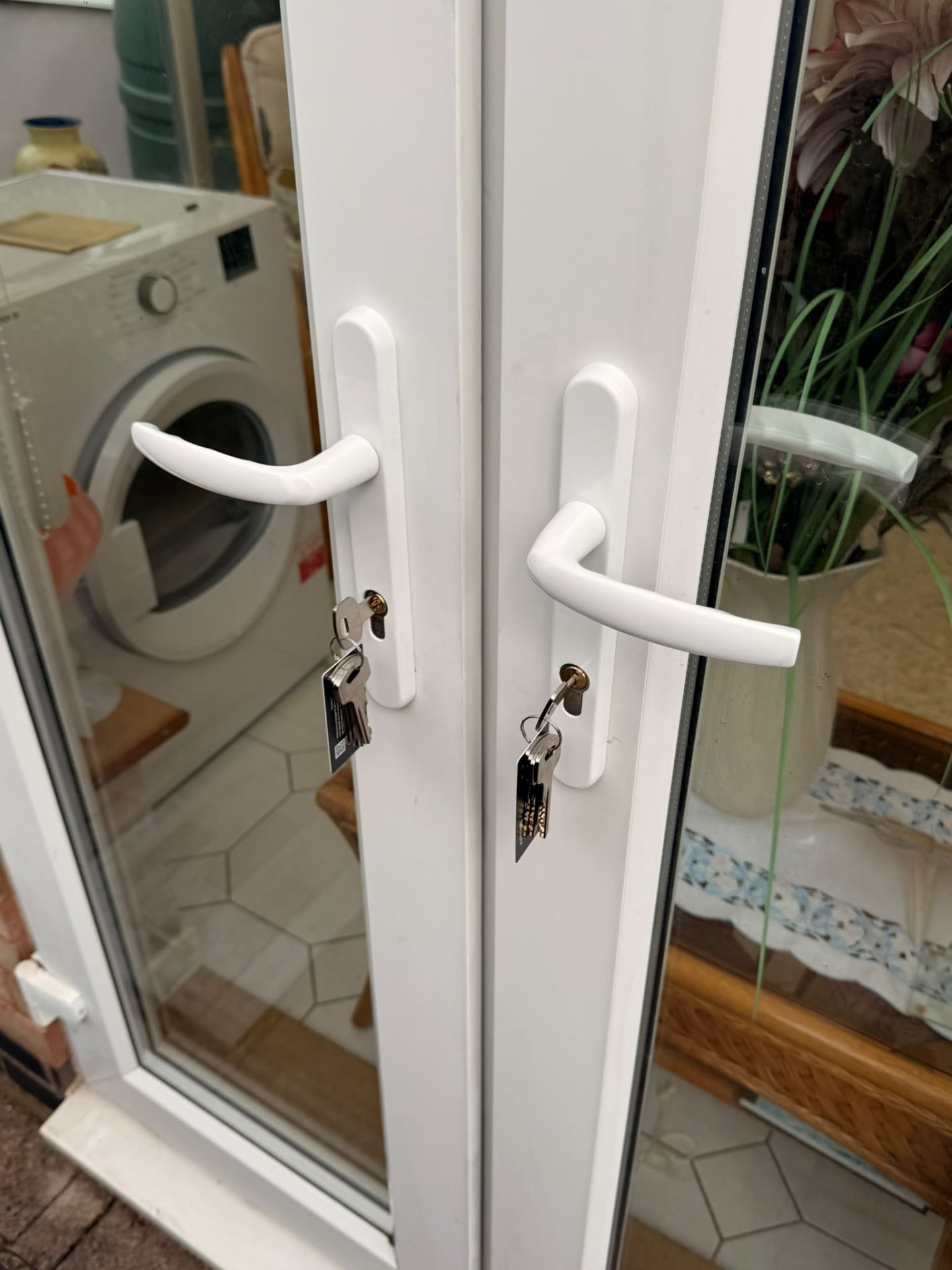
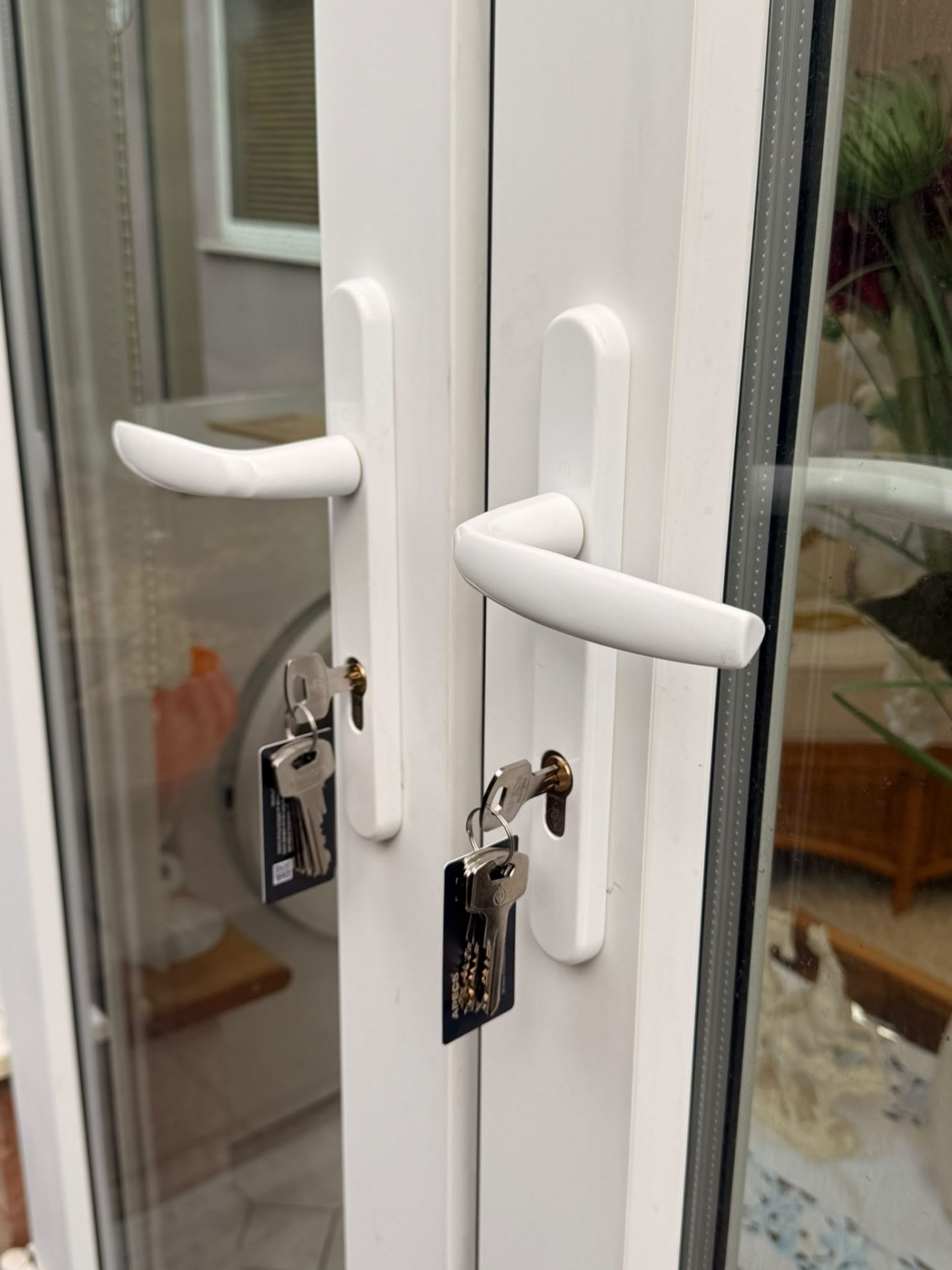
The lesson for every mover: your security is exactly as strong as your weakest door. When you move in — or when you upgrade — the back doors, patio doors and side doors count just as much as the front. One uncertified cylinder anywhere on the house is the way in. See lock replacement & fitting for what a whole-house check covers, or after-burglary service if the worst has already happened.
Who has a key to your new home?
It is easy to assume the previous occupant handed over every key. In practice, keys accumulate quietly over the years and get scattered among people who are mostly trustworthy — the trouble is you cannot know which ones. Copies commonly sit with:
- Family members, neighbours and friends of the previous owner or tenant.
- Cleaners, dog walkers, gardeners and tradespeople who were given a key and never returned it.
- Estate agents and, in rentals, letting agents who held keys during viewings and the sale.
- Previous tenants, their partners and their contractors, in a property that has been let.
- Anyone who simply had a spare cut “just in case” and forgot about it.
Most of those people will never think about your home again. But your security should not depend on the goodwill and memory of strangers. A lock change removes every one of those unknowns at a stroke, which is why we treat it as the single most worthwhile job of the first week.
Which locks and doors to deal with
Most people think about the front door and stop there. A proper lock change after moving in should cover every entry point, because a back door with an old key is exactly as much of a risk as a front one. Work through:
- The front door — the obvious one, and usually the first fitted.
- The rear and side or kitchen doors — frequently overlooked, and often where spare keys were kept.
- Patio, French and bifold doors — these run on multipoint mechanisms that may not have been serviced in years; worth checking as well as a cylinder change.
- Outbuilding door locks where they give access to the property.
Getting everything assessed in one visit is more efficient and avoids a second call-out. On what is booked as a simple lock change, Max regularly finds one door with a mechanism that is already on its way out or has lost a function — far better to know on moving day than to discover it later.
change the cylinder or replace? The honest comparison
There are two ways to make the old keys useless. Knowing the difference helps you spend sensibly.
a cylinder change
A cylinder change keeps the existing lock hardware but changes its internals — the pins or levers — so the old keys no longer work and you get fresh keys. It can be a good option where the existing lock is genuinely good quality, correctly fitted and in sound condition, or where several locks are part of a designed key system you want to keep. It is about invalidating old keys rather than upgrading the lock itself.
Replacing
Replacing removes the old cylinder or lock and fits a new one, giving you brand-new hardware and new keys. For most house moves this is the cleaner choice, because it does two jobs at once: it kills the old keys and lets you upgrade a weak point at the same time. Replacement is the sensible route when you cannot identify the standard of the existing lock, the key feels rough, the cylinder sticks out past the handle, the door has been forced in the past, or the hardware is simply old or basic.
| Situation on move-in | Usually the better choice |
|---|---|
| Existing lock is a known, good-quality, well-fitted unit | change the cylinder |
| You cannot tell the age, standard or quality of the lock | Replace |
| Cylinder protrudes past the handle or key feels rough | Replace (and upgrade to anti-snap) |
| Door has been forced or shows past damage | Replace |
| You want better security, not just new keys | Replace |
Because most people moving in cannot vouch for the existing hardware and want the reassurance of a fresh, upgraded lock, replacement is what we recommend in the majority of cases.
Cylinders versus full mechanism replacement
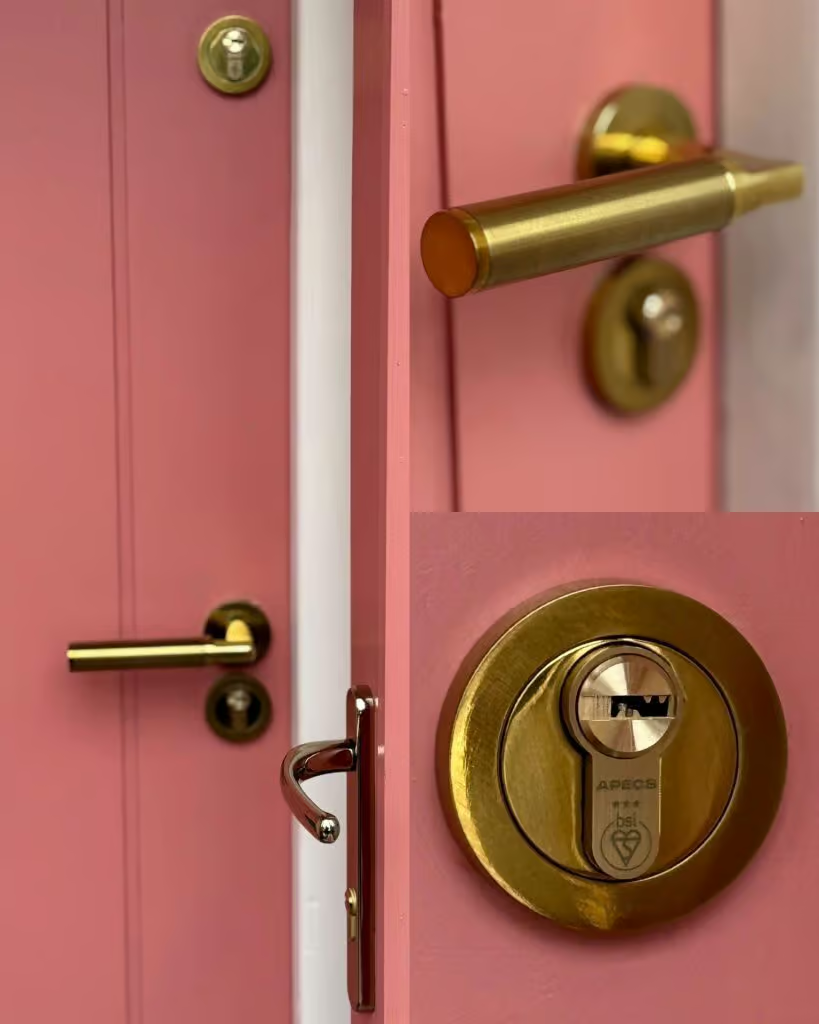
On most modern uPVC and composite doors, a lock replacement means swapping the euro cylinder rather than the whole mechanism. The cylinder is the part that accepts the key, and it can usually be changed quickly without removing the door furniture or disturbing the multipoint mechanism. What matters is the grade you fit. Older cylinders tend to be standard euro cylinders with no anti-snap protection, and snapping is a common enough attack that it appears regularly in insurance guidance. Max fits a TS007 3-star anti-snap cylinder as standard, which gives meaningfully better protection against the most common method used on homes. If a door is timber with a mortice lock, the equivalent is a five-lever deadlock to BS3621, which is what most insurers ask for.
Timing it around your move
The ideal time to change the locks is on or immediately after move-in day, before your first night in the property. A few practical pointers:
- Buyers — book the visit for completion day or the day after, so the changeover of keys and the changeover of ownership line up.
- Renters — check your tenancy agreement first and clear any lock change with your landlord or agent; many are happy for it provided they receive a key.
- Landlords — change the locks between tenancies as standard practice. It protects the incoming tenant as much as the property, and it can be timed to the changeover date so there is no gap in the property being secured.
A cylinder change on all external doors is quick — a visit covering three or four doors is typically done within about ninety minutes — so it slots easily into moving day without holding anything up. If keys have not been handed over at all and you need to get in, that gain of entry can be handled in the same visit; see the emergency locksmith service.
A security once-over while the locks are done
A lock change is also a natural moment to get a general sense of the property’s security. As part of any lock change visit, Max carries out a straightforward look over the entry points and will flag things like worn handles, misaligned keeps, tired hinges or a missing letterplate guard. None of it is a hard sell — it is the same honest assessment you would get from a knowledgeable friend having a look before you settled in. Where something needs attention, a little door repair at the same time saves a separate trip.
Pricing
Max the Locksmith charges a flat £85 plus parts — for a lock change the cylinders are the parts — with no call-out fee and no out-of-hours surcharge, and the same price across the whole coverage area: Nottingham, Derby, Mansfield, Loughborough and the surrounding East Midlands towns and villages. The price is agreed before any work starts and most lock changes are completed the same visit. Max is certified, DBS-checked, Checkatrade-approved and fully insured, with more than 600 local reviews, and works regularly with homeowners, landlords and letting agents. See the full areas covered.
Frequently asked questions
Should I really change the locks when I move into a new home?
Yes. You have no reliable way of knowing how many copies of the existing keys were cut over the years or who still holds them — previous owners or tenants, agents, tradespeople, family and friends. Changing or a cylinder change the locks on every external door invalidates all of those and puts you in full control of access from day one. It is the single most worthwhile security job in the first week.
Do I need to change every lock, or just the front door?
Every external door, not just the front. A back or side door with an old key in circulation is just as much of a risk. That means the front, rear and any side or kitchen doors, plus patio, French or bifold doors, and any outbuilding doors that are genuine access points. Doing them all in one visit is more efficient and avoids a second call-out.
Is it cheaper to change the cylinder or to replace?
a cylinder change can be slightly cheaper because it reuses the existing hardware, but for most house moves replacing the cylinder is the better value overall — it invalidates the old keys and upgrades the lock to a 3-star anti-snap standard at the same time. a cylinder change makes most sense when the existing lock is already known to be good quality and correctly fitted.
How quickly can it be done, and can it fit around moving day?
Very easily. A cylinder change across three or four external doors is typically completed within about ninety minutes, so it slots into completion day or the day after without holding up the move. Most jobs are done the same visit, and if keys were never handed over, gaining entry can be handled at the same time.
I am renting — can I change the locks myself?
Check your tenancy agreement and clear it with your landlord or letting agent first. Many are perfectly happy for locks to be changed provided they are given a key for access and compliance. Landlords should ideally change the locks between tenancies as standard, and Max works with landlords and agents to arrange exactly that around changeover dates.
Sorted? What most readers check next
- Lock replacement — quality locks, anti-snap as standard
- Locksmith prices in Nottingham — the transparent 2026 guide
- Landlords: Changing Locks Between Tenants (Best Practice)
- Insurance Approved Door Locks: BS3621 Explained
Need it sorted today? Call 07552 421433 — £85 + parts (+ VAT), no call-out fee, same price 7 days.