




My Lock Is Stiff, Sticking, or Spinning: What It Means and What to Do
Most people put up with a dodgy lock for far too long. It sticks a bit in the morning, needs a jiggle before it catches, or turns harder than it used to — and because life is busy, it waits. The trouble is that a lock rarely stays at that level. Whether your lock is stiff, sticking or spinning, each of those three behaviours means something different mechanically, and reading the symptom correctly is the difference between a quick cylinder swap and a snapped key, a failed mechanism, or a door you can’t open from either side. This guide decodes exactly what stiff, sticking and spinning-free each tend to point to, so you know what you’re dealing with and how urgent it is.
The pattern we see across Nottingham, Derby and Mansfield is consistent: the jobs that come in early are simple, and the ones that get left turn awkward. So start by matching what your lock is doing to the table below, then read the section that fits.
Stiff, sticking or spinning: the quick symptom guide
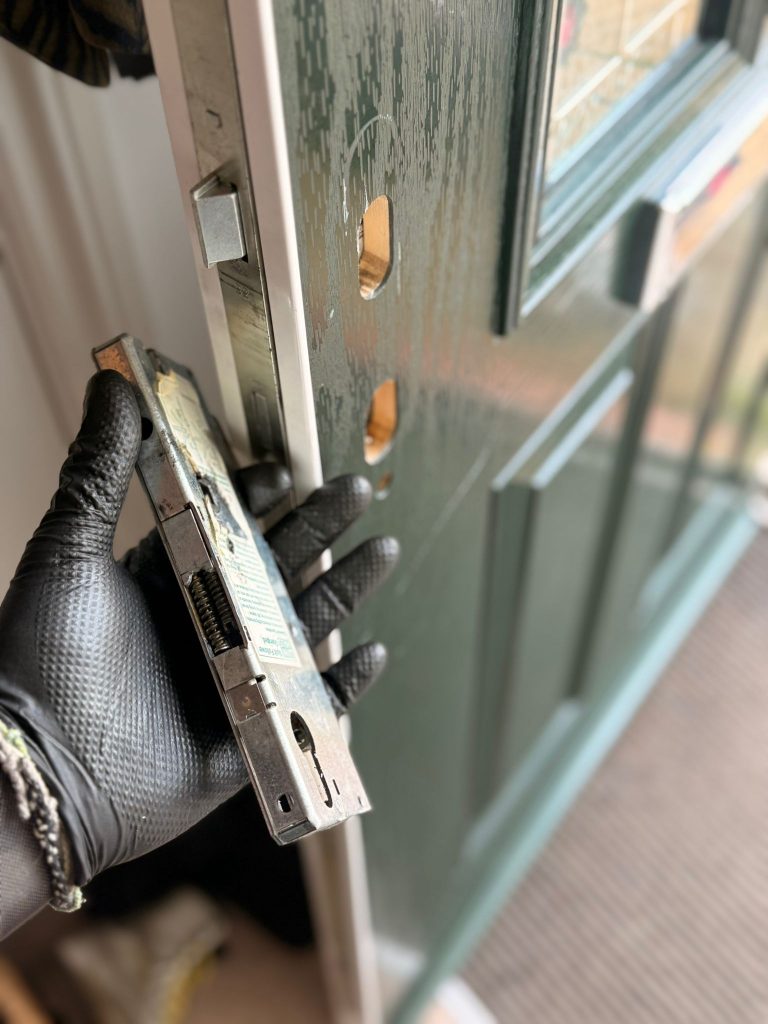
| Symptom | What it usually means | How urgent |
|---|---|---|
| Stiff / heavy to turn (both open and shut) | Dry or worn cylinder, or a worn cam inside the mechanism adding resistance | Deal with soon — it rarely improves on its own |
| Stiff only when the door is shut | Door has dropped; locking points are fighting the keep (alignment) | Book it in before the strain causes a failure |
| Sticking / needs jiggling to catch | Worn cylinder pins, or a worn or copied key not sitting at the shear line | Not an emergency, but it will get worse |
| Spinning free / turns with no resistance | Broken cam in the cylinder, or a worn spindle — the bolts aren’t being thrown | Urgent — the door isn’t secure |
| Handle floppy or drops away | Sheared spindle, loose fixings, or a tiring multipoint mechanism | Address promptly; the door won’t operate correctly |
When the lock is stiff or heavy to turn
A lock that has become stiff is usually telling you one of three things. The cylinder may simply be dry and short of lubricant — though this is less common than people assume. More often, the internal cam or tailpiece has begun to wear, which increases the effort needed to operate the lock. On older uPVC doors, it can also mean the door has dropped slightly and is pulling the cylinder out of line with the keep.
The instinctive response is to reach for WD-40, but that is counterproductive: it attracts dust and gums the mechanism up over time. A dry PTFE lubricant or graphite powder is the right choice if you want to try something at home. Apply a little, work the key gently, and see if it frees up. If the stiffness came on gradually over weeks and lubricant only helps briefly, that’s wear rather than dirt — and a quick inspection will confirm whether the cylinder or mechanism needs replacing rather than lubricating.
When the key sticks or needs jiggling
If the key slides in smoothly but needs lifting, pressing or wiggling before the lock will turn, the cylinder is usually the culprit. Over years of daily use, the pins inside wear so they no longer line up cleanly at the shear line, and the key has to be nudged into just the right spot before it engages. It’s one of the most common faults we see on older euro cylinders.
Before blaming the cylinder outright, check the key itself — especially if it’s a copy rather than the original cut, as copies are often slightly off and wear faster. Try your spare. If the spare behaves better, the key is the problem. If both stick, it’s the cylinder, and in most cases a straightforward cylinder replacement resolves it entirely within a single visit.
When the lock turns but doesn’t engage (spinning free)
This is the one that causes real alarm, and rightly so. If the key turns freely with no resistance and either the door won’t lock or you can feel something spinning inside without the bolts throwing, the cylinder has failed internally. In a euro cylinder this usually means the cam — the little arm that drives the mechanism — has sheared off. It’s a clean mechanical break rather than gradual wear, and it can happen suddenly, sometimes after a knock or a spell of heavy use.
The important point is that a spinning lock leaves you unable to secure the property, so it counts as urgent. Don’t keep turning it hoping it will bite — it won’t. Max carries the most common cylinder sizes and mechanisms as standard, which usually means a same-day repair rather than a wait for parts.
When the handle feels floppy or drops away
A handle that feels loose, drops when you use it, or flops back down without resistance isn’t strictly a lock fault, but it’s closely tied to one. The spindle connecting the handle to the latch can shear, the fixing screws can work loose over time, or the handle can crack at the fixing point. It’s especially common on busy front doors that take heavy daily use.
A floppy handle doesn’t necessarily mean the lock has failed, but it does mean the door won’t operate correctly — and it can mask a more significant problem developing in the multipoint mechanism underneath. It’s also worth knowing that some home insurance policies carry conditions about the operating condition of door furniture, so a drooping handle is worth sorting promptly rather than living with.
Why the same symptom isn’t always the same cause
The reason a locksmith diagnoses before touching anything is that on a modern door the lock is part of a system — the cylinder, the handle, the spindle and the multipoint strip all work together. A worn cylinder can make the handle feel heavy; a dropped door can make the key feel stiff; a tiring mechanism can make a healthy cylinder seem faulty. Swap the wrong part and the symptom comes straight back.
That’s why the checks in this guide matter: they narrow it down before anyone spends money. If you’d like the fuller picture on decoding a stiff lock at home, our guide on door lock repair goes deeper, and if the trouble turns out to be the whole locking strip, our lock replacement page explains what’s involved.
What to try safely at home first
- Test open versus shut. Smooth open, stiff shut means alignment, not the lock.
- Try the spare key. If it works better, the key is worn, not the cylinder.
- Use the right lubricant. PTFE spray or graphite only — never WD-40, oil or grease.
- Stop forcing a stiff key. A snapped key inside the barrel turns one job into two.
- Don’t keep working a floppy handle or a spinning lock — you risk the mechanism seizing shut or leaving the door insecure.
When to call a locksmith
If the lock is still operating and you can secure the property, a booked appointment is fine — get it in before the fault grows. If it has failed entirely, the key spins without locking, or you can’t lock the door at all, that’s an emergency and Max is available around the clock. There’s no call-out fee and no difference in price between an emergency visit and a planned one, so there’s no penalty for sorting it straight away. Our emergency locksmiths in Nottingham reach most of the area quickly, and if the fault followed an attempted break-in, our after-burglary service covers the whole door rather than just the barrel.
One tip that speeds things up: if you can, find the make and model of your door or the lock, and take a photo of the cylinder as it currently sits. That helps Max arrive with the right parts and usually means the job is finished on the first visit.
What it costs
The price is simple and it doesn’t change with the symptom or the time of day: £85 plus parts if any are needed, with no call-out fee and no out-of-hours surcharge. It’s the same price across the whole coverage area — Nottingham, Derby, Mansfield, Loughborough and the surrounding towns and villages listed on our areas covered page. Max diagnoses the fault, agrees the price before starting, and completes most jobs in one visit by carrying the common cylinders and mechanisms as standard. Every job is handled by a certified, DBS-checked, Checkatrade-approved and fully insured locksmith with more than 600 local reviews, and the approach is always repair-first — replacing only what genuinely needs it.
The short version
Stiff means friction or wear. Sticking means the cylinder or key isn’t lining up. Spinning free means something has broken inside and the door isn’t secure. A floppy handle means the spindle or mechanism is going. Match your symptom, try the safe home checks, and get it looked at while the door still works — the early jobs are always the simple ones.
Frequently asked questions
My key turns all the way round but the door won’t lock — what’s happened?
The cylinder has failed internally, usually because the cam that drives the mechanism has sheared. It’s a clean break rather than gradual wear and it leaves the door insecure, so treat it as urgent. Stop turning the key and call, as Max carries the common cylinders for a same-day fix.
Why does my key need jiggling before it turns?
That’s typically worn cylinder pins that no longer sit cleanly at the shear line, so the key has to be nudged into place. A worn or copied key can cause the same feel. Try your spare first; if both stick, a cylinder replacement usually solves it in one visit.
Is a stiff lock an emergency?
Not usually, as long as the door still locks and you can secure the property — but book it in, because stiffness is an early warning that tends to worsen. A lock that spins free or won’t lock at all is a different matter and should be treated as urgent.
Should I use WD-40 on a stiff or sticking lock?
No. WD-40 attracts dust and gums the mechanism up over time, making things worse after a short improvement. Use a dry PTFE lubricant or graphite powder instead, applied sparingly, and never force a key that feels like it might snap.
How quickly can you come out, and what will it cost?
Max is available around the clock and reaches most of the Nottingham area fast. It’s £85 plus parts if any are needed, with no call-out fee and no out-of-hours surcharge, and the same price across Nottingham, Derby, Mansfield, Loughborough and nearby areas whether it’s an emergency or a planned visit.
Sorted? What most readers check next
- Door lock & mechanism repair — handles, gearboxes, multipoint systems
- Locksmith prices in Nottingham — the transparent 2026 guide
- How to Fix a Stiff Door Lock Properly
Need it sorted today? Call 07552 421433 — £85 + parts (+ VAT), no call-out fee, same price 7 days.