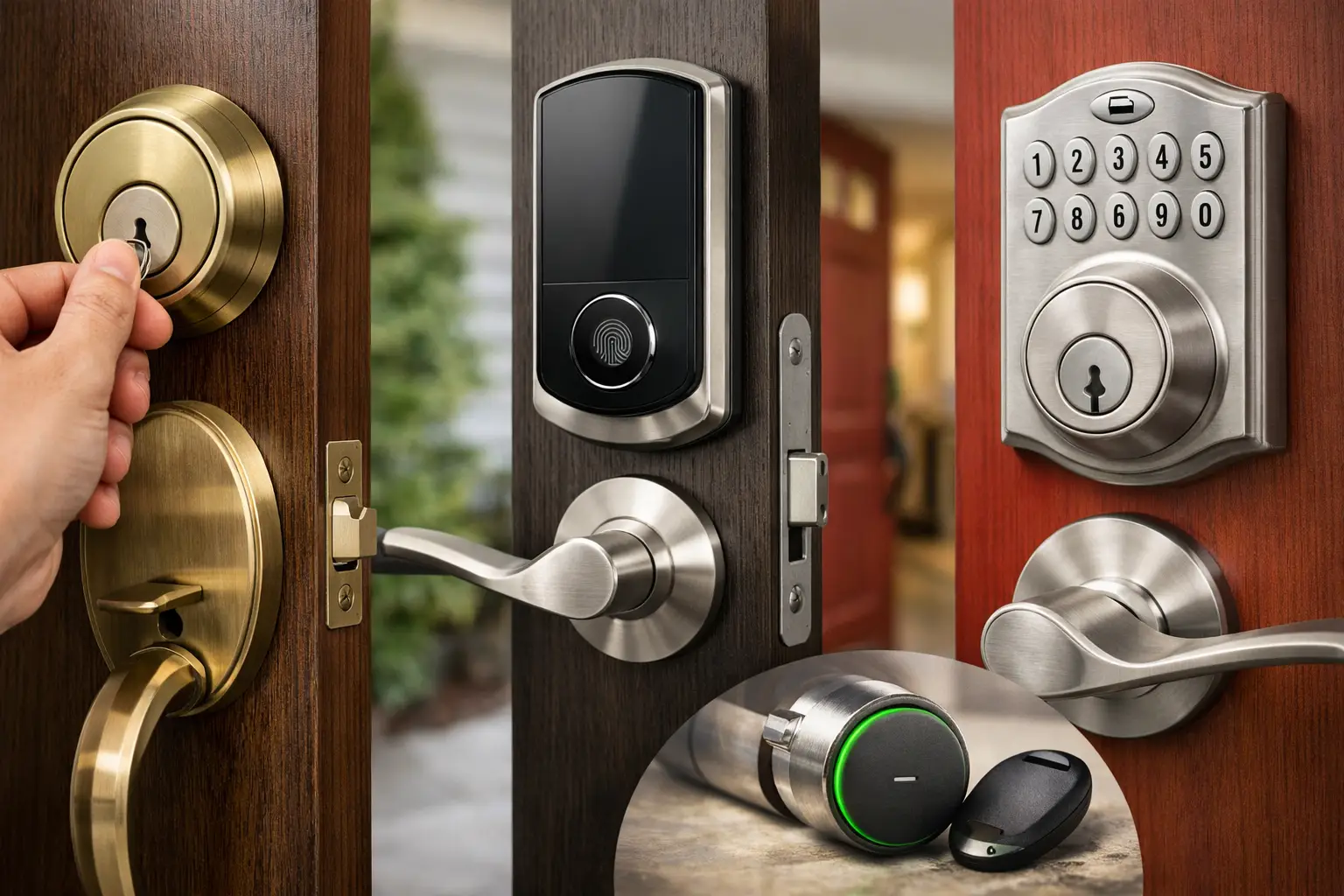
The most widely referenced standard for residential locks is BS3621, which applies to mortice deadlocks. A five-lever mortice deadlock to BS3621 must meet requirements across a range of attack methods including picking, sawing the bolt, and use of incorrect keys. The standard also specifies minimum bolt throw distance and the number of key variations that must be available.
For euro cylinders, which are the dominant lock type on uPVC and composite doors, the relevant standard is TS007, which operates on a star rating system. A three-star rating, which can be achieved by combining a one-star cylinder with a two-star handle, indicates the highest level of protection and includes specific resistance to snapping, picking, and bumping. Most insurers that specify cylinder requirements will accept TS007 three-star as compliant.
Anti-snap cylinders are not automatically British Standard compliant. The terms overlap but are not synonymous. It is possible to buy a cylinder marketed as anti-snap that does not carry a TS007 rating. When compliance with an insurance requirement is the goal, the specific standard referenced in the policy is what needs to be matched.
Home insurance providers are pricing risk. A property with locks that have been independently tested to resist the attack methods most commonly used in residential burglaries represents a lower risk than one that has not. The requirement for British Standard locks in many home insurance policies is the direct expression of that risk calculation.
The practical consequence for homeowners is that failing to meet the specified standard does not simply mean paying a higher premium. In some cases, a claim following a break-in may be reduced or rejected if the insurer determines that the locks in place at the time did not meet the policy conditions. This is not a hypothetical risk. It happens, and it is an outcome that a relatively small investment in the right locks would have prevented.
Moving into a new property is the most obvious trigger. Previous owners may have replaced locks with non-compliant alternatives at some point, or the original specification may have been adequate at the time but no longer meets the current standard your insurer requires.
Older properties with original mortice locks are frequently equipped with three-lever deadlocks rather than the five-lever BS3621 standard. The visible difference is subtle, but the security and compliance difference is significant. Three-lever locks offer substantially less resistance to picking and are not accepted as compliant by most insurers.
Properties that have had new uPVC or composite doors fitted in the past ten years may have compliant cylinders if the installer was careful about specification, or they may have standard cylinders that look identical to anti-snap alternatives but carry no tested rating. The only reliable way to know is to check what is actually fitted.
Max offers a home security check that assesses the current lock specification across external doors and accessible windows, identifies any gaps between the existing locks and the standard required by a typical home insurance policy, and provides clear recommendations on what would bring the property up to that standard.
The visit covers the cylinder or mortice lock type on each external door, the condition of the frame and keeps, the window lock specification, and any other accessible points including patio doors and integral garage access doors. The outcome is an honest and practical view of the current security position. There is no call-out fee for a security check visit.
The installation process for British Standard locks depends on the door type. On timber doors with a mortice lock, replacing a three-lever with a five-lever BS3621 deadlock is a straightforward job that involves cutting a slightly larger mortice pocket in most cases. On uPVC and composite doors, upgrading the euro cylinder to a TS007-rated alternative is a direct swap that does not require any modification to the door.
The right lock for each door is identified before anything is removed. Mortice locks need to match the door thickness and backset. Euro cylinders need to be measured accurately against the existing fitting to ensure the correct profile length. All parts and labour carry a twelve-month warranty.
Do you cover Nottingham and surrounding areas?
Yes. The service covers Nottingham city, suburbs across the NG postcodes, and a twenty-mile radius including Beeston, West Bridgford, Arnold, Hucknall, Carlton, and surrounding areas. Derby and Mansfield are also covered.