




How to Change a Front Door Lock — and When to Call a Locksmith
Changing a door lock is one of those jobs that’s either genuinely simple or quietly ruinous, depending on which lock you’ve got and how honest you are about the difference. Here’s the straight version we give customers across Nottingham, Derby, Mansfield and Loughborough — including the part you can realistically do yourself.
Rather have it done properly? Max changes front door locks across Nottingham, Derby & Mansfield — anti-snap TS007 as standard — see lock replacement & fitting. £85 labour + parts.
First: Know Which Lock You’re Looking At
Euro cylinder — the teardrop-shaped barrel in almost every uPVC and composite door, and plenty of aluminium ones. This is the one you can change yourself. Mortice lock — the heavy lock buried inside a wooden door, opened with a long-shanked key; changing like-for-like is possible for a confident DIYer, but fitting a new one to insurance spec means precise joinery. Nightlatch — the surface-mounted “Yale” on older wooden doors; swapping the cylinder is easy, replacing the whole case less so. Multipoint mechanism — the full-height strip inside uPVC and composite doors; not a DIY part, and usually the real culprit when “the lock” plays up.
Changing a Euro Cylinder Yourself — Properly
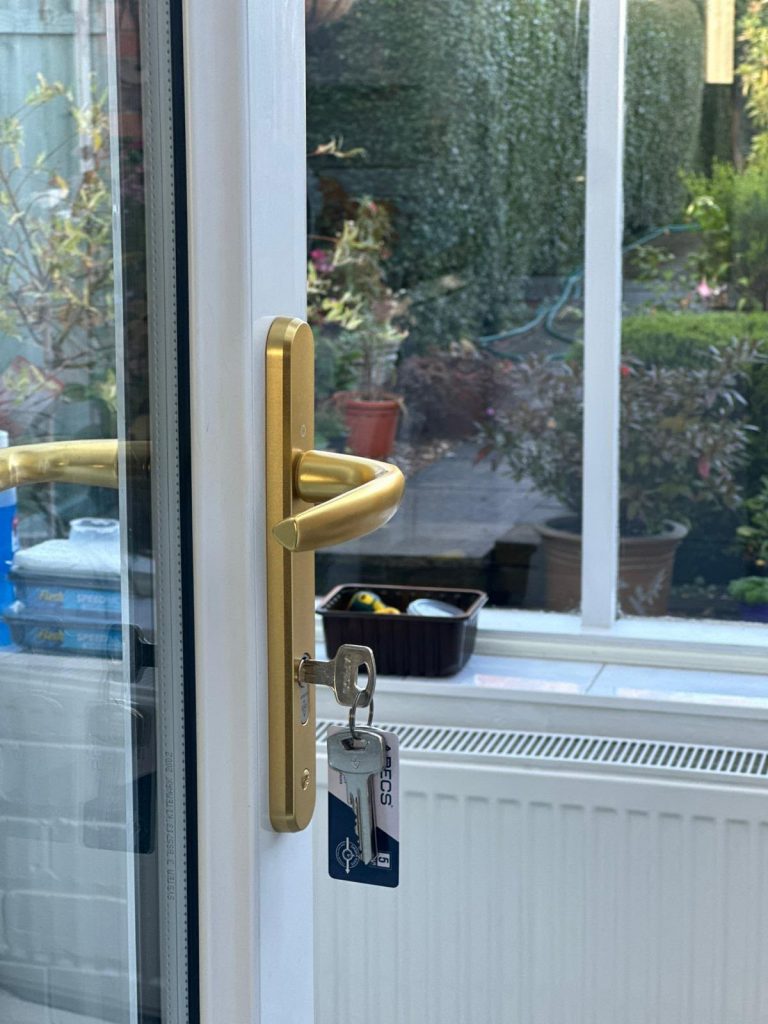
With the door open, undo the single retaining screw on the door edge, level with the bottom of the cylinder. Put the key in, turn it slightly (around 10–15 degrees) to line up the cam, and slide the cylinder out. Measure it from the central screw hole to each end — cylinders are sized in two halves, like 40/50, and the measurement matters more than anything else: a cylinder that pokes out more than a few millimetres past the handle is an invitation to snapping. Buy the same split size, slide it in, turn the key gently to seat the cam, refit the screw. Ten minutes, honestly.
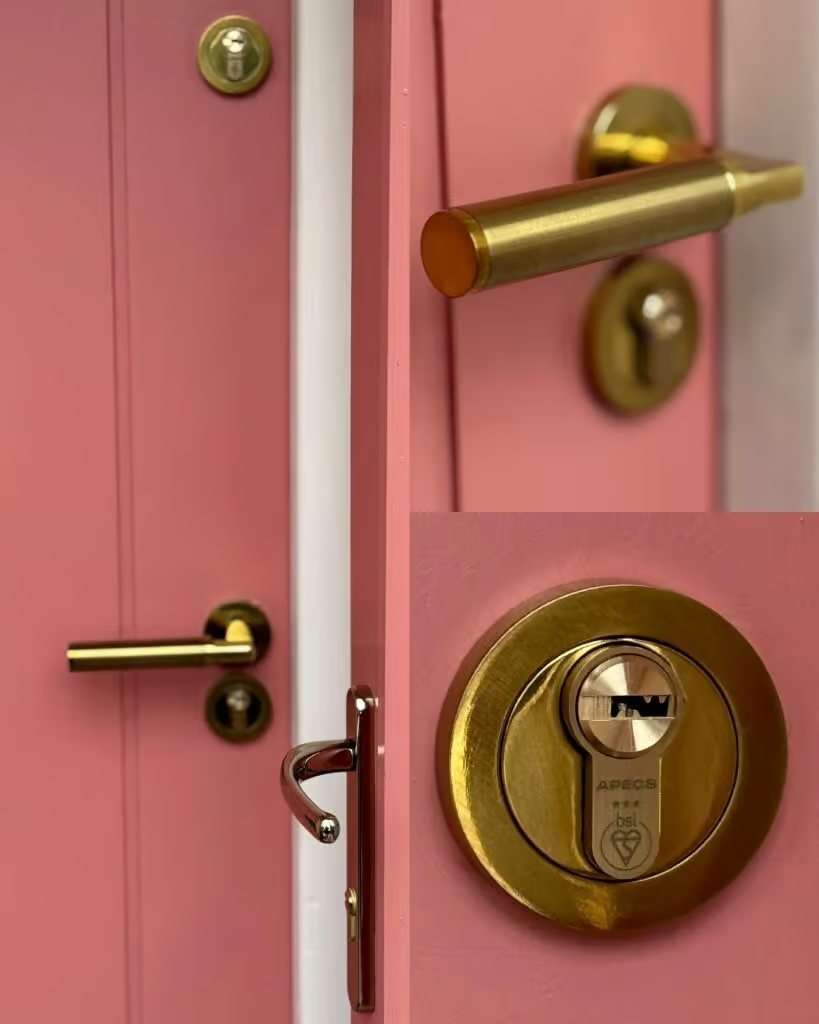
While you’re there, upgrade rather than replicate: an anti-snap cylinder — BSI Kitemarked or TS007 3-star — costs a little more than the bargain-bin barrel and removes the single most common burglary method against uPVC and composite doors. If the old cylinder was sticking rather than broken, read our guide on stiff and sticking locks first — the cylinder isn’t always the problem.
Where DIY Ends — and Why
Call it in when: the key turns but the door won’t lock unless you lift and fight the handle (that’s the multipoint mechanism or door alignment, not the cylinder); the door is wooden and the insurer wants BS3621 (a new mortice case needs accurate chiselling — get it wrong and you’ve weakened the door stile); the cylinder turns but the cam doesn’t throw (mechanism failure); or the door has dropped so the bolts miss their keeps. Fitting a perfect new lock to a misaligned door just wears the new lock out — alignment first, always.
What a Locksmith Charges for a Lock Change
Here it’s a flat £85 labour charge plus the part and VAT — same price for emergencies and appointments, no call-out fee, evenings and weekends included. Standard euro cylinders run roughly £25–£120 depending on rating; BS3621 mortice locks £30–£150. Every new lock comes with a full set of keys (we don’t cut keys — if keys are the issue, a fresh cylinder with new keys is the secure answer). Full breakdown on the price guide, and the whole service on the lock replacement & fitting page.
Moved House? Change Them All
Moving day is the one time a lock change isn’t optional thinking — it’s basic hygiene. Every previous key copy is a stranger with access. One visit swaps every external cylinder, keyed to fresh keys, usually inside the same flat labour charge — the full logic is in our new-home lock change guide.
Front Door Lock Questions, Answered
How much does it cost to change a front door lock?
With us it’s a flat £85 labour charge plus the part and VAT — a standard euro cylinder typically runs £25–£120 depending on security rating, and BS3621 mortice locks £30–£150. You get the exact figure before any work starts, and there’s no call-out fee.
Can I change a door lock myself?
A like-for-like euro cylinder swap on a uPVC or composite door is a realistic DIY job if you measure correctly. Mortice locks in wooden doors, multipoint mechanism faults and anything that needs the door re-aligned are where DIY usually ends — a badly fitted lock is worse than a worn one.
Do new locks come with keys?
Yes — every new cylinder or lock is supplied with a full set of keys, and extra keys can be supplied with the lock on request. We don’t offer key cutting as a separate service; if keys are the problem, a fresh cylinder with new keys is the secure fix.
Should I change the locks when I move house?
Always. You have no idea how many key copies exist — previous owners, their trades, neighbours, old cleaners. A cylinder change on moving day is quick, inexpensive, and the only way to know exactly who holds keys to your home.
What lock does my insurer expect?
Most policies expect a BS3621 five-lever mortice lock on final-exit wooden doors, or a multipoint system on uPVC and composite doors — and many now recognise TS007 3-star or Kitemarked anti-snap cylinders. Check your policy wording; fitting the right spec is part of the job.
Want it done right first time? Lock replacement & fitting covers every door and lock type across Nottingham, Derby, Mansfield, Loughborough and everywhere between — repairs first where a repair will do.