




Smart Locks on uPVC & Composite Doors: What Actually Works (UK 2026)
The short answer: smart locks work well on uPVC and composite doors — but only the ones designed for multipoint mechanisms, fitted so the door still lifts and locks properly. Budget no-name units are a security downgrade dressed as an upgrade. Supplied, fitted and configured from £150 + £85 labour + VAT, trusted brands only.
Why uPVC doors are different
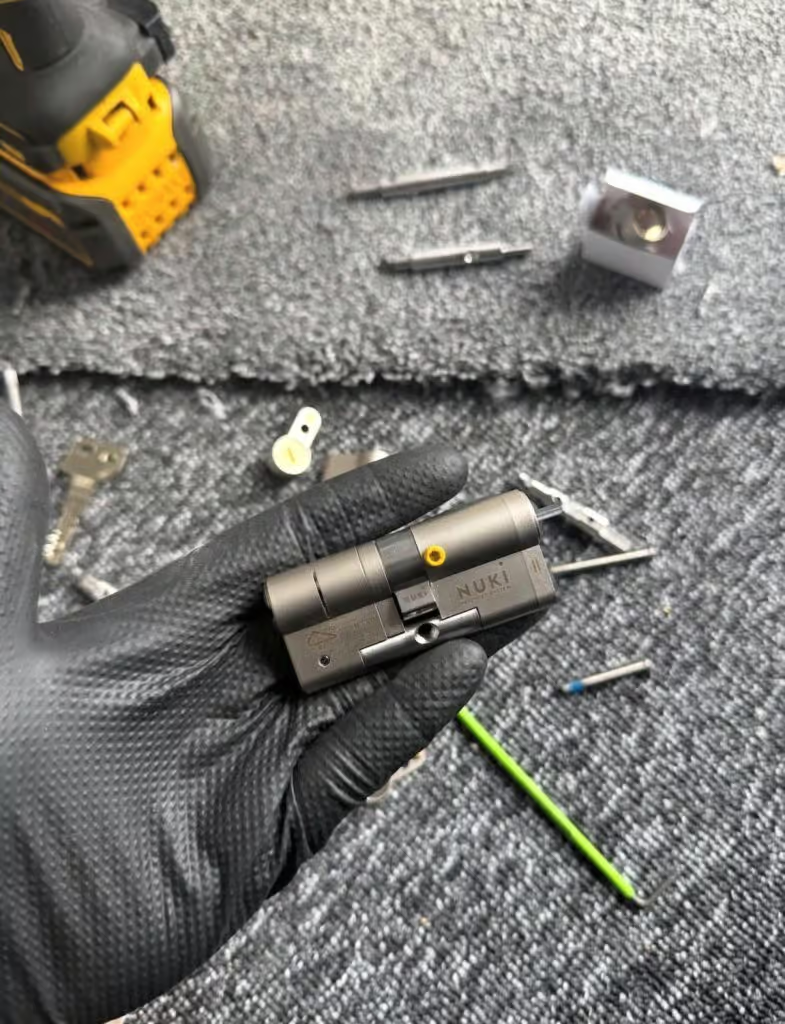
Most smart locks you’ll see advertised are built for American-style deadbolts on timber doors. A uPVC or composite door locks by lifting the handle to throw hooks and rollers into the frame, then turning a euro cylinder — so a smart solution has to either replace the cylinder with a motorised one, or replace the handle set with one that drives the multipoint for you. Bolt-on gadgets that ignore the multipoint leave you with a smart latch on a door whose real locking points never engage — convenient, and dramatically less secure than what you started with.
What actually works
Smart euro cylinders swap directly into the existing mechanism: keypad, fob, phone or fingerprint on the outside, thumb-turn inside, and the multipoint still does the heavy lifting. Fitting is the same discipline as any cylinder — correct length, flush fit, no overhang to grip. Smart handle sets go further and motorise the lift itself. Either way the mechanism underneath must be healthy first: a smart lock on a door that won’t lock properly just automates the fault.
The security caveats that matter
Keep the certification you already rely on — the cylinder side should still meet TS007 3★ or SS312 Diamond, because a snappable smart cylinder is still snappable. Check your insurance wording: some policies want key-operated locks (or BS3621 on final-exit timber doors), and a handful of insurers treat app-only entry warily. And insist on a mechanical key override plus decent battery behaviour — low-battery warnings, external contact points for a flat battery, and a spare route in that isn’t “call a locksmith”.
Why Max won’t fit the cheap ones
The £40 marketplace units fail three ways: thin zinc bodies that give up to basic attack, firmware and apps that stop being updated within a year, and batteries that die without warning. Being cheapest always has a cost — and on your front door it’s the wrong place to find out. Max fits established, certified brands with UK support, and it’s the same honest structure as everything else: hardware from £150, £85 labour, VAT stated upfront — full context on the price guide.
Good use cases (and poor ones)
Brilliant for: landlords and HMOs re-coding between tenants instead of changing locks every changeover, family homes juggling school-run keys, holiday lets, and anyone done with the flowerpot key. Poor fit for: doors with tired mechanisms (fix that first), and situations where every user needs app-level access but the broadband dies weekly — keep a fob or code path.
Quick answers
Can you fit one to my existing door? Almost always, if the door and mechanism are sound — the survey happens on the same visit as fitting.
What if the battery dies? Proper units warn you for weeks and keep a mechanical or external-power fallback. This is exactly the corner the cheap ones cut.
Are they insurance-approved? The good ones carry the same kitemarks as conventional hardware — but check your policy wording, and see the BS3621 guide for where traditional standards still rule.
Sorted? What most readers check next
- Lock installation — TS007 3★ anti-snap & BS3621 insurance-grade
- Locksmith prices in Nottingham — the transparent 2026 guide
- How to Tell Difference Between uPVC and Composite Doors
- Best Locks for Front Doors Explained
Need it sorted today? Call 07552 421433 — £85 + parts (+ VAT), no call-out fee, same price 7 days.
What a Smart Lock Install Costs
Smart lock installation runs at a flat £120 labour charge plus the device — the lock itself is the variable, from sensible mid-range to premium units like Nuki. The multipoint mechanism and anti-snap cylinder stay part of the picture, so the door keeps its insurance-grade security alongside the convenience. No call-out fee, and the figure is agreed before any work starts — see the price guide.
Quick Answers
Can a smart lock work with a uPVC multipoint door?
Yes — retrofit smart locks like Nuki drive the existing euro cylinder, so the multipoint hooks and shootbolts keep working exactly as before. The door stays insurance-compliant while gaining keyless entry.
What happens if the battery dies?
You still have a normal key. Retrofit units keep the cylinder key-operable from outside, and most give weeks of low-battery warning through the app before anything gets close to flat.
Will a smart lock affect my home insurance?
Not if the underlying lock still meets your policy — a Kitemarked or TS007-rated cylinder in a multipoint door. That’s why fitting is matched to the insurance spec, not just the gadget.
Related reading: Smart lock installation service · Cheap smart locks vs certified · Smart locks for Airbnb & HMO landlords