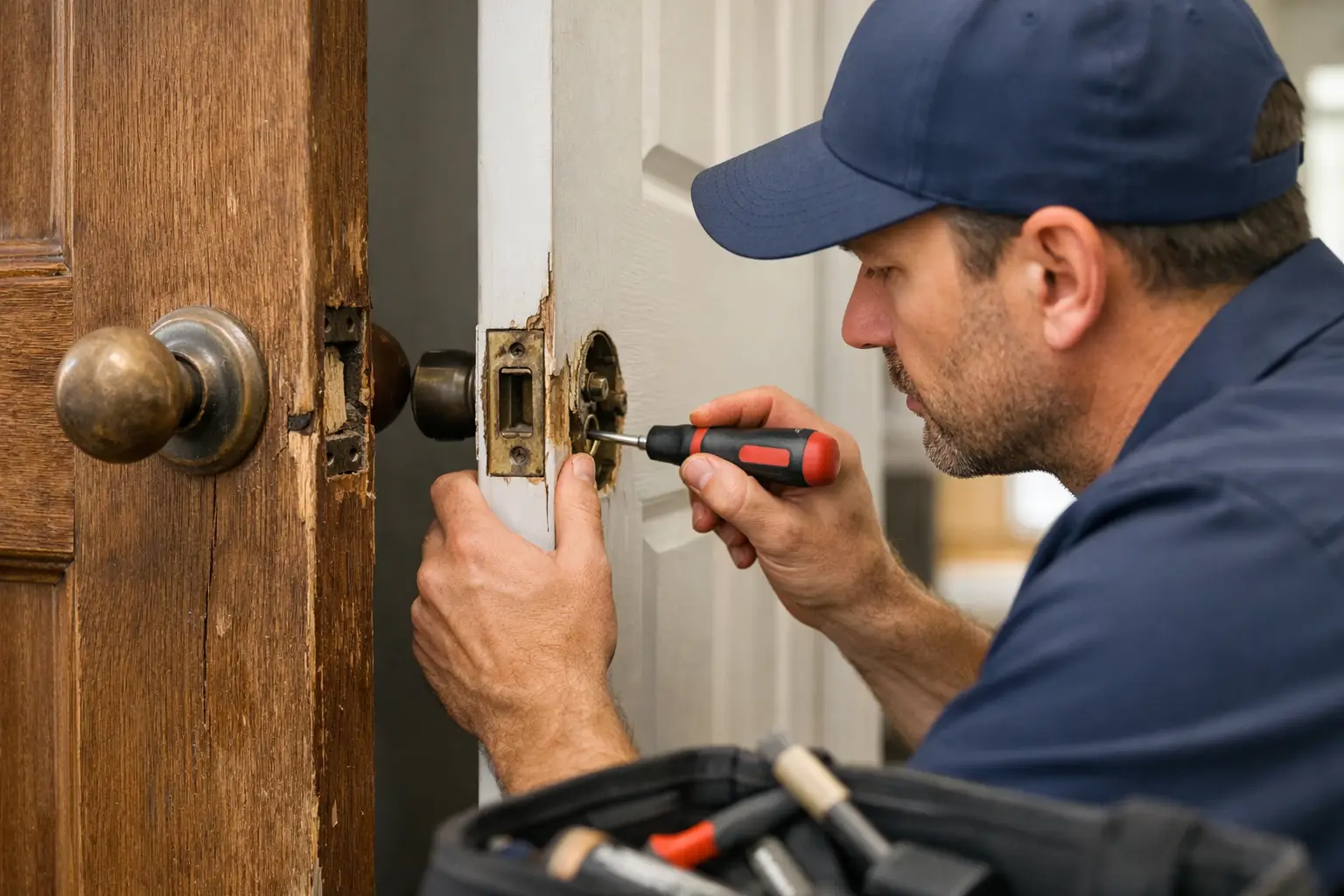
The majority of UK residential break-ins involve some form of forced entry rather than sophisticated lock defeat. That tells you something important about where the vulnerability lies. It is not usually the lock mechanism itself that gives way; it is the cylinder being snapped, the frame splitting at the keep, or a weak hinge giving under physical pressure.
uPVC doors from the 1990s and early 2000s were frequently fitted with standard euro cylinders, single-point locks rather than multi-point systems, and frames that were not reinforced at the locking points. Many of these doors are still in service. They look functional from the outside and the handle works, but the security specification they represent is substantially below what is now available.
Older windows present a similar picture. Single glazing is an obvious weak point, but even older double-glazed windows may have single-point latches, non-laminated glass, and frames that have softened at the corners over time.
The primary improvement in modern door security comes from three areas working together: the cylinder specification, the locking system, and the door construction itself.
Anti-snap cylinders are now the expected standard in any professionally specified installation. Unlike standard euro cylinders, which can be defeated by snapping the outer barrel and turning the remaining stub with a screwdriver, anti-snap cylinders are designed so that the outer section breaks away before the internal mechanism is compromised.
Multi-point locking systems, which are standard on modern uPVC and composite doors, lock the door at the top, bottom, and centre simultaneously when the handle is lifted. This distributes the resistance to forced entry across the full height of the door and makes it considerably harder to attack any single point.
Composite doors add a third layer of security through construction quality. A solid composite door core, combined with reinforced steel around the lock and hinge points, provides meaningful resistance to physical impact in a way that a hollow uPVC panel does not.
Modern windows address the vulnerabilities of older systems at several levels. Internal glazing beads, which are standard on modern windows, prevent the glass from being pushed out from the outside. Toughened or laminated glass provides better resistance to breakage. Multi-point espagnolette locking systems, which run along the opening edge of the window, provide substantially more resistance than single-point catches.
Modern doors and windows designed for security also happen to be significantly better at keeping heat in than their older counterparts. The same features that improve physical resistance, denser materials, tighter seals, multi-chamber frames, also improve thermal performance. The improvement for homeowners replacing single-glazed windows or original uPVC doors from the early nineties can be substantial, often noticeable in the first winter.
If you are considering new doors or windows, the lock specification should be part of the conversation before you commit to a supplier rather than after. Many standard installations come with cylinders that are adequate but not optimal. Specifying an anti-snap cylinder as part of the original installation, or upgrading the cylinder immediately after a new door is fitted, costs very little relative to the total project and meaningfully improves the security outcome.
For existing doors and windows that are structurally sound but could use a lock upgrade, a security check visit is the right starting point. Max can assess the cylinder specification, the condition of the frame at the keep, the multi-point mechanism where one is fitted, and any window locks, and provide an honest view of what is worth changing. There is no call-out fee for this kind of visit.